2741 W 4th Ave, Vancouver, BC V6K 1P9
+1 604-559-1666
info@karmaindianbistro.ca
Open daily from 12:00 PM
They arrive at the table looking like cousins - orange, creamy, chicken in a tomato gravy. They are not the same dish, they didn't come from the same place, and once you know what to look for you'll never confuse them again.
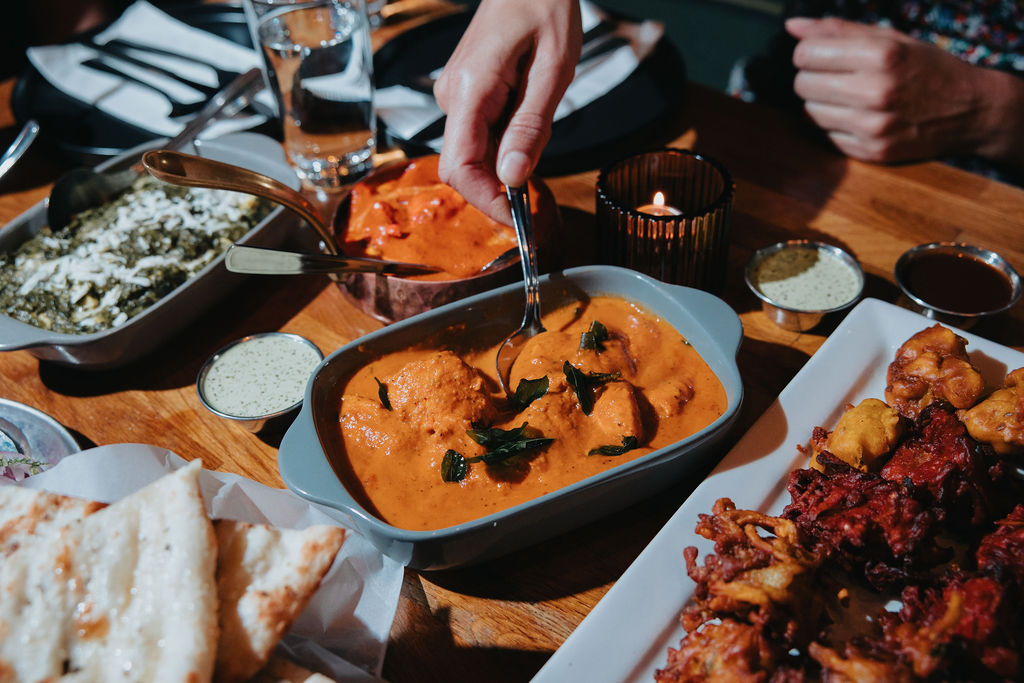
Two tomato-based curries can sit side by side and taste nothing alike.
Butter chicken is a Delhi dish from the 1950s: tandoor-cooked chicken in a smooth tomato gravy finished with butter and cream. Mildly sweet, gentle, deliberately simple. Tikka masala is a later, murkier invention with onion and bell pepper in the sauce - sharper, more savoury, chunkier. Same chicken, same tandoor, different gravy and a different point.
The dish has a birthplace, which is rare. Butter chicken - murgh makhani - was created at Moti Mahal in Delhi in the years after Partition, in a kitchen that had moved from Peshawar and set up again in a new country. The story that goes with it is a thrifty one: tandoori chicken that hadn't sold by the end of service was drying out on the skewer, so it was dropped into a gravy of tomato, butter and cream to bring it back.
Whether it happened quite that neatly is another matter - two Delhi restaurants have been to court in recent years arguing over who invented it, which tells you something about how much the dish is worth. But the mechanism is real, and it explains the recipe better than any origin story could. Butter chicken is a dish designed to rescue tandoori chicken, which is why the chicken has to go in the tandoor first. If it were built to be a curry from the start, you'd poach the chicken in the sauce and save yourself the step.
Butter chicken is a dish designed around cooked-yesterday tandoori chicken. Skip the tandoor and you're making something else.
That's also why the gravy is as simple as it is. It was never meant to be a complicated sauce - it had one job, which was moisture and richness. Tomato for acidity, butter and cream for fat, a little sugar's worth of sweetness from the tomatoes cooking down, and enough spice to hold it together without competing.
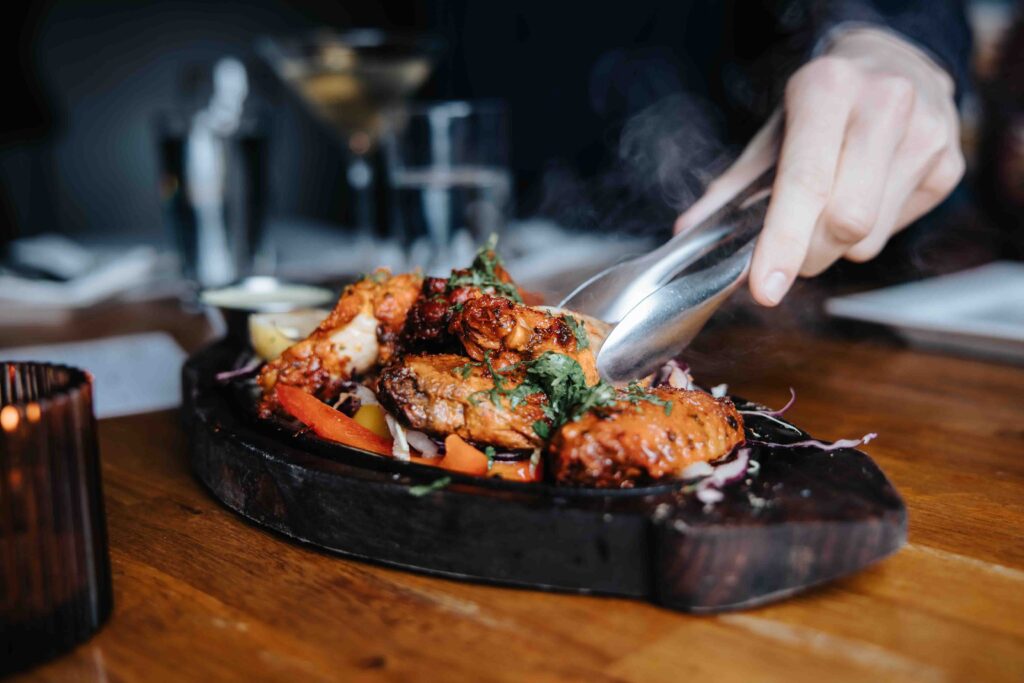
Ours follows the original shape. The chicken is marinated, then broiled in the tandoor, then finished in the gravy - three stages, in that order, every time.
The tandoor is the part that most kitchens quietly drop. It's a second piece of equipment, a second step, and a second thing to time on a busy Friday. Poaching chicken directly in the sauce is faster and nobody complains. But the char is where the flavour lives, and it's the only reason the meat holds any texture in a gravy this rich - tandoor-cooked chicken stays chicken; poached chicken in cream goes soft.
[CHEF - the gravy: tinned or fresh tomatoes, and which? Onion in it or a pure tomato base? Cashew? Kasuri methi? Which whole spices, and when do they go in? Is the gravy batched and the dish finished to order, or built per order? This paragraph is the one no competitor can copy.]
One thing we don't do is fix the heat. Because every curry here is cooked when you order it, butter chicken comes in four levels like everything else - and it's the only dish on the menu where mild genuinely means mild, because the dairy is doing the work. Most restaurants pre-make the base and set the heat at nine in the morning.
Chicken tikka masala has no agreed birthplace at all. The best-known claim puts it in Glasgow in the 1970s - a British-Asian restaurant improvising a sauce for a customer who wanted gravy with his chicken tikka, allegedly out of a tin of tomato soup. Other accounts place it firmly in Punjab as a natural evolution of the same tandoor-plus-gravy logic. A British foreign secretary once called it a national dish, which annoyed a lot of people and settled nothing.
What isn't disputed is what it consists of. Chicken tikka is boneless chicken marinated in yogurt and spices and cooked in the tandoor. Masala just means a spice mixture - and by extension, the sauce built from one. So the name describes an assembly rather than a recipe, which is exactly why it varies so wildly from one restaurant to the next.
The version most kitchens settle on, including ours, has onion and bell pepper in the sauce alongside the tomato and cream. Those two ingredients change everything. Onion adds savoury depth, peppers add a vegetal sharpness, and between them they cut the sweetness that defines butter chicken. It's a busier sauce with more going on and less of a single clean note.
Delhi, 1950s. A documented dish with a known kitchen.
Tomato, butter and cream. Smooth, no vegetables in it.
Rounded and mildly sweet. One clear flavour, done well.
Silky. The sauce coats the chicken.
The gentlest curry on our menu at any spice level.
Disputed. Glasgow in the 1970s, or Punjab, depending who you ask.
Creamy tomato with onion and bell pepper.
Sharper and more savoury. Layered rather than singular.
Chunkier - you meet the peppers and onion.
Carries heat more openly, with less sweetness to soften it.
Both start with the same chicken out of the same tandoor. Everything that separates them happens after that.
Three reasons, and none of them are the diner's fault.
- They look identical. Tomato plus cream plus Kashmiri chilli gives you the same orange in both pans. Kashmiri chilli is used across North Indian cooking for colour rather than heat, and it's why so many curries arrive the same shade.
- Menus use the names loosely. Plenty of kitchens run one tomato-cream base and relabel it - butter chicken here, tikka masala there, korma if you add cashew. If a restaurant is making one gravy and three names, they genuinely are the same dish.
- Tikka masala has no canonical recipe to be wrong about. Butter chicken can be made incorrectly, because there's an original to deviate from. Tikka masala is whatever the kitchen decides, which makes it useless as a fixed point of comparison.
The test, if you're curious: taste for onion. Butter chicken shouldn't have any noticeable onion sweetness or texture in the sauce. If it tastes like a tikka masala with the peppers left out, you're eating one recipe with two labels.
Genuinely depends on the meal, not on which is better.
Your first Indian meal
Butter Chicken
The gentlest thing on the menu, and the most recognisable. Nothing to brace for.
Something with more edge
Tikka Masala
The peppers and onion give it savouriness that butter chicken deliberately avoids.
To feed a table of six
One of each
They're different enough to be worth both, which is the honest test of whether a kitchen makes them properly.
Rich but not tomato
Chicken Korma
A Mughlai cashew and onion gravy with no tomato at all. The third dish people lump in with these two.
Something to eat it with
Garlic basil naan
$5, and the butter chicken gravy is essentially a reason for bread to exist.
And if you're ordering butter chicken for the table because it's the safe choice - that's fine. It's the most ordered dish here for a reason. Just order it at medium rather than mild, and let the tandoor do what it's there for.
Short answers to the things that get these two confused.
What is the difference between butter chicken and tikka masala?
The sauce. Butter chicken is tomato, butter and cream - smooth, with no vegetables in it. Tikka masala adds onion and bell pepper, which cuts the sweetness and makes it sharper, more savoury and chunkier. Both start with the same tandoor-cooked chicken; everything that separates them happens after that.
Is butter chicken the same as murgh makhani?
Yes - murgh makhani is the original name, literally "buttered chicken". It was created at Moti Mahal in Delhi in the years after Partition, as a way of rescuing tandoori chicken that had dried out by the end of service. That origin is why the chicken has to go in the tandoor first.
Is butter chicken spicy?
It is the mildest curry on our menu by design - the cream and butter carry it, and dairy blunts chilli heat. At medium it reads as warm rather than hot. If you want real heat on it, ask for Indian hot; the kitchen will cook it that way, because every curry here is finished when you order it.
How is korma different from these two?
No tomato at all. Korma is a Mughlai cashew and onion gravy - nutty and delicate rather than tangy, and the third dish people lump in with butter chicken and tikka masala. It contains cashew, which the other two do not.
Is your butter chicken gluten-free? Does it contain nuts?
The dish is marked gluten-free on our menu. The naan is not - order rice instead, or missi roti, which is made with chickpea flour. On nuts, please check with your server before ordering: several curries on the menu are cashew-based and our kitchen is shared, so we would rather talk an allergy through than guess.
What should I order with it?
Garlic basil naan ($5) - the gravy is essentially a reason for bread to exist. If you are eating gluten-free, jeera rice ($7) instead. A mango lassi ($7) if you have gone up the spice scale, or a Kingfisher ($9) if you have not.
Can I get butter chicken vegan or dairy-free?
No - butter and cream are the dish, so there is no version of it without them. For something in the same register without dairy, order the Kadai Chicken, or from the vegan side, the Coconut Vegetable curry.
Butter chicken is $21 and gluten-free, cooked to order on four spice levels, at 2741 West 4th Avenue. Open daily from noon.