2741 W 4th Ave, Vancouver, BC V6K 1P9
+1 604-559-1666
info@karmaindianbistro.ca
Open daily from 12:00 PM
Every Indian dish has its own combination of spices, from turmeric and chilli to mustard seeds, fenugreek, and ginger. These ingredients work together to create the distinctive aromas, warmth, colour, and depth of flavour that make Indian cooking so irresistible.
You order for a table, not for a plate. That one shift explains most of the menu.
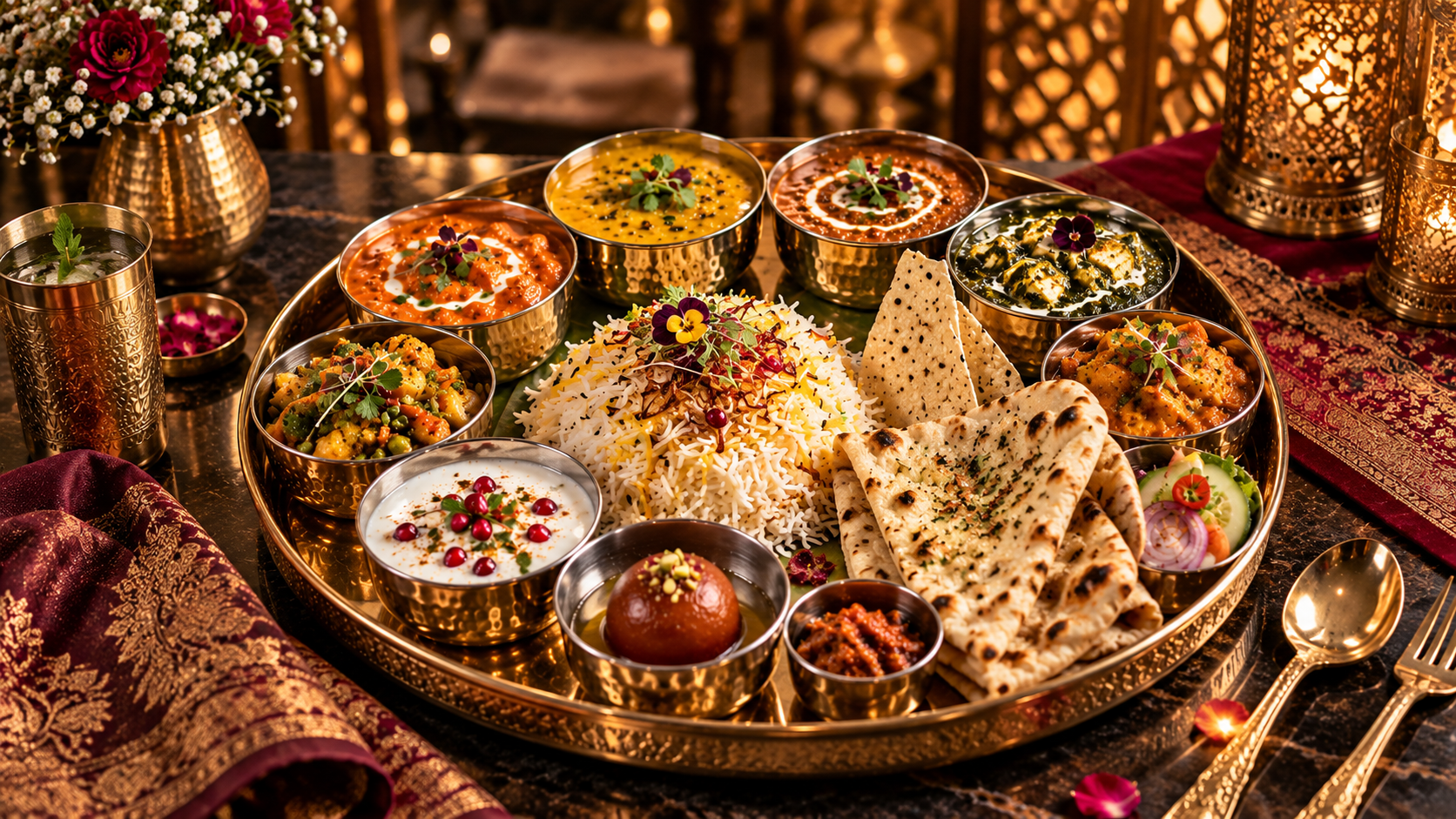
For two people: one shared starter, two curries, one rice, one bread. Pick curries that are different from each other rather than two creamy ones. Order at medium unless you know you want more. That is about $30 to $35 each, and it is a complete meal - you do not need a dish per person, and ordering that way is the commonest first-timer mistake.
"Garam masala" and "curry powder" show up on the back of spice jars and the front of grocery store shelves as if they're roughly equivalent - a generic seasoning to sprinkle on something to make it taste Indian. Neither is quite what it appears to be. One is a specific, variable blend with real regional identity; the other is largely a British invention that doesn't map onto any single Indian tradition at all. Here's what's actually behind the flavours on an Indian menu.
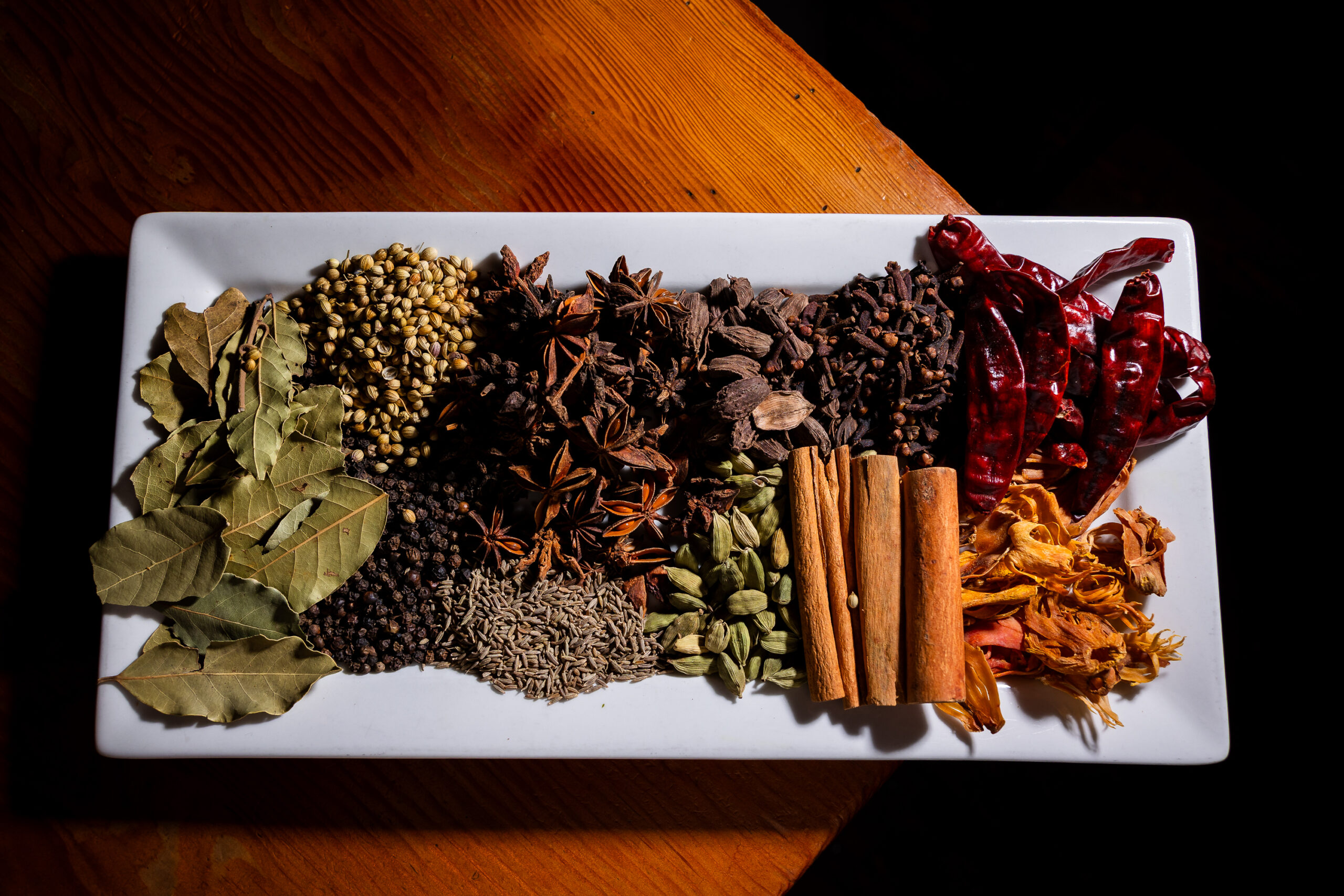
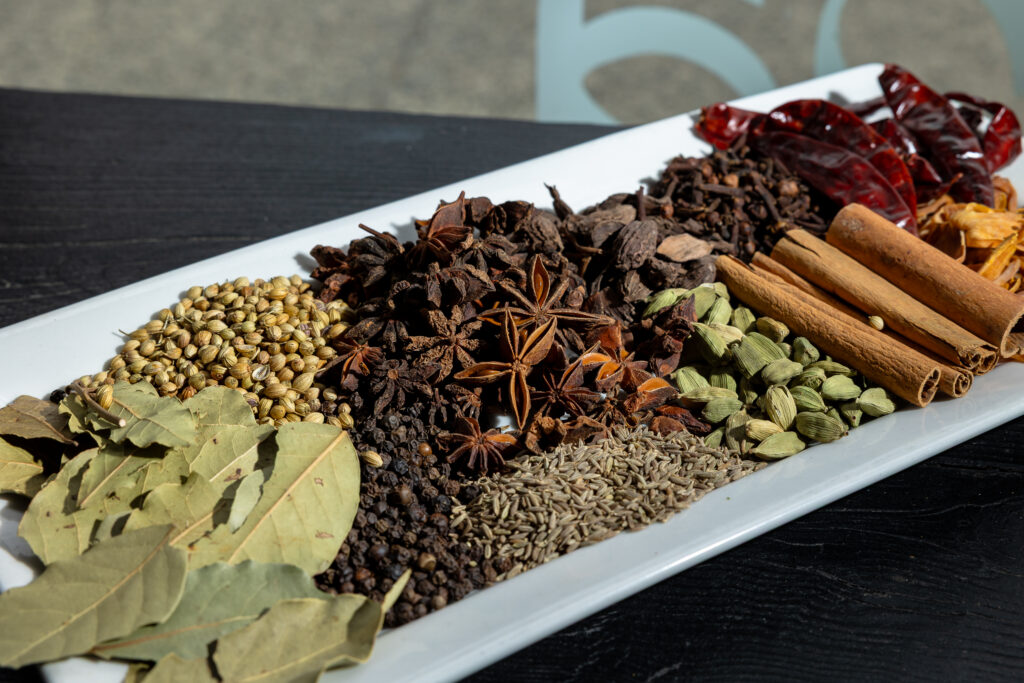
Garam masala isn't a single spice - it's a blend, and "garam masala" translates roughly to "warm spice mix," referring to the warming quality of the spices involved rather than chilli heat specifically. A typical blend includes some combination of cumin, coriander, cardamom, cinnamon, clove, black pepper, and bay leaf, though the exact ratio and specific inclusions vary meaningfully by region, by household, and by kitchen - there's no single fixed recipe the way there might be for a more standardised spice product.
This variability is actually the point rather than a flaw. A North Indian garam masala might lean more heavily on warming spices like cinnamon and clove, while a version from further south or east might include different proportions or additional ingredients specific to that region's pantry. Garam masala is typically added toward the end of cooking, rather than at the start with the whole spices - this preserves more of its aromatic character, since prolonged cooking can mute the more delicate top notes of a spice blend.
Beyond garam masala as a finishing blend, a handful of whole and ground spices form the backbone of most Indian cooking, typically used individually rather than pre-blended, added at different points in the cooking process for different effects.
Cumin brings an earthy, slightly nutty, warm flavour and is often the first spice to hit hot oil at the start of cooking (a technique called tempering, discussed further below), releasing its aroma into the fat before other ingredients are added.
Coriander, from the seed of the cilantro plant (a genuinely different flavour from the fresh leaf, despite coming from the same plant), has a citrusy, slightly sweet quality and is one of the most commonly used spices across the whole of Indian cooking, often used in higher proportion than any other single spice in a given dish.
Cardamom, used in both green and black varieties with distinctly different flavour profiles, brings a floral, slightly sweet, almost eucalyptus-like aromatic quality and shows up in both savoury cooking and desserts - it's a defining flavour in many of the milk-based sweets covered in our guide to Indian desserts.
Cinnamon and clove, often used together, bring warmth and a slightly sweet, woody depth, common in both garam masala blends and in biryani, where whole spices are layered through the rice during the dum cooking process.
Two of the most visually obvious elements of a curry - its colour and its heat - actually come from two entirely separate ingredients doing two entirely separate jobs, which is a common point of confusion for people newer to Indian cooking.
Turmeric is responsible for the yellow-orange colour running through many curries, and it has a warm, slightly bitter, earthy flavour of its own, but it contributes essentially no heat. A curry can be deeply turmeric-yellow and still be completely mild, which surprises diners who associate that colour with spiciness.
Chilli - fresh, dried, or ground into chilli powder - is what actually controls heat, and it's added independently of turmeric, in whatever quantity a given dish calls for. This is why, as covered in our guide to curry names, a dish's colour tells you very little about how hot it's going to be - a vibrant red or orange sauce might be turmeric- and tomato-driven with very little actual chilli, while a duller-looking sauce could be considerably hotter.
"Curry powder," as sold in most Western grocery stores, is a standardised, pre-mixed blend - typically including turmeric, coriander, cumin, and often other spices - that was largely developed and popularised by the British during the colonial period as a convenient, shelf-stable approximation of Indian spicing for cooks who didn't have access to (or familiarity with) the individual whole and ground spices a traditional Indian kitchen would use separately.
Traditional Indian cooking generally doesn't use a single fixed "curry powder" the way Western recipes calling for it suggest -instead, a cook selects and combines specific whole and ground spices for a specific dish, often toasting or tempering them individually at different points in the cooking process rather than adding one pre-mixed jar all at once. This is part of why a scratch-made curry can taste noticeably more complex and layered than one built from a single commercial curry powder - the individual spices are doing distinct jobs at distinct moments, rather than all being added in one flat, pre-combined dose.
Beyond dried and ground spices, fresh aromatics do a huge amount of the actual flavour-building work in Indian cooking, and they're easy to overlook when the conversation focuses only on spice jars.
Ginger and garlic, usually used together as a paste, form the aromatic base of an enormous range of curries, typically cooked into the onion base early in the process to build a foundational layer of flavour that the rest of the dish is built on top of.
Curry leaves, distinct from curry powder and not related to it despite the similar name, are a fresh, fragrant leaf used extensively in South Indian cooking specifically, usually tempered in hot oil at the start of cooking alongside mustard seeds to release their aroma - a technique with no real northern equivalent, as covered in more detail in our earlier piece on regional Indian cooking.
Our approach follows the traditional method rather than a shortcut version - individual whole and ground spices, tempered and added at the right point in cooking rather than a single pre-mixed blend dropped in all at once, and fresh ginger-garlic paste and aromatics built into the base of most curries from the start. That's part of why our curries taste the way they do, and it's also directly tied to the tandoor cooking process for anything grilled or roasted - the same attention to individual ingredients rather than shortcuts applies across the kitchen. The full range of what that produces is on our food menu.
What is garam masala made of?
Garam masala is a blend of warming spices - typically some combination of cumin, coriander, cardamom, cinnamon, clove, black pepper and bay leaf - rather than a single spice. The exact mix varies by region and kitchen.
Is curry powder the same as garam masala?
No. Curry powder is a standardised commercial blend largely developed outside India, while garam masala is a variable, traditional blend. Traditional Indian cooking generally uses individual spices added at different points rather than one fixed pre-mixed powder.