2741 W 4th Ave, Vancouver, BC V6K 1P9
+1 604-559-1666
info@karmaindianbistro.ca
Open daily from 12:00 PM
Holi marks the arrival of spring and the triumph of good over evil, rooted in Hindu mythology and celebrated widely across India and among Hindu communities internationally.
You order for a table, not for a plate. That one shift explains most of the menu.
For two people: one shared starter, two curries, one rice, one bread. Pick curries that are different from each other rather than two creamy ones. Order at medium unless you know you want more. That is about $30 to $35 each, and it is a complete meal - you do not need a dish per person, and ordering that way is the commonest first-timer mistake.
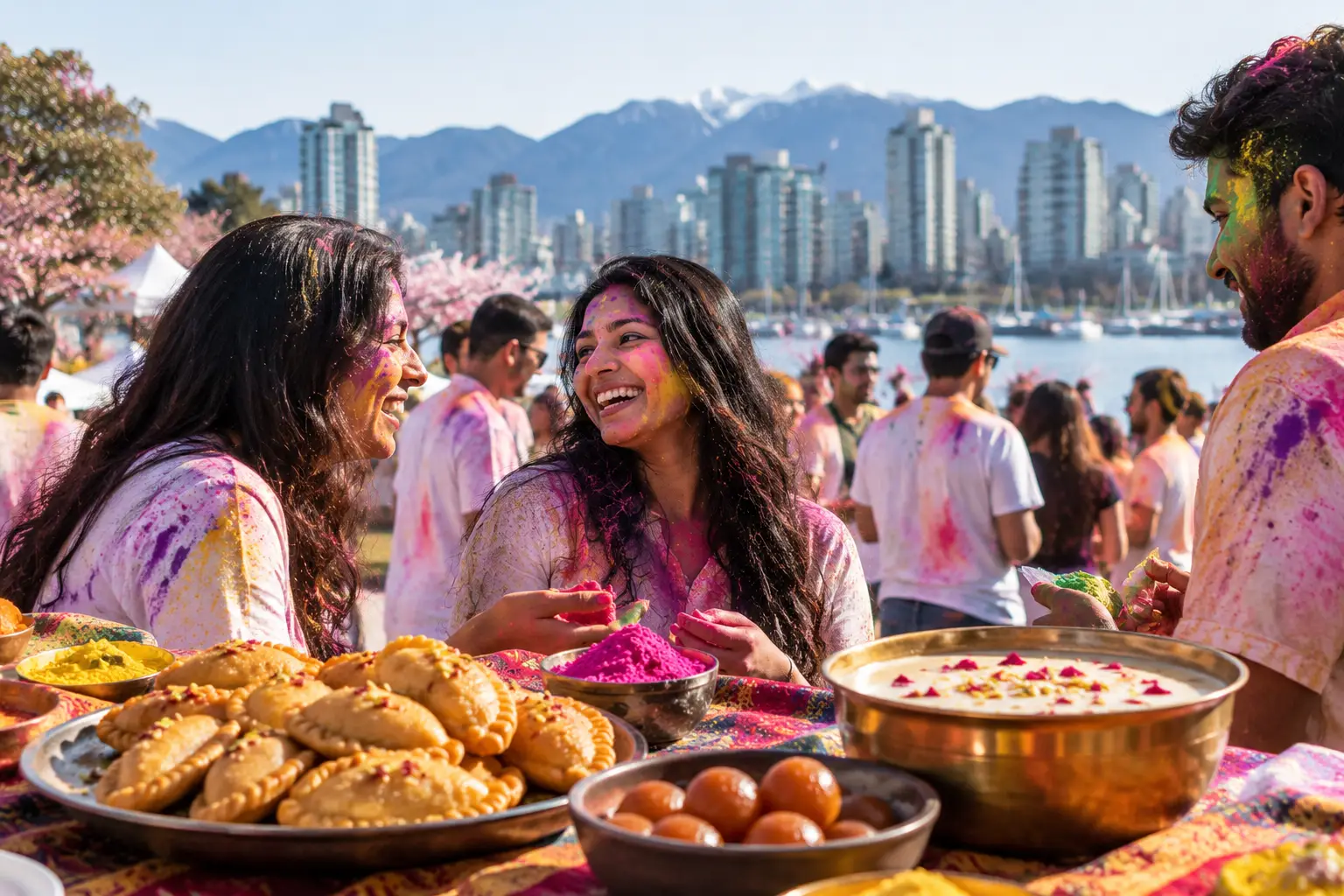
Holi is best known outside India for its most visual element — the colour, thrown and smeared across streets, parks, and crowds of celebrants in a burst of pink, yellow, and green. That image travels well, but it's only one part of a festival that's also genuinely about food, community, and a specific set of dishes that show up around this time of year and mostly nowhere else.
Holi marks the arrival of spring and the triumph of good over evil, rooted in Hindu mythology and celebrated widely across India and among Hindu communities internationally. It typically falls in March, with the exact date shifting each year according to the lunar calendar, and celebrations traditionally span two days — an evening bonfire (Holika Dahan) the night before, followed by the main day of colour-throwing, music, and communal celebration.
Beyond the mythology, Holi functions socially as a genuine reset — a festival where social hierarchies are temporarily loosened, strangers and neighbours celebrate together in the street, and the usual formality of daily life gives way to a day of colour, water, sweets, and shared food.
Holi has its own specific food traditions, distinct from the everyday menu covered throughout the rest of this site, and largely built around sweets and a specific festive drink.
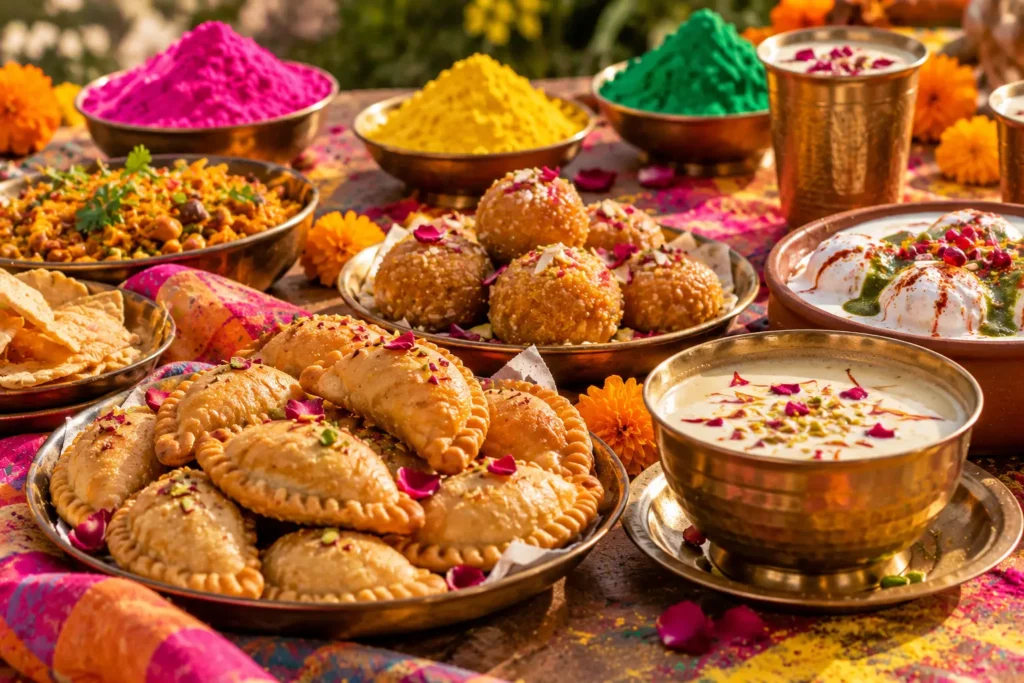
Gujiya is a sweet, deep-fried pastry — a half-moon-shaped dumpling filled with a mixture of khoya (reduced milk solids, the same base covered in our guide to Indian desserts), nuts, and sometimes dried fruit, then fried until golden and often finished with a light sugar syrup coating. It's one of the most specifically Holi-associated sweets, made in large batches ahead of the festival in many households, since it's meant to be shared generously with visitors throughout the day.
Thandai is a cooling, festive milk-based drink, flavoured with a blend of nuts (almonds and cashews), whole spices (including some of the same warming spices covered in our guide to Indian spices — cardamom, black pepper, fennel), and rose water, served chilled. It's specifically associated with Holi in a way most other drinks on an Indian menu aren't tied to one particular occasion, and its cooling character suits a festival traditionally celebrated outdoors, often in the heat of the day.
Beyond these two specifically festive items, Holi food generally leans toward dishes built for a full day of visiting and sharing — snacks and sweets that can sit out and be offered to a steady stream of guests, rather than a single seated meal at a fixed time.
Vancouver's Hindu and South Asian communities mark Holi with organised colour events, community gatherings, and celebrations that echo the communal, public spirit of the festival as it's celebrated in India, even without the same scale of citywide participation. These events tend to draw people well beyond the immediate community, since the colour-throwing element in particular has become widely recognised and popular as a shared cultural experience.
If you're planning to celebrate Holi with a meal afterward — a natural pairing, given how much of the day traditionally centres on food and hospitality — it's worth booking ahead the same way we'd recommend for any occasion night, as covered in more detail in our guide to booking a table. If your group is on the larger side, coming together after a community colour event or celebration, our guide to group bookings covers what to know for parties past the size of a normal table.
Describe any Holi-specific menu items, promotions, or events Karma runs, if any, before publishing — otherwise this section can simply note that the regular menu, including desserts, is available for anyone celebrating.Whether or not you're marking the day with anything specific on our end, the current menu is here, and it's a good time of year to bring a group together after a day that's traditionally spent doing exactly that.
What is Holi, and when is it celebrated?
Holi is a Hindu festival marking the arrival of spring, typically celebrated over two days in March, with a bonfire the evening before and a main day of colour-throwing and celebration. The exact date shifts each year based on the lunar calendar.
What food is traditionally eaten during Holi?
Gujiya, a sweet fried pastry filled with reduced milk solids and nuts, and thandai, a chilled, spiced milk drink, are the two dishes most specifically associated with Holi, alongside a broader spread of snacks and sweets meant for sharing throughout the day.