2741 W 4th Ave, Vancouver, BC V6K 1P9
+1 604-559-1666
info@karmaindianbistro.ca
Open daily from 12:00 PM
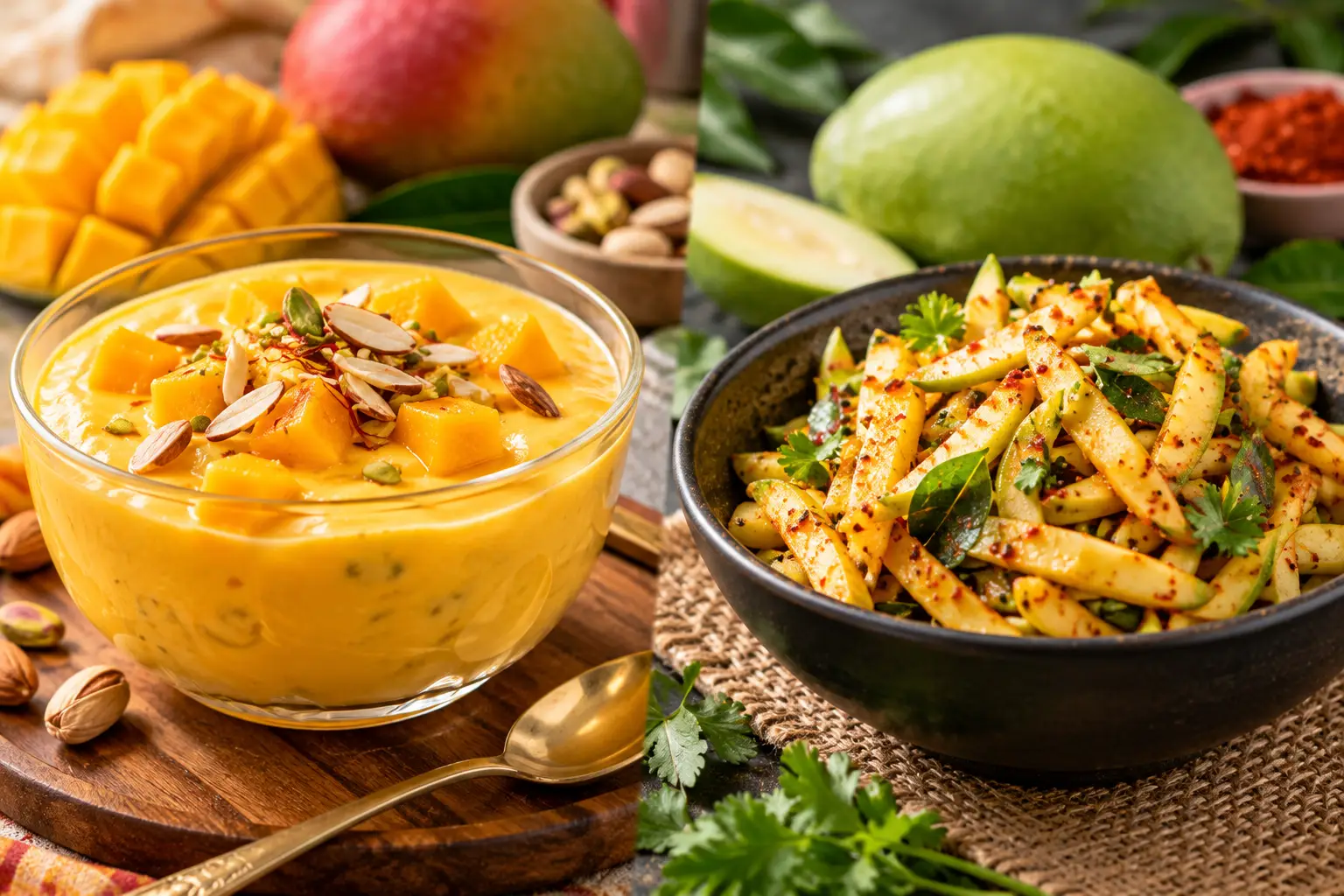
Mango is one of the few ingredients on an Indian menu that shows up in genuinely opposite roles depending on where you encounter it — sweet, soft, and central to dessert in one dish, sharp, sour, and used sparingly as a condiment in the next.
You order for a table, not for a plate. That one shift explains most of the menu.
For two people: one shared starter, two curries, one rice, one bread. Pick curries that are different from each other rather than two creamy ones. Order at medium unless you know you want more. That is about $30 to $35 each, and it is a complete meal - you do not need a dish per person, and ordering that way is the commonest first-timer mistake.
Mango is one of the few ingredients on an Indian menu that shows up in genuinely opposite roles depending on where you encounter it — sweet, soft, and central to dessert in one dish, sharp, sour, and used sparingly as a condiment in the next. That's not two different fruits, and it's not inconsistency. It's the same fruit at two different points of ripeness, put to completely different use because of it.
The single fact that explains mango's dual role across Indian cooking is that ripe and unripe mango are used as though they're almost different ingredients entirely. Ripe mango is sweet, soft, and fragrant — the fruit most people picture by default, used in desserts and drinks where sweetness is the point. Unripe (green) mango is firm, sour, and starchy rather than sweet, since the sugars that develop as a mango ripens simply haven't formed yet — and that sourness is exactly what makes it useful in an entirely different category of preparation: pickles and certain chutneys, covered in more detail in our guide to Indian chutneys and pickles.
This is genuinely different from most fruits used in cooking, where ripeness is simply a matter of quality rather than defining two distinct culinary uses. A slightly underripe apple and a ripe one are still used the same general way; an unripe mango and a ripe one are put to work in almost entirely separate parts of the menu.
Among the dozens of mango varieties grown across India, Alphonso is the one most worth knowing by name — widely considered among the finest eating mangoes, prized for a particularly rich, non-fibrous texture, deep golden-orange flesh, and a distinctive sweet, aromatic flavour that's become something of a benchmark variety internationally. It's grown primarily in the state of Maharashtra, on India's west coast, and has a genuinely dedicated following, with a fairly short growing season each year that makes fresh Alphonso mango something of an anticipated seasonal event rather than a year-round given.
Other significant varieties exist and are used throughout Indian cooking as well, but Alphonso's reputation specifically is why it's the name most likely to show up on a menu or a product label when ripe mango quality is being called out deliberately, rather than mango simply being used as a generic ingredient.
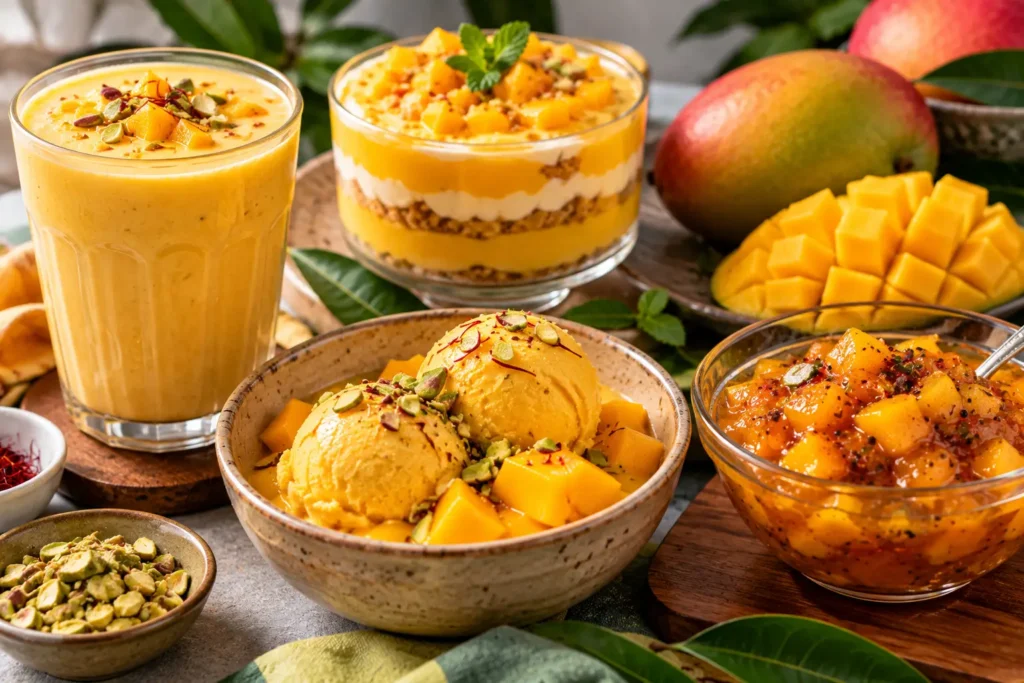
Ripe mango's sweetness makes it a natural fit anywhere sugar and fruit character are the goal. Mango lassi, as covered in our guide to what to drink with Indian food, is one of the most recognisable uses — ripe mango blended with yoghurt, sometimes with a touch of added sugar, producing a thick, fruity, cooling drink that works particularly well alongside spicier dishes.
Ripe mango also shows up across Indian desserts, either as a flavouring throughout a dish or, when in season, served simply on its own as a genuinely excellent dessert requiring no preparation at all beyond slicing. And a sweeter style of mango chutney — distinct from the sharper, unripe-mango-based pickle covered below — uses ripe mango cooked down with sugar and spice into a jam-like condiment, closer in character to a fruit preserve than to the intensely sour mango pickle it shares a name with.
Unripe, green mango's firm texture and sour character make it suited to an entirely different job. Mango pickle, covered in detail in our guide to Indian chutneys and pickles, is built specifically from unripe mango, cured in oil, salt, and spice into an intensely sour, preserved condiment, used sparingly alongside a meal rather than eaten in any real volume.
Unripe mango also appears in certain savoury chutneys and relishes distinct from the sweeter, ripe-mango version, and in some regional raw preparations where its firm texture and tartness are used deliberately, in the same spirit as a very sour green apple might be used in other cuisines — as a sharp, structural counterpoint rather than a sweet centrepiece.
Fresh mango, particularly a prized variety like Alphonso, has a genuine, fairly short growing season — roughly April through June in most mango-producing regions of India, though this varies somewhat by variety and region. Outside that window, fresh mango used in Indian cooking internationally, including in North America, is more likely to be imported, frozen, or pureed and preserved rather than fully fresh and in-season, which can affect both availability and quality depending on the specific dish and the time of year.
This is worth knowing mostly so that "seasonal" isn't a meaningless word when applied to a mango dish — a mango lassi or dessert made during the actual mango season, with genuinely fresh, ripe fruit, can taste noticeably better than the same dish made from frozen or preserved mango pulp out of season, even though both are entirely legitimate ways to make the dish outside of a short seasonal window.
Mango shows up across both ends of the spectrum on our menu — in mango lassi and desserts when ripe fruit and its sweetness are the goal, and in mango pickle where the unripe fruit's sourness does different, complementary work alongside a meal. The current menu is here.
Is mango lassi made with ripe or unripe mango?
Ripe mango. Its natural sweetness is what gives mango lassi its flavour, blended with yoghurt and sometimes a small amount of added sugar.
What's the difference between mango chutney and mango pickle?
Mango chutney is typically made with ripe mango, cooked down with sugar into a sweeter, jam-like condiment. Mango pickle is made from unripe, green mango, cured in oil, salt and spice into an intensely sour condiment used sparingly.