2741 W 4th Ave, Vancouver, BC V6K 1P9
+1 604-559-1666
info@karmaindianbistro.ca
Open daily from 12:00 PM
Every curry we cook is made to order on four levels, and the one at the top of the list stops people ordering it. Here is what each level actually means, what creates heat in Indian food, and how to ask for what you want.
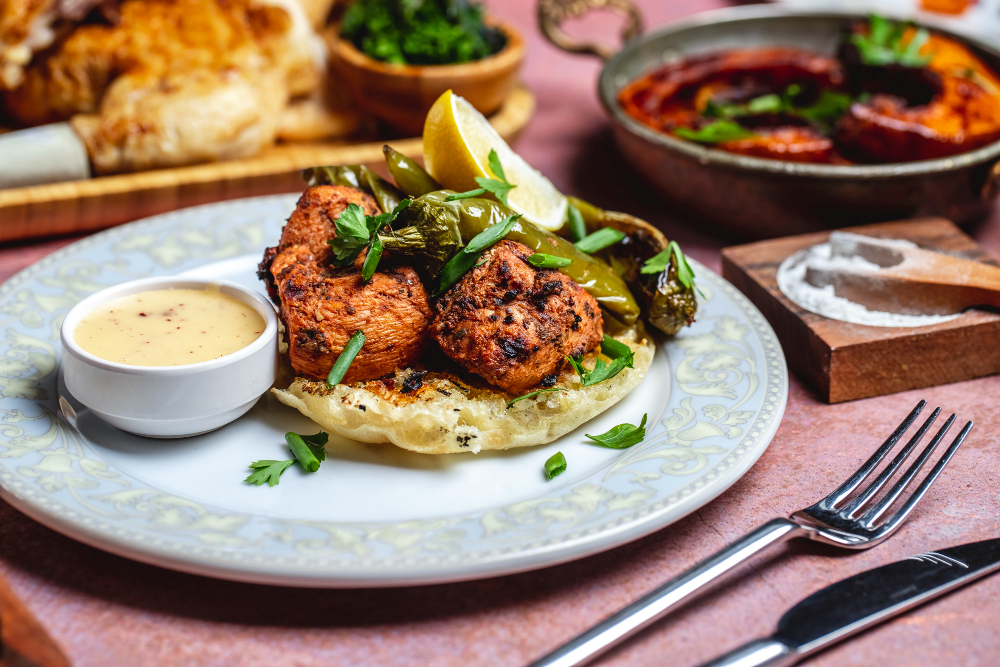
Green chillies do most of the visible work. Black pepper and mustard seed do the rest, and behave completely differently.
Indian hot is genuinely hot - the level a kitchen in Punjab or Chennai would cook without being asked. It is not a challenge dish or a novelty. Our medium is a real medium, hot has a definite edge, and mild is gentle enough for a seven-year-old. Because everything is cooked to order rather than ladled from one pot, the level you ask for is the level you get.
Most kitchens make a curry base in bulk in the morning and fix the heat then. We don't, which is the only reason a choice is possible at all: each curry is cooked when you order it, so the chilli goes in at the point of cooking rather than at seven that morning.
Aromatic rather than hot. You'll taste the whole spices - cardamom, clove, cumin, coriander - without any burn behind them. This is where we'd put a child, or anyone who genuinely doesn't enjoy heat. It isn't a lesser version of the dish; South Indian coconut curries in particular are built to be gentle.
Our default and where most people should start. Warmth that builds across a few mouthfuls and then settles. If you eat chilli happily at home, this will read as pleasant rather than mild. It is a real medium, not a medium adjusted downward for a Canadian room.
A definite edge. You'll notice it on the lips and reach for the lassi about halfway through, but you'll still taste the tomato, the coconut, the ginger - the heat sits on top of the dish rather than replacing it.
What the kitchen would cook for itself. Order rice, order a raita, and give it a minute between mouthfuls. Nobody will talk you out of it and nobody will quietly dial it back - if you ask for Indian hot, that is what leaves the kitchen.
The levels are not evenly spaced, and that's deliberate. The step from mild to medium is small. The step from hot to Indian hot is the big one.
"Spicy" does two jobs in English, which is where most of the confusion starts. It means full of spices, and it means hot. In Indian cooking those are separate dials. A korma is heavily spiced and barely hot at all. A simple green-chilli stir-fry can be fierce with almost no spice in it.
Three different things create what you feel as heat, and they arrive at different times:
- Capsaicin, from chillies. The familiar one. It binds to the heat receptors on your tongue - the same receptors that respond to a hot cup of tea - which is why your brain reads a chilli as temperature rather than flavour. It builds, and it lingers.
- Piperine, from black pepper. Older than chilli in Indian cooking by centuries; chillies only arrived from the Americas in the 1500s. Pepper heat is sharper, drier and shorter-lived. The black mustard and pepper in a Chettinad or a Madras are doing something quite different from a green chilli.
- Mustard oils, from mustard seed. These are volatile, so they go up the nose rather than sitting on the tongue — the wasabi sensation. It clears fast. A dish can taste pungent and barely be hot.
A dish can be intensely flavoured and gentle, or plain and fierce. Spice and heat are not the same dial.
Chilli varieties matter more than quantity. Kashmiri chilli is used across North Indian cooking for its deep red colour and is only mildly hot - the colour of a butter chicken owes more to it than to any amount of heat. A small green bird's-eye chilli can be twenty times hotter than a jalapeño by weight. Two kitchens using "two chillies" can produce completely different plates.
Before you pick a level, it's worth knowing where a dish starts. Some of ours are gentle by construction and some come with heat built in - ordering a vindaloo mild is possible, but you're fighting the recipe.
Butter Chicken
Gentle
Tomato, butter and cream. Dairy blunts capsaicin, so this is the mildest curry on the menu whatever level you pick.
Chicken Korma
Gentle
A Mughlai cashew and onion gravy with no tomato and no chilli heat by design. Heavily spiced, barely hot.
Palak Paneer
Gentle
Spinach, cream and paneer. Same dairy effect.
Chicken Madras
Warm to hot
Roasted coconut and black mustard from South India. The pepper-and-mustard heat rather than the chilli kind.
Chettinad Chicken
Hot
A Tamil speciality built on tamarind, mustard seed and curry leaf. Sharp rather than blunt.
Vindaloo
Hot
Goan, and the heat is structural - vinegar, paprika and chilli are the dish. Ask for it mild and it stops being a vindaloo.
Chicken Jalfrezi
Warm
Vinegar, tomato and sliced peppers, cooked dry rather than in a sauce, so there's less to soften it.
If you want one plain rule: anything with cream, coconut milk, cashew or paneer will carry heat more gently than anything cooked dry or with vinegar. That has nothing to do with the level you order and everything to do with fat.
Capsaicin doesn't dissolve in water. It dissolves in fat. So a glass of water moves it around your mouth and spreads the problem, while dairy - a mango lassi, a spoon of raita, plain yogurt - actually lifts it off. The casein in milk binds to it and carries it away.
Rice and bread work differently: they don't neutralise anything, they just give the capsaicin somewhere else to be. Both help. Beer helps least of the options at the table, though nobody orders a Kingfisher for medical reasons.
Practically, at our table: raita ($5) is the fastest fix, mango lassi ($7) is the pleasant one, and plain basmati ($5) is the one that lets you keep eating.
Three things worth saying to whoever takes your order.
Not per table. A table of four ordering four curries can have four different levels - there's no reason for everyone to eat at the spice tolerance of the most cautious person present. If you're ordering online, put it in the notes field.
Heat can't be taken out of a finished curry. It can always be added at the table - we'll bring green chilli or chilli powder if you want to push it up. Ordering medium and adjusting upward is a free option; ordering Indian hot and regretting it is not.
Not "mild please" but "I really can't do chilli". There's a difference between the mild setting and a dish cooked with no chilli in it, and for some dishes we can do the second. Ask.

It's a fair thing to be suspicious of. Plenty of Indian restaurants outside India cook everything a notch down on the assumption that the room can't take it, and then a menu that says "hot" means something closer to warm. If you've been served that a few times, you learn to order two levels up and hope.
You don't need to do that here, and you shouldn't. Ordering above what you actually want because you're braced for disappointment is how a perfectly good dinner gets ruined. Our medium is medium. Our Indian hot is what the kitchen eats.
Cooking to order is more work than making one base and portioning it, and it's slower on a full Friday. It's also the only way any of this is true - which is why we do it, and why the four levels are a real choice rather than a line on a menu.
The things people ask us across the counter before they commit to a level.
What does "Indian hot" actually mean?
It is the level a kitchen in Punjab or Chennai would cook without being asked -genuinely hot, but not a challenge dish or a novelty. It is the fourth of our four levels, above mild, medium and hot. Order rice and a raita with it, and give it a moment between mouthfuls.
Is your medium actually medium?
Yes. Our medium is not a medium adjusted downward for a Canadian room - it is warmth that builds across a few mouthfuls and then settles. Because every curry is cooked when you order it rather than portioned from one morning batch, the level you ask for is the level that leaves the kitchen. You do not need to order two levels up and hope.
Which dishes are mild even at a higher spice level?
Anything with cream, coconut milk, cashew or paneer in it. Butter chicken is the gentlest curry on the menu whatever level you pick, because dairy blunts capsaicin; korma and palak paneer behave the same way. Dishes cooked dry or with vinegar - vindaloo, jalfrezi - carry heat much more openly.
Which is hotter, a madras or a vindaloo?
Vindaloo. It is Goan and the heat is structural - vinegar, paprika and chilli are the dish, so ordering it mild is fighting the recipe. A madras reads as warm to hot, but much of that is black mustard and pepper rather than chilli, which is a sharper, drier, shorter sensation.
Can everyone at the table order a different spice level?
Yes, and you should. Levels are set per dish, not per table - there is no reason for everyone to eat at the spice tolerance of the most cautious person present. Tell your server as you order each dish, or put it in the notes field if you are ordering online.
What should I drink if a curry is too hot?
Something dairy. Capsaicin does not dissolve in water - it dissolves in fat - so a glass of water spreads it around your mouth while the casein in milk lifts it away. Raita ($5) is the fastest fix, mango lassi ($7) is the pleasant one, and plain basmati ($5) is the one that lets you keep eating. Beer helps least.
What if I cannot eat chilli at all?
Say exactly that - not "mild please" but "I really can't do chilli". There is a difference between the mild setting and a dish cooked with no chilli in it, and for some dishes the kitchen can do the second. Ask when you order and we will tell you which ones.
Ninety-seven dishes, all cooked to order, at 2741 West 4th Avenue in Kitsilano. Open daily from noon. Tell us the level and we'll cook it that way.