2741 W 4th Ave, Vancouver, BC V6K 1P9
+1 604-559-1666
info@karmaindianbistro.ca
Open daily from 12:00 PM
Here's a practical guide to what travels, what doesn't, how pickup and delivery actually compare, and where we deliver across Kitsilano and the West Side.
You order for a table, not for a plate. That one shift explains most of the menu.
For two people: one shared starter, two curries, one rice, one bread. Pick curries that are different from each other rather than two creamy ones. Order at medium unless you know you want more. That is about $30 to $35 each, and it is a complete meal - you do not need a dish per person, and ordering that way is the commonest first-timer mistake.
Deciding what to eat in the next half hour usually comes down to one practical question: will this actually be good by the time it gets to me? Curry has a reputation, deserved in some cases, for arriving as a sad, separated version of what it was in the kitchen. That's mostly a function of which dishes were chosen, not a fixed property of Indian food - some dishes genuinely improve on the trip home, and others should never leave the restaurant in the first place.
Here's a practical guide to what travels, what doesn't, how pickup and delivery actually compare, and where we deliver across Kitsilano and the West Side.
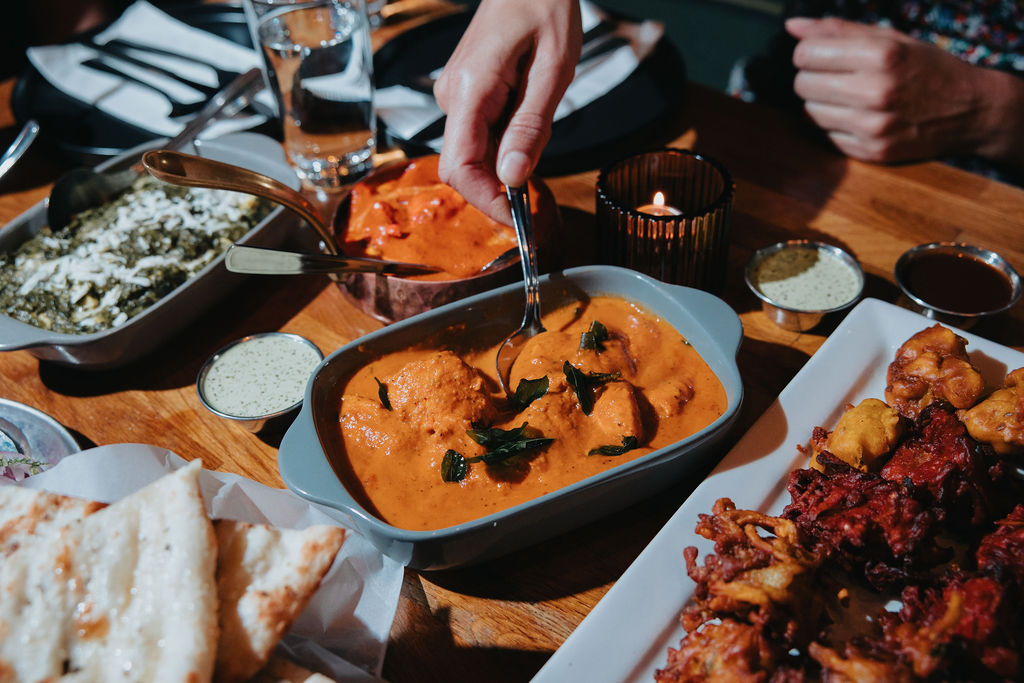
What travels well: Curries, in general, hold up to transport and reheating better than almost anything else on an Indian menu, and several genuinely improve with a short rest - the sauce has time to further absorb into the meat or vegetables, and flavours that were sharp and distinct straight off the stove often mellow and integrate more during the ten or fifteen minutes it takes to get home. Butter chicken, dal, and most vegetable curries are in this category - they're built around a sauce that's meant to be sat in, not a crisp texture that degrades the moment it stops being hot. Biryani also travels reasonably well, since it's dense, layered, and doesn't rely on a crisp exterior the way fried food does - reheated gently, it holds most of its character.
What is better eaten in the restaurant: Anything built around a crisp or crunchy texture is working against you the moment it's boxed up. Tandoori breads - naan especially - lose the char and chew that come specifically from being fresh off the tandoor wall within minutes of leaving the oven; a naan that travels for fifteen or twenty minutes in a closed container steams itself soft rather than staying blistered and slightly crisp at the edges. Anything fried - pakora, papadum, any of the crispy starters - suffers the same fate, softening in the container's trapped steam in a way that fundamentally changes the dish. None of this means you shouldn't order them for delivery; it just means the expectation should be reset, since a soft version of a dish built to be crisp is a genuinely different eating experience than the same dish at the table.
If you're eating delivery or pickup food later rather than immediately, or reheating leftovers, a few adjustments make a real difference to the result.
Reheat curry slowly, over low-to-medium heat, on the stove rather than in the microwave if you have the option. A gentle reheat keeps the sauce from separating or scorching, whereas a microwave - especially on high power - can overheat parts of the dish unevenly while leaving other parts lukewarm, and tends to be harder on delicate ingredients like paneer, which can turn rubbery if blasted with high, uneven heat. If the microwave is genuinely your only option, use a lower power setting and stir partway through.
Add a small splash of water or stock before reheating curry, particularly if it's been in the fridge overnight - the sauce naturally thickens as it cools and sits, and a bit of added liquid brings it back to the right consistency rather than leaving you with something gluey.
Rice reheats best with a bit of added moisture too - a few drops of water sprinkled over the rice before microwaving, or a splash in the pan if reheating on the stove, keeps the grains from drying out and clumping.
Naan and other breads are genuinely difficult to bring back once they've gone soft, but a hot, dry pan or a few minutes in a toaster oven does more to restore some crispness than a microwave ever will - the microwave will only make already-soft bread softer.
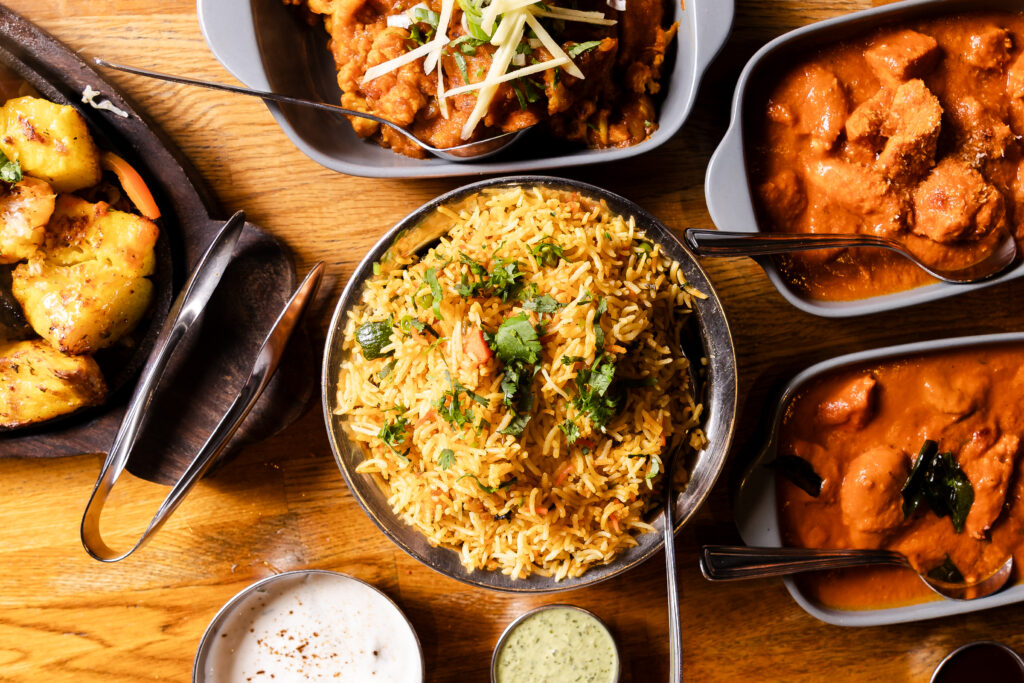
Pickup is the faster option and the one that preserves food quality best, simply because it minimises the time between the kitchen and your plate. Pickup orders are usually ready in 20 to 25 minutes from when the order is placed, and picking it up yourself means everything - including the naan and any crispy starters - arrives at your table in something much closer to its original state than it would after a delivery trip. It also typically avoids delivery fees and platform service charges, which can add up meaningfully on a larger order.
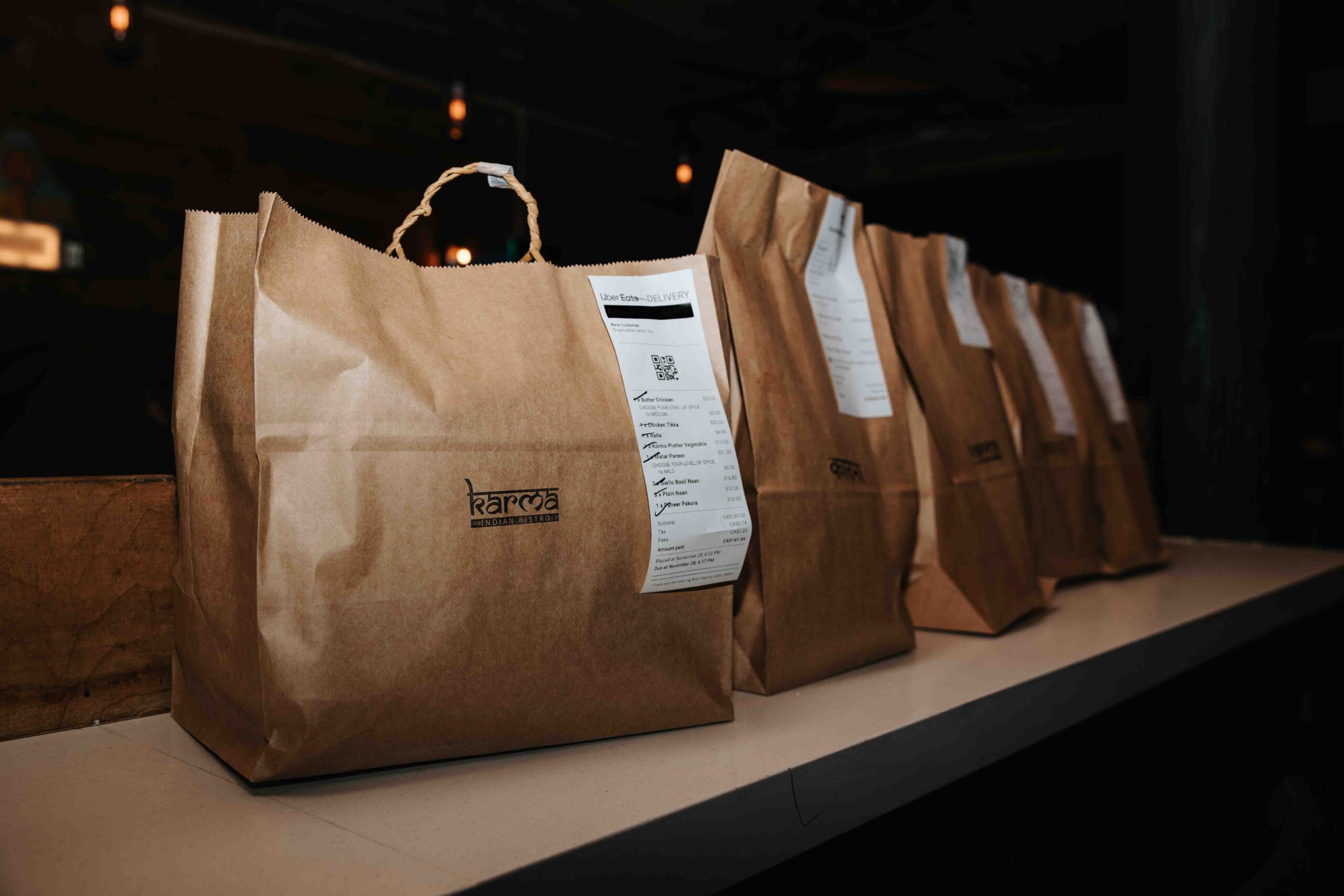
Delivery trades some of that immediacy and food quality for convenience - you don't have to leave the house, which matters on a bad-weather night, when you're managing kids, or simply when going out isn't appealing. The trade-off is real: extra time between kitchen and table (which affects the "what travels well" dishes discussed above more than the others), delivery and service fees on top of the food cost, and less control over exactly when the food arrives, since that depends on the driver's route and timing rather than your own.
Neither is objectively better - it's a genuine trade-off between speed and quality on one side and convenience on the other, and which one makes sense depends on what you're ordering and what your evening actually looks like.
We deliver across Kitsilano and into the surrounding West Side neighbourhoods through DoorDash, alongside pickup available directly from the restaurant for anyone nearby. Because delivery radius and available time slots are managed through the DoorDash platform rather than set independently by us, the most accurate way to confirm whether your specific address is covered - and what the current delivery time looks like for your area - is to check directly on the app before ordering, since coverage and estimated times can shift with demand and time of day.
Ordering Indian food for a group delivery or pickup follows slightly different logic than ordering for a table at the restaurant, mostly because you lose the ability to adjust or ask questions mid-meal the way you can at a table.
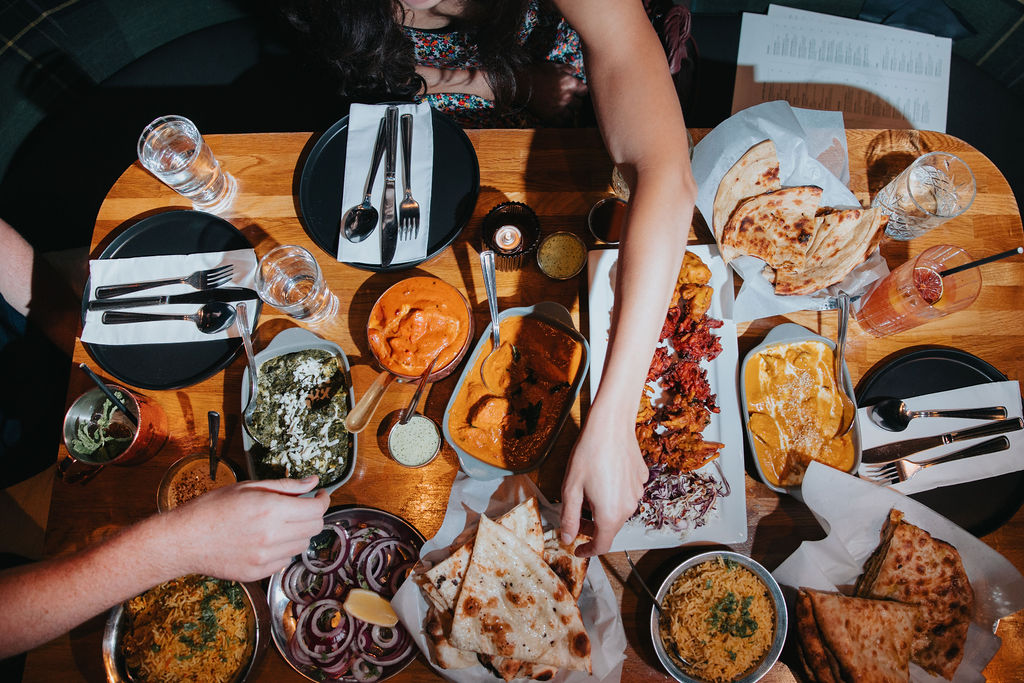
Order a genuine spread rather than one dish per person. Indian food is built around sharing multiple curries with rice and bread, rather than one main course per diner, and a group order that mirrors that - several curries, a couple of rice options, bread, and a shared starter or two - tends to work better and go further than everyone ordering an individual "meal" the way you might at a different kind of restaurant.
Front-load the dishes that travel well, and be selective about anything fried. Given the reheating and texture issues discussed above, a large group order is a good moment to lean toward curries, dal, and biryani, and to order fried starters and naan in reasonable quantities rather than heavily, since they're the items most affected by the trip.
Note any dietary needs clearly in the order, not just verbally to whoever's placing it. If your group includes someone who's vegan, avoiding gluten, or wants a milder or spicier version of a dish, put that directly in the order notes - a kitchen working from a written delivery ticket doesn't have the same opportunity to double-check verbally that a server would at the table.
Time the order around when you actually want to eat, not just when you're hungry now. For pickup, build in the 20-to-25-minute window plus travel time. For delivery, order with some buffer, since a larger group order takes a bit longer to prepare than a single portion, and building that into your timing avoids a hungrier, less patient version of the wait.
Whether you're ordering in or planning to come sit on our patio instead, the current full menu is here, our butter chicken - a genuinely strong choice for delivery, given how well it holds up on the trip - gets its own detailed page here, and you can reach us directly with any questions through our contact page.
Does Karma Indian Bistro deliver?
Yes - across Kitsilano and Vancouver's West Side through Door Dash, with pickup available directly. Pickup orders are usually ready in 20 to 25 minutes.
Which Indian dishes travel best for delivery?
Curries, biryani and dal travel well and often taste better after resting. Tandoori breads, anything fried and anything crisp are best eaten in the restaurant.