2741 W 4th Ave, Vancouver, BC V6K 1P9
+1 604-559-1666
info@karmaindianbistro.ca
Open daily from 12:00 PM
Here's the real answer: what paneer actually is, what separates palak from saag, and why a menu using the two names loosely isn't necessarily making a mistake.
You order for a table, not for a plate. That one shift explains most of the menu.
For two people: one shared starter, two curries, one rice, one bread. Pick curries that are different from each other rather than two creamy ones. Order at medium unless you know you want more. That is about $30 to $35 each, and it is a complete meal - you do not need a dish per person, and ordering that way is the commonest first-timer mistake.
Palak paneer and saag paneer show up on nearly every Indian menu, usually right next to each other, and most diners have never been given a clear reason to pick one over the other. Part of the confusion is that both names are often correct for the same bowl of food - and part of it is that most explanations online get the actual linguistic distinction slightly wrong. Here's the real answer: what paneer actually is, what separates palak from saag, and why a menu using the two names loosely isn't necessarily making a mistake.
Paneer is a fresh, unaged cheese made by curdling hot milk with an acid - typically lemon juice, vinegar, or citric acid - then straining and pressing the resulting curds until they form a firm, sliceable block. Unlike most Western cheeses, paneer isn't aged, cultured with bacteria, or set with rennet, which is why it has a mild, milky flavour and doesn't melt the way an aged cheese would when heated. Instead, cubes of paneer hold their shape in a hot curry, softening slightly but staying structurally intact rather than dissolving into the sauce.
That firm, non-melting quality is exactly why paneer works so well as a centrepiece for a curry rather than just a garnish - it can be pan-seared for a bit of colour and texture before going into the sauce, sit in a simmering gravy for an extended time without breaking down, and hold up to reheating far better than a soft, aged cheese would. It's also entirely vegetarian, made without rennet (which is sometimes derived from animal sources in other cheeses), which is a large part of why it's such a central protein across Indian vegetarian cooking specifically.
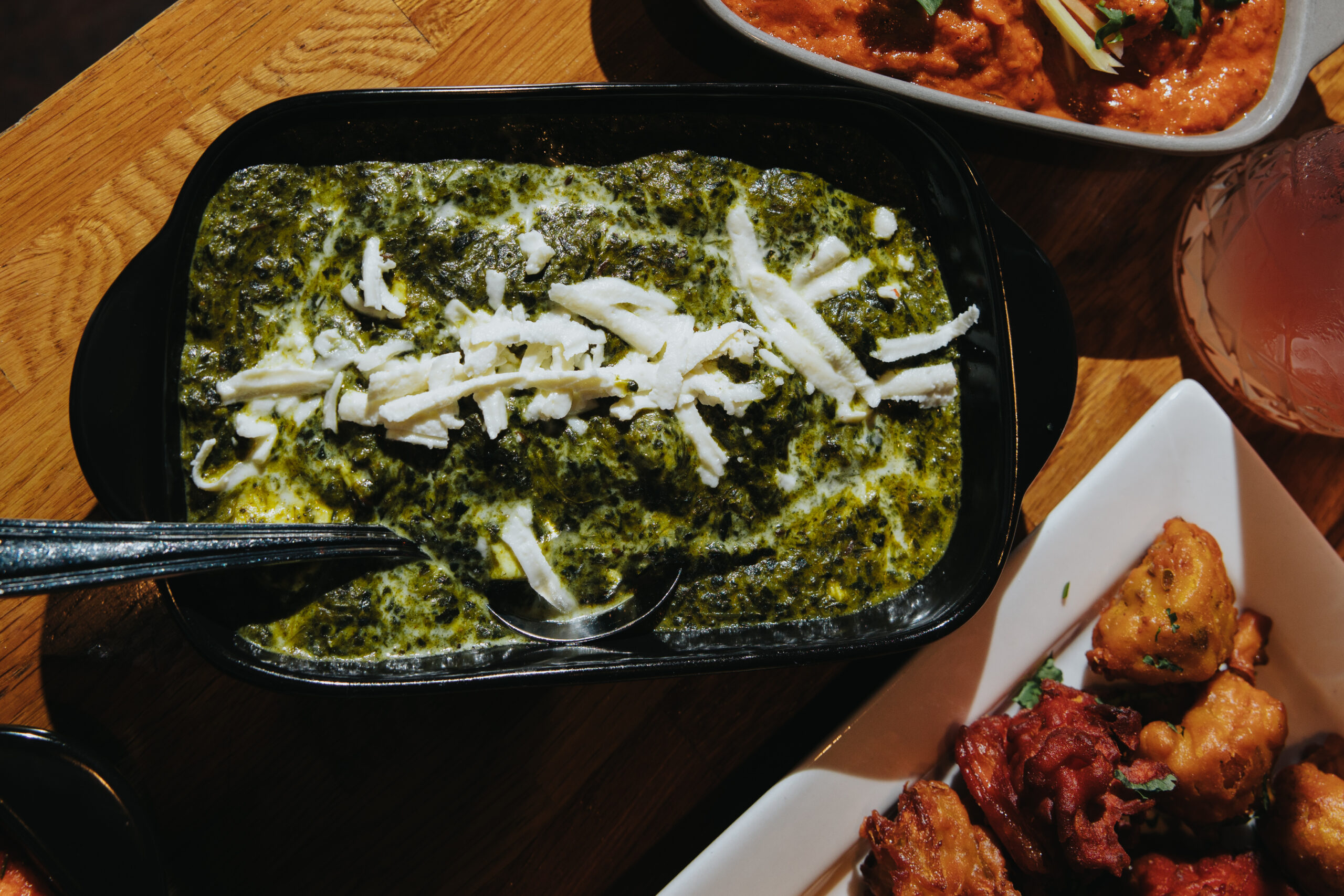
"Palak" is the specific Hindi word for spinach, and nothing else. A dish labelled palak paneer, when the name is being used precisely, is made specifically with spinach as its base - blanched, pureed, and cooked down into a smooth, vivid green sauce, usually finished with cream, garlic, ginger, and a moderate spice blend that's built to let the spinach's flavour come through rather than overwhelm it.
Because it's built from a single, consistent green, a properly made palak paneer tends to have a smoother, more uniform sauce and a cleaner, slightly earthy spinach flavour that's fairly consistent from kitchen to kitchen - there's less regional or seasonal variation in what "palak" means than there is in "saag," precisely because the word itself refers to one specific vegetable rather than a cateory.
"Saag" is a broader term - it refers to leafy greens generally, not to one specific vegetable, and traditionally covers a mixture that can include mustard greens (sarson), spinach, fenugreek leaves (methi), and other seasonal greens depending on the region and what's actually available at the time. This is where the real distinction from palak lies: saag is a category, palak is a specific member of that category.
In North Indian home cooking, particularly in Punjab, saag traditionally leans heavily on mustard greens, giving it a more pronounced, slightly bitter, earthier flavour than a pure spinach preparation - sarson da saag, made specifically from mustard greens and traditionally paired with makki di roti (cornbread), is one of the most iconic dishes in this category, though it's usually served on its own rather than with paneer. When paneer is added to a saag-style dish, the result is generally more complex and varied in flavour than palak paneer, since it's drawing on a mix of greens rather than one consistent ingredient, and the exact blend can genuinely vary by season and by kitchen.
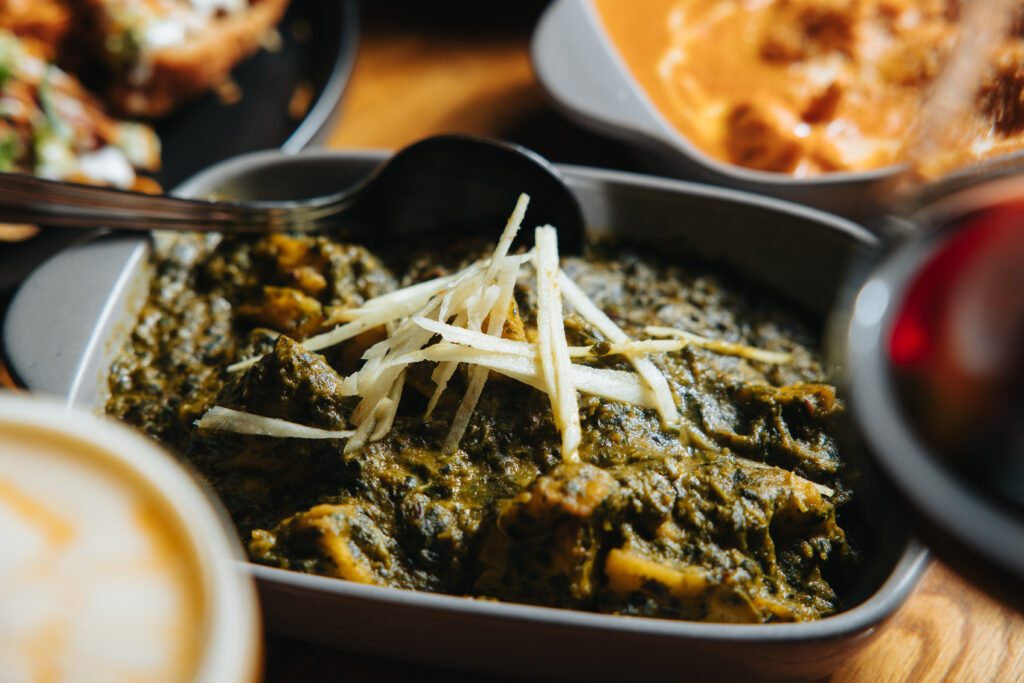
Given that palak is technically one specific green and saag is a broader category that can include spinach among other things, it's entirely linguistically correct for a dish made purely from spinach to be called either palak paneer or saag paneer - spinach is a valid saag ingredient, so "saag" isn't wrong when applied to a spinach-only dish, even though "palak" would be the more precise term in that specific case.
This is why so many restaurant menus use the two names interchangeably, and why that practice isn't really an error so much as a matter of precision. A kitchen serving a pure spinach preparation could reasonably call it either name. A kitchen serving a genuine mixed-greens preparation with mustard greens and fenugreek in the mix should, strictly speaking, call it saag rather than palak - but in practice, plenty of menus use "saag paneer" as the default name regardless of exactly which greens are in the pot, simply because it's the more commonly recognised term internationally. If the specific greens matter to you - if you're hoping for the more assertive, mustard-forward flavour of a true mixed saag rather than a smoother spinach dish - it's worth asking the kitchen directly what's actually in that day's preparation, since the name alone won't always tell you.
Paneer is vegetarian, not vegan - it's a dairy cheese, made from milk, and no amount of skilled cooking changes that basic fact. This trips up plenty of diners who see "vegetable" or "green" in the dish name and assume it's automatically plant-based, when the paneer itself is the part that rules it out.
Tofu is not a traditional substitute for paneer in Indian cooking, and most Indian kitchens, including ours, don't keep it as a swap-in replacement the way some other cuisines might - the texture and flavour profile are different enough that simply substituting tofu into a palak or saag recipe doesn't reproduce what the dish is actually built around. A vegan diner looking for something in the same general territory as a paneer curry is usually much better served by a chickpea-based curry (chana masala), a lentil-based dal, or a vegetable curry built specifically around vegetables and legumes rather than a dairy-cheese swap - these are dishes designed from the ground up to be vegan, rather than a vegetarian dish with one ingredient pulled out. Our full vegan and vegetarian menu breaks down exactly which dishes fall into each category, so there's no guesswork required at the table.
If gluten is also a concern alongside eating vegan, most of these plant-based curries are naturally gluten-free as well, for the same reason most Indian curries generally are - more detail on that is in our gluten-free Indian food guide. And whichever version of paneer or its alternatives you're after, the current lineup is always on our food menu.
What is the difference between palak paneer and saag paneer?
Palak specifically means spinach. Saag is a broader word for leafy greens and often includes mustard greens, fenugreek or a mixture. In practice many menus use the two names for the same dish.
Is paneer vegan?
No. Paneer is a fresh cheese made from milk, so it is vegetarian but not vegan. Tofu is not a traditional substitute in Indian cooking; a vegan diner is usually better served by a chickpea, lentil or vegetable curry.