2741 W 4th Ave, Vancouver, BC V6K 1P9
+1 604-559-1666
info@karmaindianbistro.ca
Open daily from 12:00 PM
Chaat is one of the most beloved categories of Indian food and one of the least understood outside India, partly because it doesn't map neatly onto "starter," "snack," or "meal" the way most menu categories do.
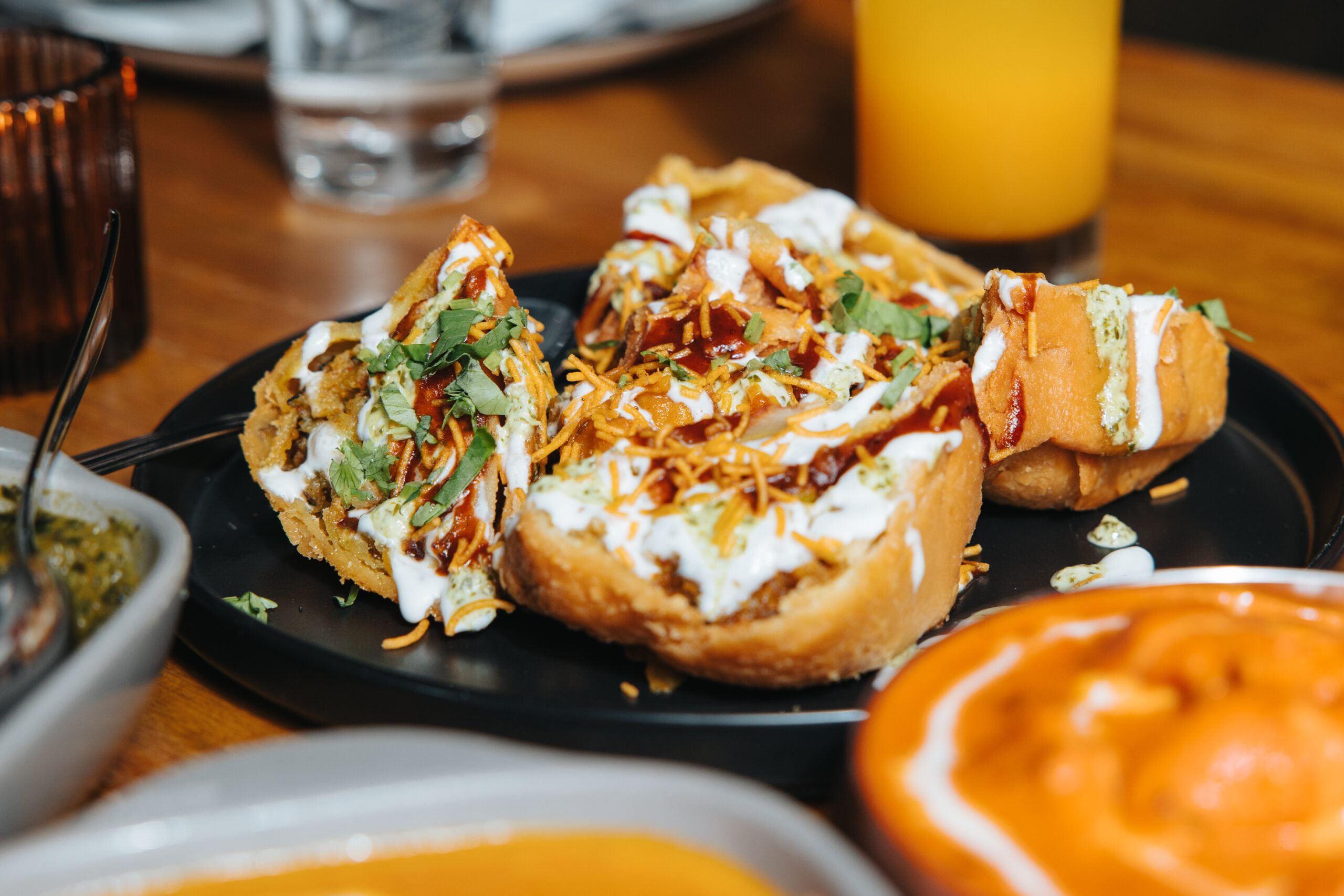
You order for a table, not for a plate. That one shift explains most of the menu.
For two people: one shared starter, two curries, one rice, one bread. Pick curries that are different from each other rather than two creamy ones. Order at medium unless you know you want more. That is about $30 to $35 each, and it is a complete meal - you do not need a dish per person, and ordering that way is the commonest first-timer mistake.
Chaat is one of the most beloved categories of Indian food and one of the least understood outside India, partly because it doesn't map neatly onto "starter," "snack," or "meal" the way most menu categories do. It's a genre of its own — built for fast eating, big flavour contrast in a small bite, and a specific kind of textural chaos that's the whole point rather than an accident. Here's what it actually is, and the varieties worth knowing.
Chaat originated as street food, sold from carts and stalls across Indian cities, meant to be eaten standing up, quickly, often as a between-meal snack rather than a full sit-down course. That origin shapes everything about how chaat is built: it's designed to deliver maximum flavour and textural contrast in a small, fast bite, rather than the slower, more composed eating experience of a plated curry meal.
The name itself comes from a Hindi word meaning "to lick" or "to taste," pointing to that same idea — chaat is built to be immediately, intensely flavourful, hitting sweet, sour, salty, spicy, and crunchy often within the same single bite, rather than developing flavour slowly over a longer dish. This is a genuinely different eating experience from the shared-curry-table format most of this site's other guides describe, and it's worth approaching chaat with that different expectation.
Pani puri (also called golgappa or puchka depending on the region) is probably the single most recognisable chaat item, and it's built around a small, hollow, crisp fried shell (the puri) filled with a mixture of spiced potato, chickpeas, and tamarind chutney, then dunked or filled with a chilled, tangy, spiced water (the pani, flavoured with mint, tamarind, and spices) right before eating.
The defining feature of pani puri is speed and immediacy: the puri is fragile and meant to be eaten in a single bite, the moment it's filled, before the crisp shell has a chance to soften from the liquid inside. This is part of why pani puri is almost always served and eaten one piece at a time rather than plated as a full portion to eat slowly — the format itself demands quick, sequential eating, one intensely flavoured bite at a time.
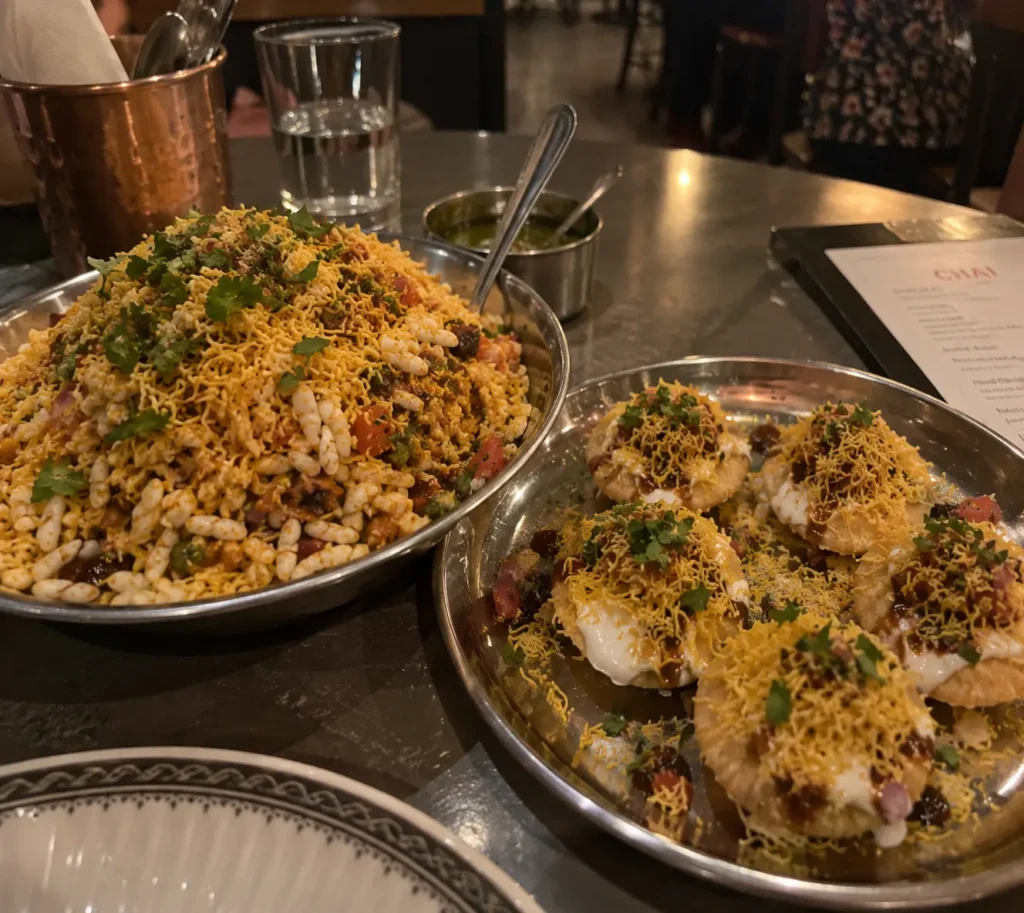
Bhel puri is a mixture of puffed rice, sev (thin, crunchy chickpea flour noodles), chopped vegetables (onion, tomato, and sometimes potato), and a combination of tamarind and mint chutney, all tossed together just before serving. It's assembled rather than cooked — the puffed rice and sev provide crunch, the vegetables add freshness, and the chutneys tie it all together with the same sweet-sour-spicy balance that defines chaat generally.
Sev puri follows similar logic on a different base: small, flat, crisp puris (distinct from pani puri's hollow, round version) topped with chopped potato and onion, a drizzle of both chutneys, and a generous scattering of sev on top, eaten in one or two bites per piece rather than assembled into a single mixed bowl the way bhel puri is.
Both dishes share the core chaat principle — crunchy base, fresh vegetables, and a mix of both chutneys — but bhel puri is a tossed, mixed dish eaten with a spoon, while sev puri is individual, bite-sized pieces, closer in format to pani puri.
Chaat genuinely doesn't work without chutney — it's not a garnish or an optional addition the way it can be with other dishes, but a structural component that provides most of the dish's actual flavour. As covered in our guide to Indian chutneys, tamarind chutney's sweet-sour depth and mint chutney's sharp, cooling brightness are both doing essential work in nearly every chaat dish, and the contrast between the two chutneys — sweet against sharp — is a large part of what makes chaat taste the way it does.
This is worth understanding because it explains why chaat can taste so different from dish to dish even when the base ingredients (puffed rice, sev, fried puris) are broadly similar — the specific balance and quality of the chutneys used is doing an enormous amount of the actual flavour work.
Chaat and the fried starters covered in our guide to Indian starters — samosa, pakora, bhaji — share some overlap (both are often eaten as a snack or a starter, both involve fried elements), but they come from genuinely different traditions and serve different roles. A samosa or pakora is a single, self-contained item, usually served hot straight from the fryer. Chaat is typically assembled at the point of serving from multiple components — a base, a filling or topping, and chutney — and is often served at room temperature or even chilled (as with pani puri's water), rather than piping hot.
Chaat also leans more heavily into raw, fresh elements — chopped onion, tomato, fresh herbs — layered against the fried and crunchy components, giving it a lighter, fresher character overall compared to the more straightforwardly fried, hot nature of a typical starter.
Chaat sits somewhat apart from the shared-curry-table structure most of this site describes, since it's built around individual, fast bites rather than a dish meant to be portioned out and eaten alongside rice or bread. If chaat is what you're after specifically, it's worth asking directly what's currently available, since it's a distinct category from the rest of the starters and mains on our food menu and worth treating as its own thing rather than assuming it follows the same ordering logic as the rest of the table.
What is chaat?
Chaat is a category of Indian street food built for fast, intensely flavourful bites — combining crunchy elements like puffed rice or fried puris with fresh vegetables and both tamarind and mint chutney, hitting sweet, sour, salty, and spicy notes together.
What is the difference between bhel puri and sev puri?
Bhel puri is a mixed, tossed dish of puffed rice, sev, vegetables, and chutney, eaten with a spoon. Sev puri is individual, bite-sized crisp puris topped with potato, onion, chutney, and sev, eaten piece by piece.