2741 W 4th Ave, Vancouver, BC V6K 1P9
+1 604-559-1666
info@karmaindianbistro.ca
Open daily from 12:00 PM
A thin layer of the fermented batter is spread across a large, flat, very hot griddle (called a tawa) in a circular, spreading motion, then cooked with a small amount of oil or ghee until the underside turns golden and develops a light crispness.
You order for a table, not for a plate. That one shift explains most of the menu.
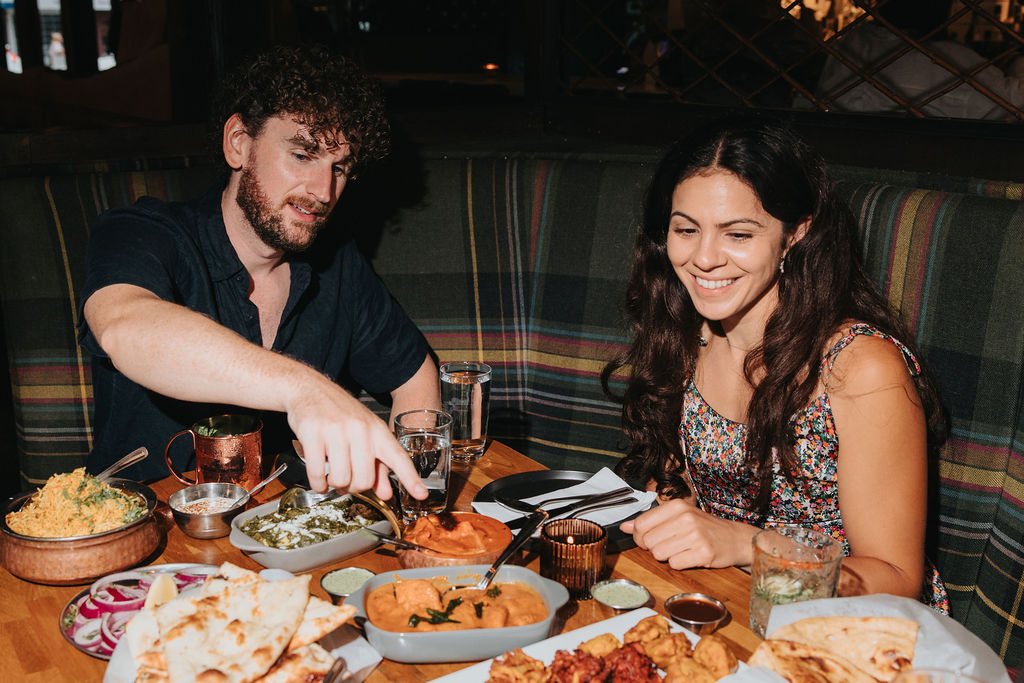
For two people: one shared starter, two curries, one rice, one bread. Pick curries that are different from each other rather than two creamy ones. Order at medium unless you know you want more. That is about $30 to $35 each, and it is a complete meal - you do not need a dish per person, and ordering that way is the commonest first-timer mistake.
Dosa gets described to newcomers as "an Indian crepe" often enough that the comparison has basically stuck, and it's not wrong exactly — both are thin, cooked flat on a hot surface, and can be filled or folded. But the similarity mostly ends at the shape. Dosa comes from a completely different batter, a different fermentation process, and a different culinary tradition than a French crepe, and understanding that difference is really what explains why dosa tastes and behaves the way it does.
Dosa batter is made from a mixture of rice and a specific type of lentil (usually urad dal), soaked separately, ground into a smooth batter, and then left to ferment for several hours, typically overnight. That fermentation step is the real defining feature of dosa batter, and it's what separates it entirely from a crepe batter, which is unfermented and relies on eggs and gluten for structure instead.
Fermentation does two things to the batter: it develops a distinct, faintly tangy flavour that's genuinely part of what makes a good dosa taste like a good dosa, and it produces gas bubbles within the batter that help create the thin, slightly crisp, slightly porous texture once it's cooked. This is a live, active process rather than a static mixture — the batter changes overnight, and a dosa made from properly fermented batter is a noticeably different thing from one made with a shortcut, unfermented version.
A thin layer of the fermented batter is spread across a large, flat, very hot griddle (called a tawa) in a circular, spreading motion, then cooked with a small amount of oil or ghee until the underside turns golden and develops a light crispness. Unlike a crepe, which is typically flipped to cook both sides, a dosa is usually cooked and served with the crisp side facing out, then folded or rolled around a filling (or served plain) without ever fully flipping the whole thing over the way a Western crepe would be.The combination of a thin batter spread across a very hot surface, plus the structure fermentation already gave the batter, is what produces dosa's characteristic thin, lacy, crisp edges — a texture that's genuinely difficult to achieve with an unfermented batter, no matter how thin it's spread.
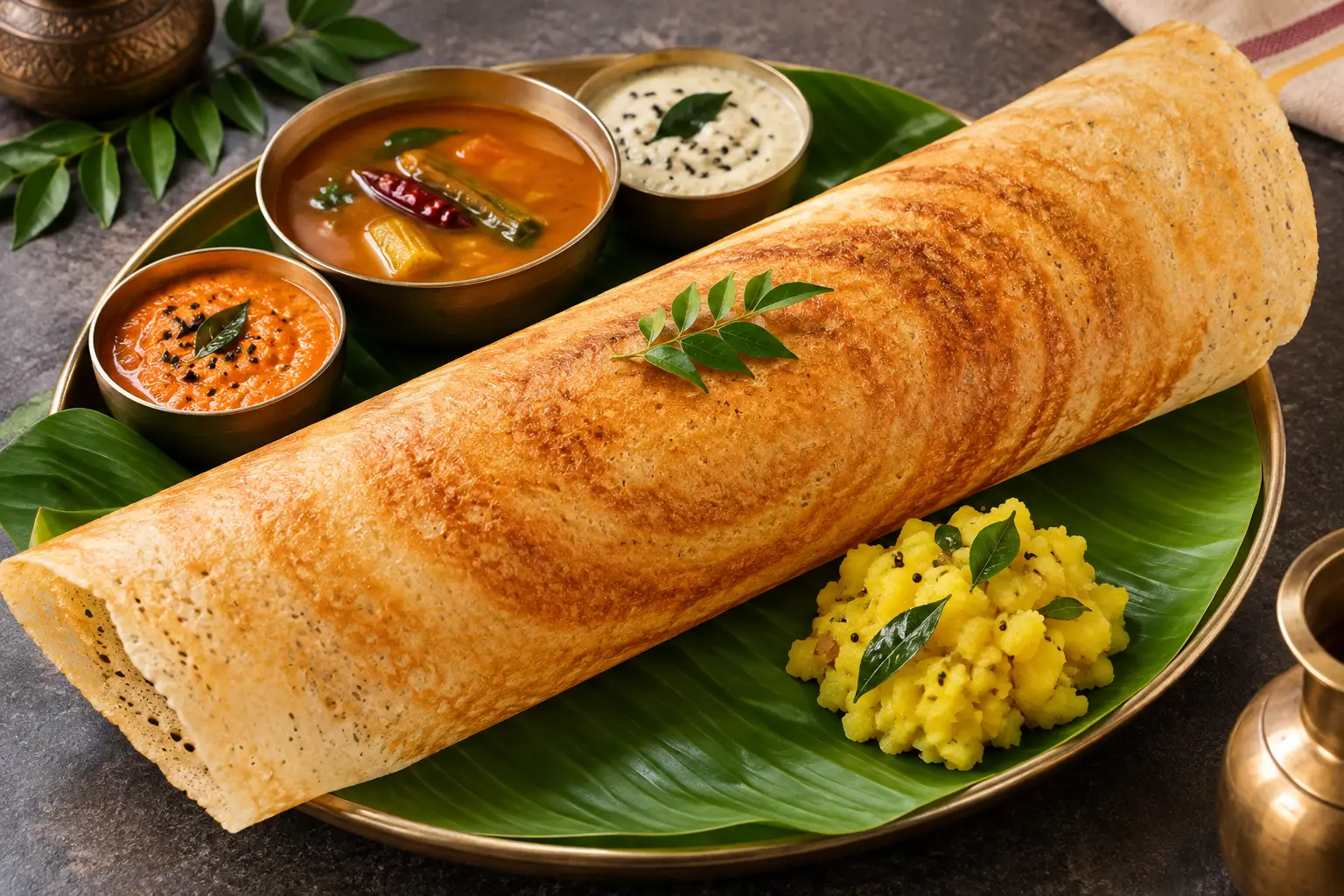
Masala dosa is the most internationally recognised version, filled with a spiced potato mixture (usually potato cooked with onion, mustard seed, turmeric, and curry leaves) before being folded closed. It's substantial enough to function as a full meal on its own, and it's the version most people picture when they hear "dosa" without further specification.
Beyond masala dosa, several other variations show up regularly. Plain dosa (sada dosa) comes with no filling at all, served simply with the standard accompaniments described below, letting the fermented batter's own flavour stand on its own. Rava dosa uses a different, unfermented batter based on semolina (rava) rather than the traditional rice-and-lentil ferment, producing a thinner, lacier, crispier result with a noticeably different flavour, since it skips the fermentation step entirely. Paper dosa refers to an especially large, thin, extra-crisp version, often served rolled into a cone shape rather than folded flat.
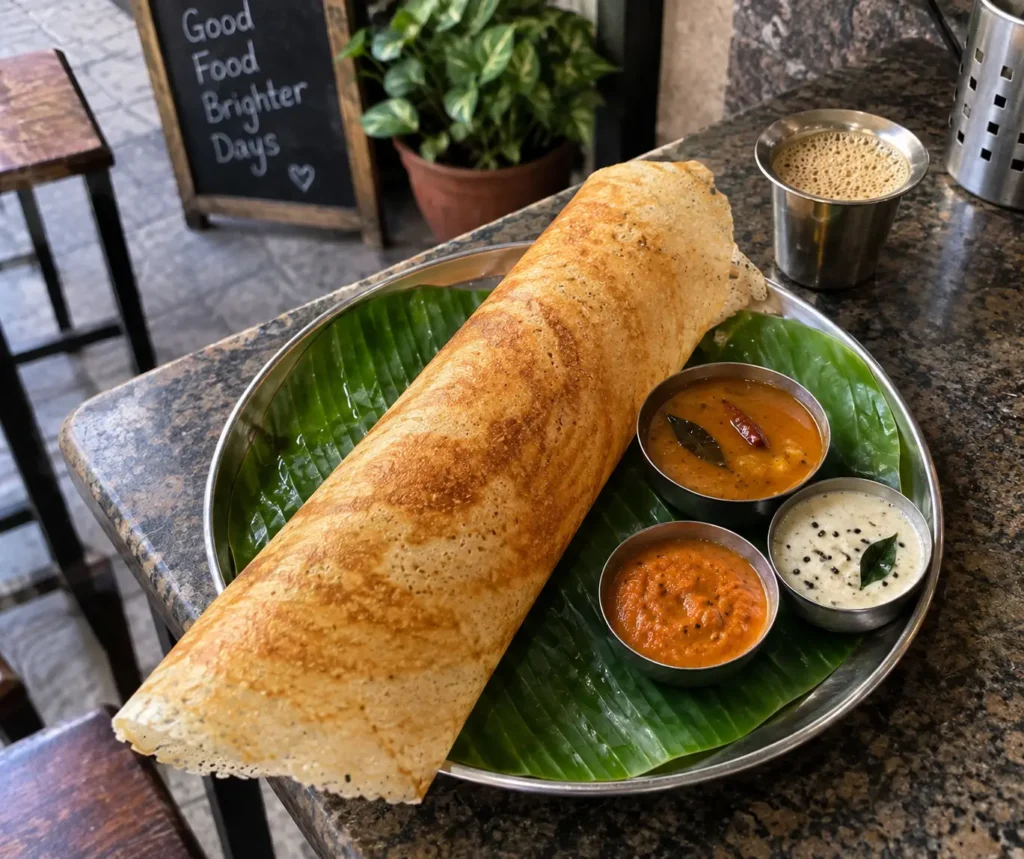
Dosa is almost never served entirely on its own — sambar, a tangy, tamarind-based lentil and vegetable stew, and one or more chutneys (coconut chutney is the classic pairing, alongside the mint or tamarind chutneys covered elsewhere on this site) are the standard accompaniments, meant to be dipped into or spooned over the dosa as you eat rather than treated as separate side dishes.Coconut chutney specifically — made from fresh grated coconut, green chilli, and often a touch of ginger, tempered with mustard seed and curry leaves — is worth calling out as a dosa-specific pairing, since it's less commonly served alongside anything else on a typical Indian menu and is built specifically to complement dosa's texture and mild tang.
Traditional dosa batter, made purely from rice and lentils with no wheat flour involved, is naturally gluten-free, which makes plain dosa and masala dosa genuinely solid options for a gluten-free diner, in the same spirit as the swaps covered in our guide to gluten-free Indian food. The caveat worth knowing: some kitchens add a small amount of wheat flour to the batter for texture or ease of handling, so it's still worth confirming with the specific kitchen rather than assuming every dosa is automatically safe, the same caution that applies across the rest of the menu.
Rava dosa is the exception to keep in mind specifically — since it's based on semolina rather than the traditional rice-and-lentil batter, it's not gluten-free, even though it's still called dosa.
We make our dosa batter with the traditional rice-and-lentil ferment rather than a shortcut version, which is what gives ours the characteristic tang and crisp, lacy texture described above. Masala dosa is our most requested version, served with sambar and coconut chutney, though plain dosa is available for anyone who wants the batter's flavour on its own. As a reminder of how dosa fits into the broader picture of Indian regional cooking, our guide to North vs South Indian food covers where dosa sits within that wider tradition. The current menu is here.
What is dosa made of?
Dosa batter is made from rice and lentils (usually urad dal), soaked, ground, and fermented overnight before being spread thin on a hot griddle and cooked. The fermentation gives it a distinct tang and its characteristic crisp texture.
Is dosa gluten-free?
Traditional dosa, made from rice and lentils, is naturally gluten-free. Some kitchens add a small amount of wheat flour to the batter, so it's worth confirming. Rava dosa specifically is not gluten-free, since it's made from semolina rather than the traditional rice-and-lentil batter.