2741 W 4th Ave, Vancouver, BC V6K 1P9
+1 604-559-1666
info@karmaindianbistro.ca
Open daily from 12:00 PM
Paneer turns up on Indian menus in a dozen places — in a spinach curry, charred on a skewer, cubed through a tomato sauce — and most people order it without ever being told what it is.It's cheese. Fresh cheese, made from milk, and the way it's made explains everything else about it.
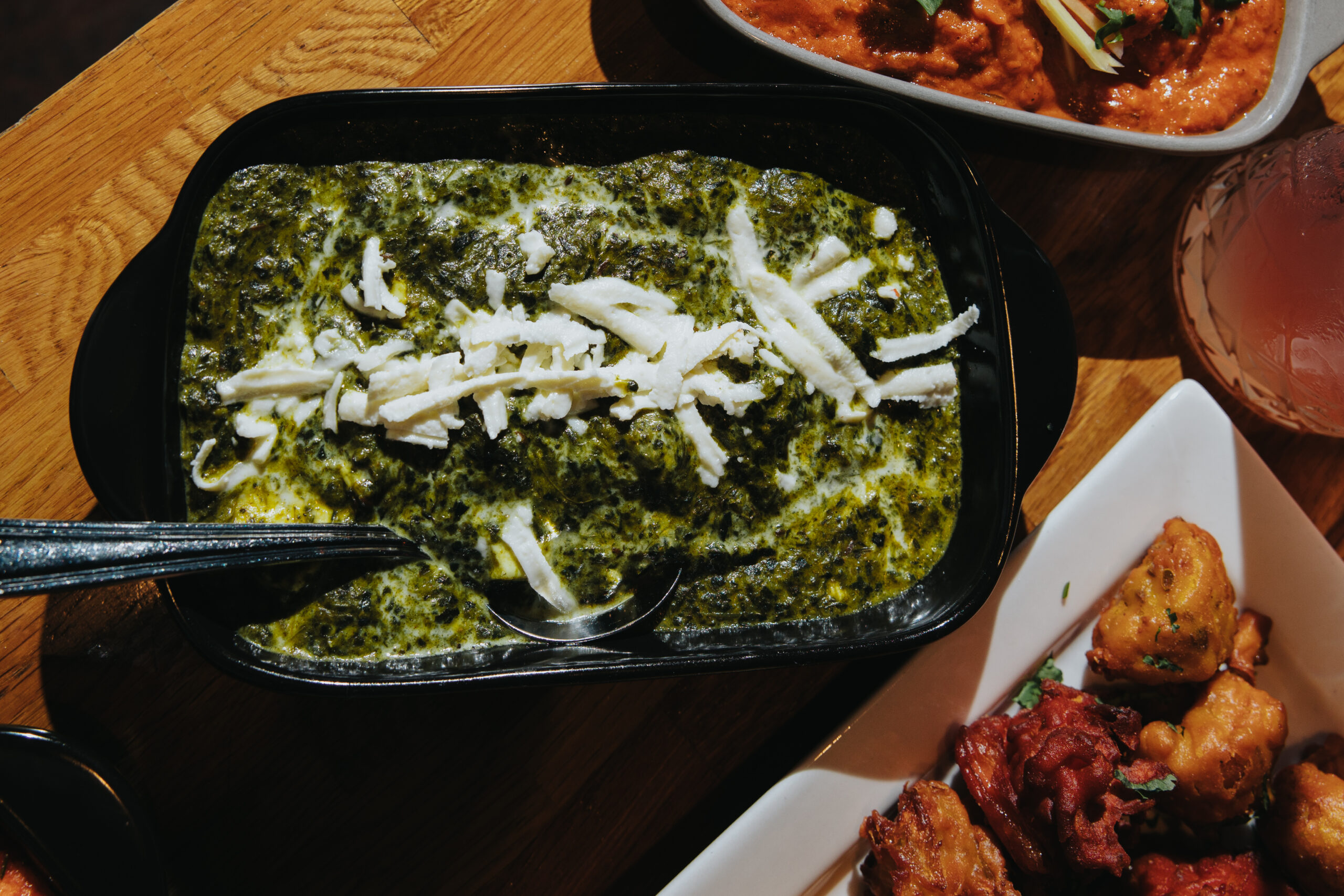
Paneer isn't there to taste of itself. It's there to carry whatever it's cooked in.
Milk is heated, then something acidic goes in — lemon juice, vinegar, or whey from a previous batch. The acid separates the milk into curds and whey. The curds are strained through cloth, pressed under a weight until the moisture is gone, and left to firm up into a block.
That's the whole process. An hour, start to finish, with two ingredients.
What it doesn't involve is rennet, and it doesn't involve ageing. Most cheeses you know are set with rennet and then left for weeks, months or years, which is where their flavour comes from. Paneer skips both steps, which is why it tastes mild — milky, slightly sweet, not much else.
That mildness is the point. Paneer isn't there to taste of itself. It's there to carry whatever it's cooked in.
This is the useful part. Because paneer is acid-set rather than rennet-set, its protein structure holds together under heat instead of flowing. Put it under a grill and it browns and chars at the edges. Drop it into a simmering curry and it stays in neat cubes.
Almost no other cheese does this. It's why paneer can go on a tandoor skewer and come out intact, and why a curry can carry cubes of it through twenty minutes of cooking without turning into a sauce.
The visual resemblance causes a lot of confusion, particularly for anyone ordering vegetarian.
Tofu is made from soya beans and is a plant product. Paneer is made from milk and is a dairy product. They are not substitutes for each other in any meaningful way — tofu absorbs marinade, paneer mostly doesn't; tofu is bland in a different direction; they behave differently under heat.
Tofu is also not a traditional ingredient in Indian cooking. If you're looking for a plant-based option on an Indian menu, the answer isn't tofu — it's one of the chickpea, lentil or vegetable curries, which were never built around dairy in the first place.
Palak paneer — cubes in a spinach base, probably the most ordered paneer dish anywhere.
Paneer tikka — marinated and cooked on a skewer in the tandoor, which is where that char comes from. It's one of the best things the clay oven does.
Kadai paneer — cooked with peppers and onions in a thicker, spicier masala, named after the pan it's made in.
Matar paneer — with peas, in a tomato base. The homely one.
Paneer butter masala — the rich end of the range, and the closest thing to butter chicken without the chicken.
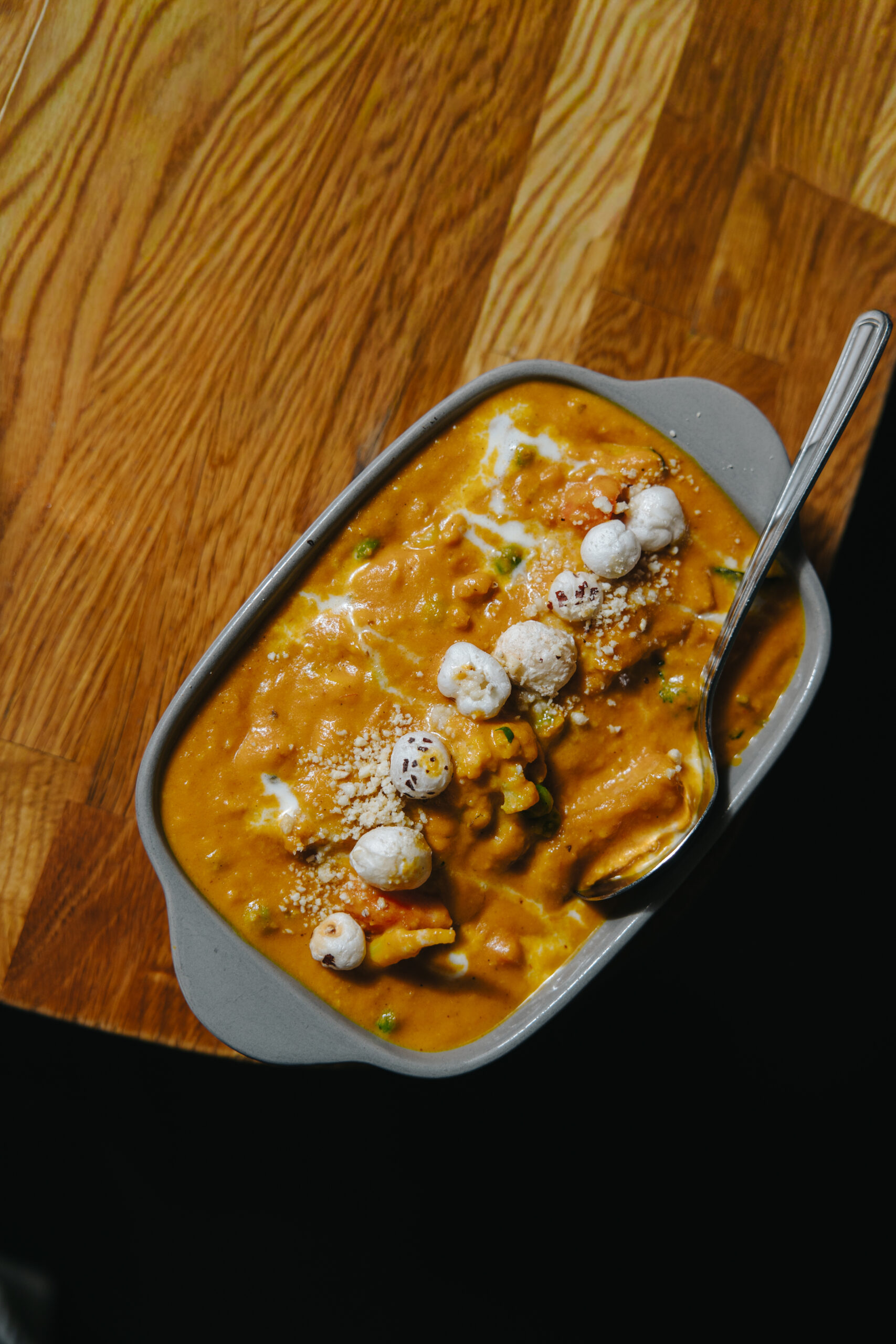
Paneer is vegetarian — no rennet, no animal product beyond the milk itself — which is why it sits at the centre of so much Indian vegetarian cooking. It's also a solid source of protein, which matters in a cuisine where a lot of people don't eat meat.
But it is dairy, and that catches vegan diners out more than anything else on an Indian menu. If you're eating vegan, paneer is the word to watch for, and the chickpea, lentil and coconut-based curries are where to look instead.
What is paneer made from?
Milk and an acid — usually lemon juice or vinegar. The milk is heated, the acid separates it into curds and whey, and the curds are strained and pressed into a block. No rennet, no ageing.
Is paneer vegetarian?
Yes. It's made without rennet, so it's suitable for vegetarians.
Is paneer vegan?
No. Paneer is a dairy product. It's the most common thing vegan diners get wrong on an Indian menu.
Does paneer melt?
No, and that's the point. Because it's acid-set rather than rennet-set, it holds its shape under heat — which is why it can be grilled on a skewer or simmered in a curry and stay in cubes.
Is paneer the same as cottage cheese?
They're related but not the same. Both are fresh, unaged cheeses, but cottage cheese is left loose and wet while paneer is pressed into a firm block you can cut and cook with.
What does paneer taste like?
Mild and milky, slightly sweet, without much flavour of its own. It's designed to carry the spices around it rather than compete with them.
Is paneer gluten-free?
Paneer itself is, being just milk and acid. What it's served with may not be — naan and other wheat breads contain gluten, so order rice alongside if you need to avoid it.