2741 W 4th Ave, Vancouver, BC V6K 1P9
+1 604-559-1666
info@karmaindianbistro.ca
Open daily from 12:00 PM
Raita shows up on the side of an Indian table often enough to be taken for granted, treated as a minor accompaniment rather than something worth ordering with any intention.
You order for a table, not for a plate. That one shift explains most of the menu.
For two people: one shared starter, two curries, one rice, one bread. Pick curries that are different from each other rather than two creamy ones. Order at medium unless you know you want more. That is about $30 to $35 each, and it is a complete meal - you do not need a dish per person, and ordering that way is the commonest first-timer mistake.
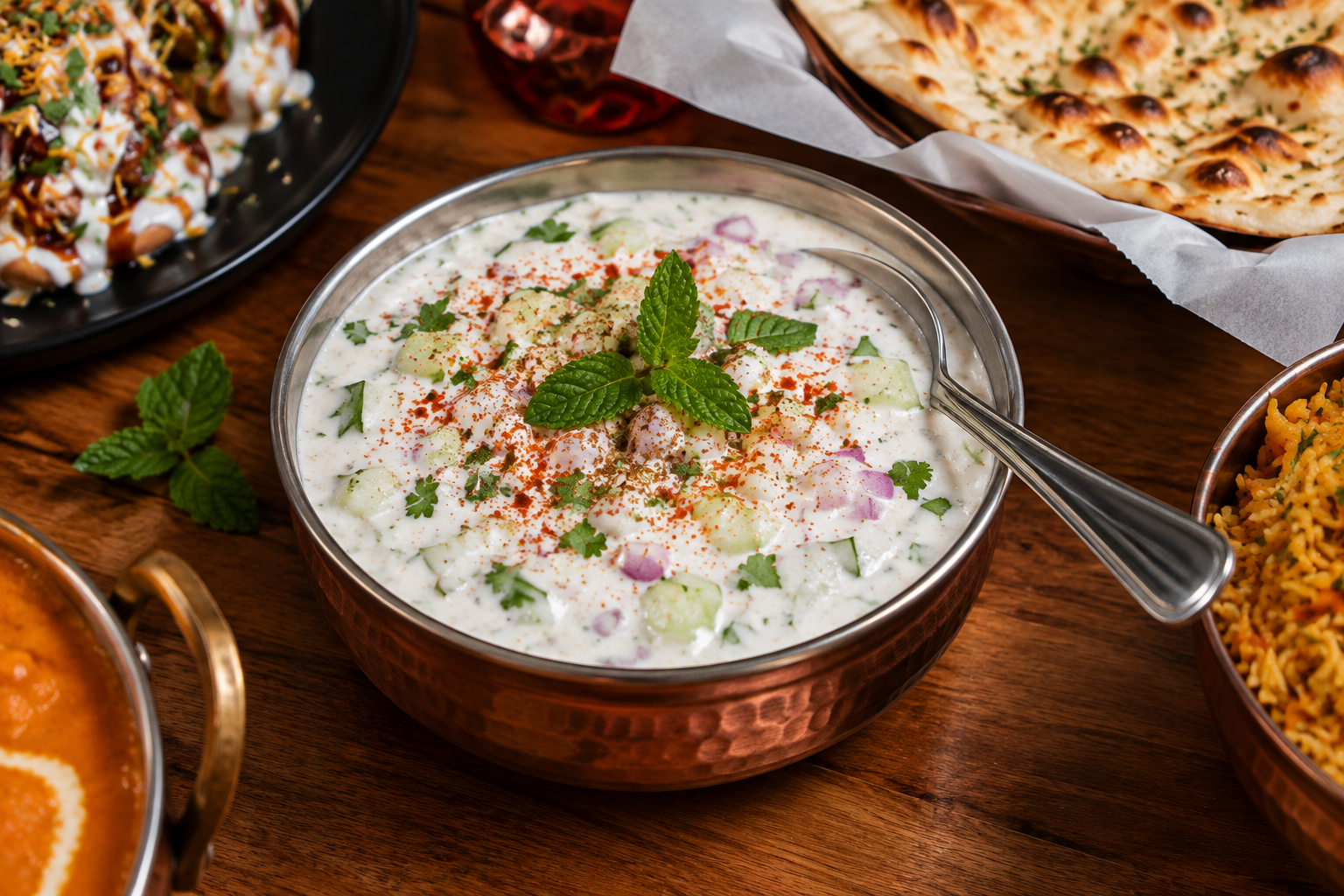
Raita shows up on the side of an Indian table often enough to be taken for granted, treated as a minor accompaniment rather than something worth ordering with any intention. That undersells it. Raita is a specifically seasoned yoghurt preparation, built with a real function on the table, not just a bowl of plain yoghurt that happens to be nearby — and knowing its common varieties changes what you'd actually pair it with.
Raita is yoghurt (typically whisked smooth, sometimes with a little water added to loosen it) combined with vegetables, spices, and sometimes fruit, seasoned to be eaten as a side dish rather than on its own. The base is always yoghurt, but the specific additions — and there's real variety in what goes into a raita — are what actually define which version you're eating and what role it plays alongside the rest of the meal.
A basic seasoning across most versions includes roasted cumin (often ground and toasted separately for a deeper flavour than raw cumin would give), salt, and sometimes a small amount of chilli powder or fresh green chilli for a bit of heat against the yoghurt's coolness. From there, the specific vegetable or fruit mixed in is what distinguishes one raita from another.
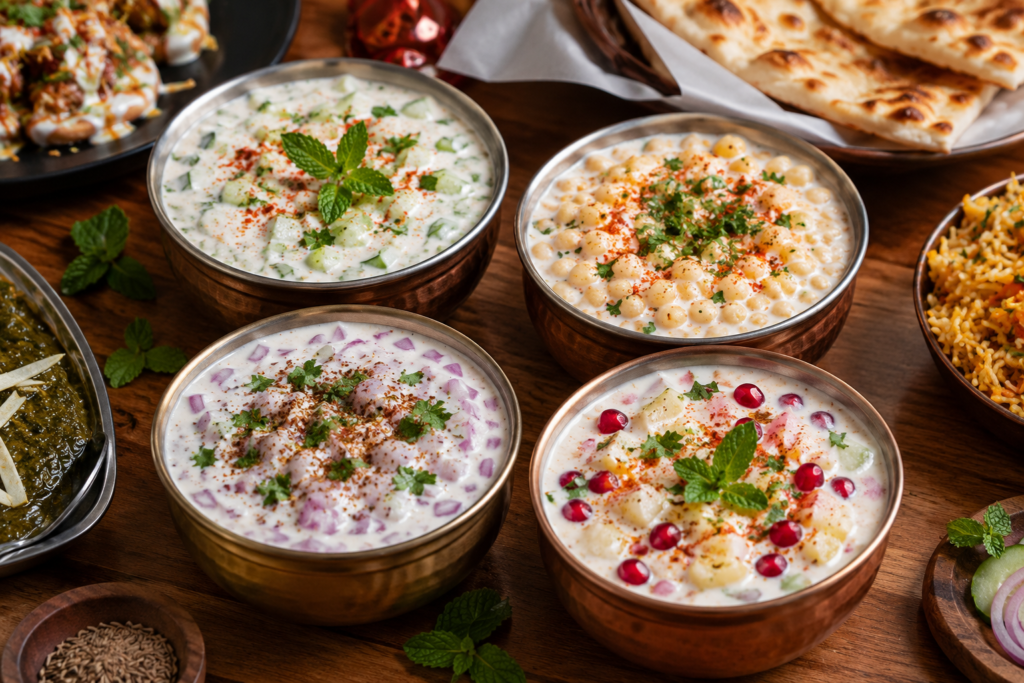
Cucumber raita is the most common version on most menus, built from grated or finely diced cucumber mixed into seasoned yoghurt. The cucumber's own natural water content and mild, fresh flavour make it a genuinely gentle, cooling side — it doesn't compete with a curry's flavour so much as sit quietly alongside it, offering a cool, crisp contrast to a hot dish.
This is the version most people picture when raita comes up without further specification, and it's a reliable, low-risk choice if you're not sure which raita to order or if the specific version isn't stated on the menu.
Boondi raita swaps the freshness of cucumber for texture — boondi are small, deep-fried gram flour balls (the same base flour used in pakora batter) that soften slightly once mixed into yoghurt but retain a distinct bite, giving the raita a genuinely different mouthfeel from the smoother, more uniform texture of a vegetable-based version.
Other common variations include onion and tomato raita (adding a sharper, more savoury edge than cucumber's mild freshness), mixed vegetable raita (a combination of several finely diced vegetables for more complexity), and, less commonly on a restaurant menu but worth knowing, pineapple or other fruit-based raitas, which lean into a sweeter, fresher contrast against a rich or spicy dish.
Raita earns its place most clearly alongside richer or spicier dishes, where its cool, mild character provides genuine contrast rather than simply sitting on the plate unused. As covered in our guide to what to drink with Indian food, dairy fat is genuinely effective against chilli heat for physiological reasons — capsaicin dissolves in fat, not water — and raita works on the same principle as lassi in that respect, just eaten with a spoon rather than drunk.
Alongside a lighter, already-mild dish, raita adds less — it's not doing much work if there's no real heat or richness for it to counterbalance, and in that context it can feel more like a default addition than something actually contributing to the meal. It's most worth ordering deliberately alongside your table's spiciest or richest dish, rather than automatically with every meal regardless of what else is on it.
These three are easy to lump together since they're all yoghurt-based, but they're built for different roles. Plain yoghurt, served unseasoned, is closer to a neutral accompaniment or a base ingredient than a finished dish in its own right. Lassi, as covered in our drinks guide, is a blended, drinkable preparation, thinner than raita and meant to be sipped alongside or after a meal. Raita sits between the two — seasoned and textured like a proper side dish, but eaten with a spoon rather than drunk, and specifically built to complement whatever else is on the table rather than stand alone.
Our raita is made fresh, seasoned with roasted cumin and finished with the vegetable or texture of your choice depending on what's available. It's worth ordering alongside a richer curry or anything with real heat, where its cooling effect actually does something for the meal — as covered in our guide to the thali, raita is one of the standard components of a balanced Indian meal for exactly this reason. The current menu is here.
What is raita made of?
Raita is yoghurt seasoned with roasted cumin and salt, mixed with vegetables (most commonly cucumber), fruit, or textured additions like fried boondi, served as a cooling side dish alongside richer or spicier food.
Is raita the same as yoghurt?
Not quite. Plain yoghurt is unseasoned. Raita is specifically seasoned and mixed with other ingredients, built to function as a proper side dish rather than a neutral accompaniment.