2741 W 4th Ave, Vancouver, BC V6K 1P9
+1 604-559-1666
info@karmaindianbistro.ca
Open daily from 12:00 PM
Ask most people in Canada or the UK what vindaloo is and you'll get a version of the same answer: it's the hot one. The dish you order to prove something, usually after a few pints, usually regretted. That reputation is about fifty years old. The dish is about five hundred, and chilli isn't the part that defines it.
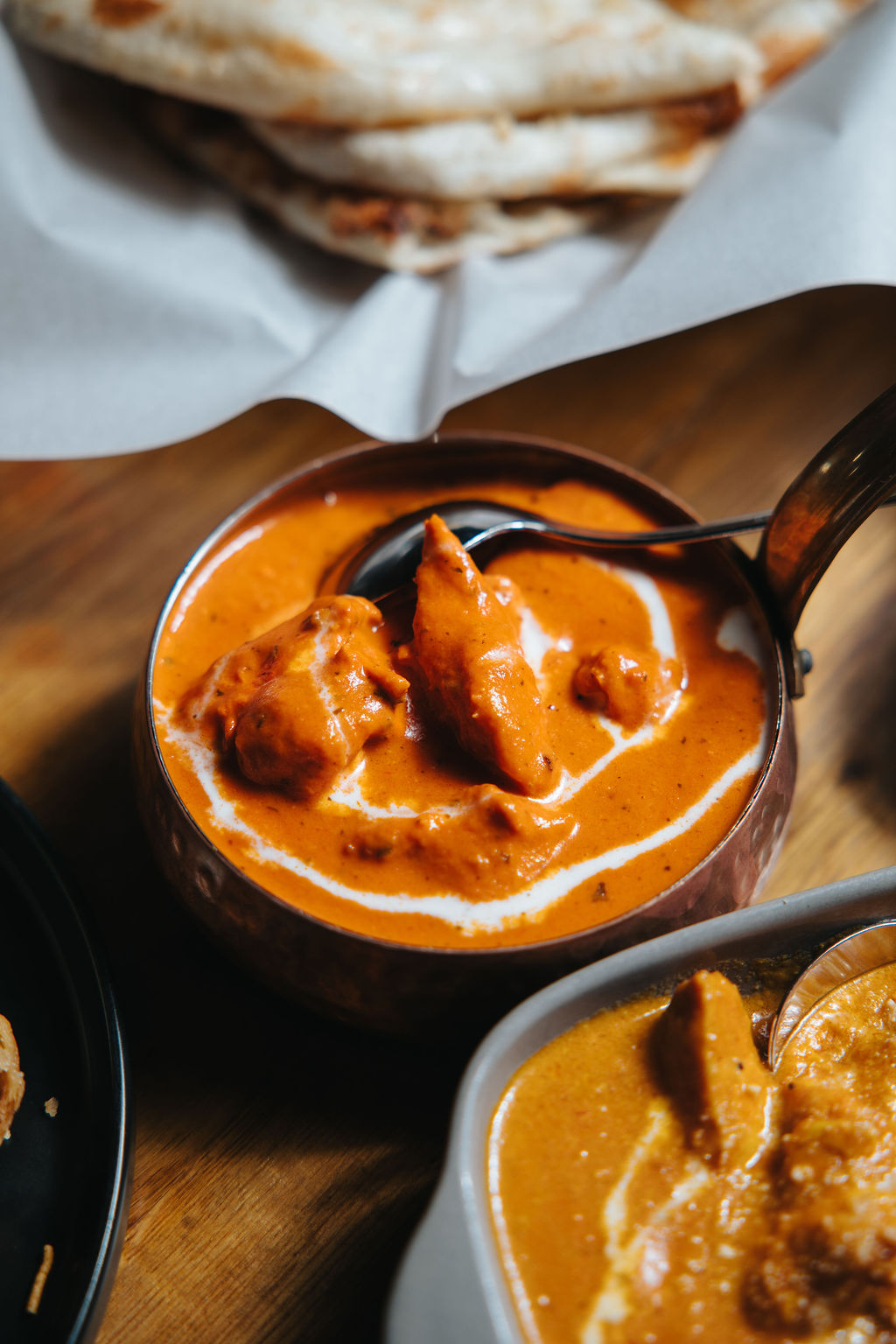
Meat made in wine and garlic. It wasn't a curry.
Portugal held Goa for more than four centuries, and Portuguese sailors brought with them a dish called carne de vinha d'alhos — meat in wine and garlic. It wasn't a curry. It was a way of keeping pork edible on a long sea voyage, by packing it in wine, garlic and spices so the acid did the preserving.
The name is a near-direct corruption of that phrase: vinha d'alhos became vindaloo. Vin for the wine, alho for the garlic. There's no "aloo" in it — despite what the name looks like to anyone who knows that aloo means potato in Hindi. Potatoes turning up in some versions is a later accident of mishearing, not an original ingredient.
Goan cooks took the Portuguese dish and rebuilt it with what they had. Wine became palm vinegar, which is sharper and more aromatic. Garlic stayed, and multiplied. And in went the spices Goa actually cooks with — Kashmiri chillies for colour more than heat, cinnamon, cloves, cumin, black pepper, tamarind.
The result is a dish defined by sourness. A proper vindaloo hits you with vinegar first. The heat is there, but it sits behind the acidity rather than in front of it, and the two together are the point — that sharp, tangy, slightly sweet depth is what the dish is for.
Traditionally it's made with pork, which is unusual on an Indian menu and makes sense once you know the history: Goa's large Catholic population had no religious reason to avoid it.
Because of what happened to it in Britain. When Indian restaurants spread through the UK from the 1960s onwards, menus were often standardised into a heat ladder — korma at the mild end, then madras, then vindaloo, then phaal — with the recipes adjusted to fit the rung rather than the other way round.
Vindaloo landed near the top of that ladder and the vinegar quietly disappeared from a lot of versions. What was left was chilli. Several generations of diners have now met the dish only in that form, which is why "vindaloo" reads as a dare rather than as a place.
Both versions exist on menus today. They aren't the same dish.
They get filed together as "the hot ones", which obscures how different they are.
Madras is South Indian, built on roasted coconut, black mustard seed and tamarind. Its character is aromatic and earthy.
Vindaloo is Goan, built on vinegar and garlic with a Portuguese inheritance. Its character is sour and sharp.
Neither name tells you a heat level — they tell you a place and a method. Any kitchen can cook either one mild or ferocious, and ours cooks everything to order at one of four spice levels.
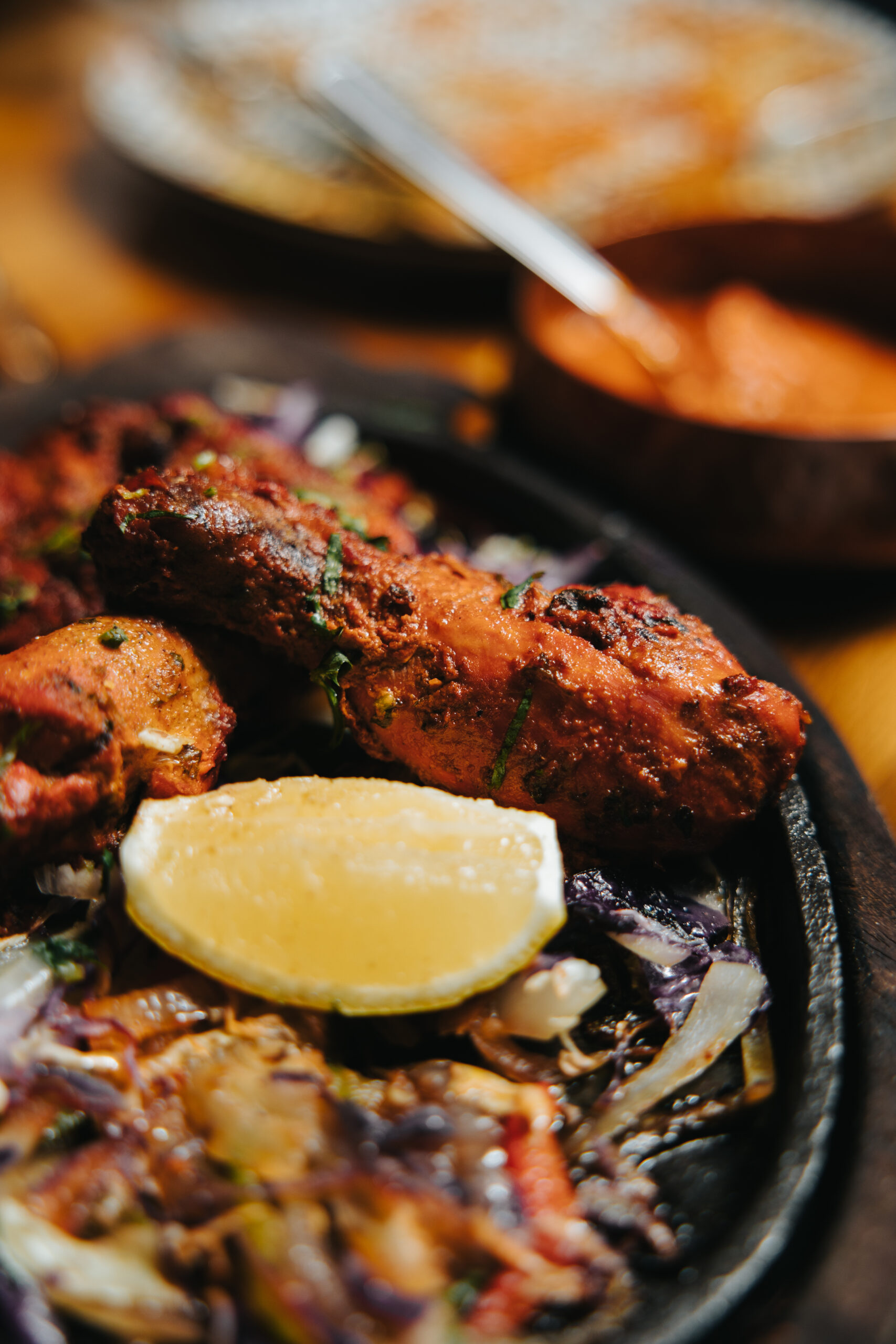
Expect sourness. If what arrives is simply hot and nothing else, you've been served the British ladder version rather than the Goan dish.
It's a good partner for plain rice, which gives the acidity somewhere to land. And it's one of the few Indian dishes where a slightly sweet drink works better than a lager — the vinegar needs something to push against.
What does vindaloo mean?
It comes from the Portuguese vinha d'alhos — wine and garlic. "Vin" for wine, "alho" for garlic. It has nothing to do with aloo, the Hindi word for potato, despite the resemblance.
Is vindaloo Indian or Portuguese?
Both, in sequence. The dish arrived in Goa with Portuguese sailors as a preserved pork dish, and Goan cooks rebuilt it with palm vinegar, local spices and chillies. It's a Goan dish with a Portuguese parent.
Is vindaloo the hottest curry?
Not inherently. It's often the hottest thing on a British-style menu because of how those menus were standardised, but a traditional Goan vindaloo is defined by sourness from vinegar, not by heat.
What's the difference between vindaloo and madras?
Madras is South Indian, built on roasted coconut, mustard seed and tamarind. Vindaloo is Goan, built on vinegar and garlic. The names describe a place and a method, not a heat level.
What meat goes in a traditional vindaloo?
Pork, traditionally — unusual on an Indian menu, and a consequence of Goa's large Catholic population. Chicken and lamb versions are common now.
Is vindaloo always spicy?
No. The chilli level varies enormously between kitchens. Here, every curry is cooked to order at mild, medium, hot or Indian hot, whatever the dish is called.