2741 W 4th Ave, Vancouver, BC V6K 1P9
+1 604-559-1666
info@karmaindianbistro.ca
Open daily from 12:00 PM
Here's the real logic behind pairing drinks with Indian food - what to avoid, what actually works, and why.
You order for a table, not for a plate. That one shift explains most of the menu.
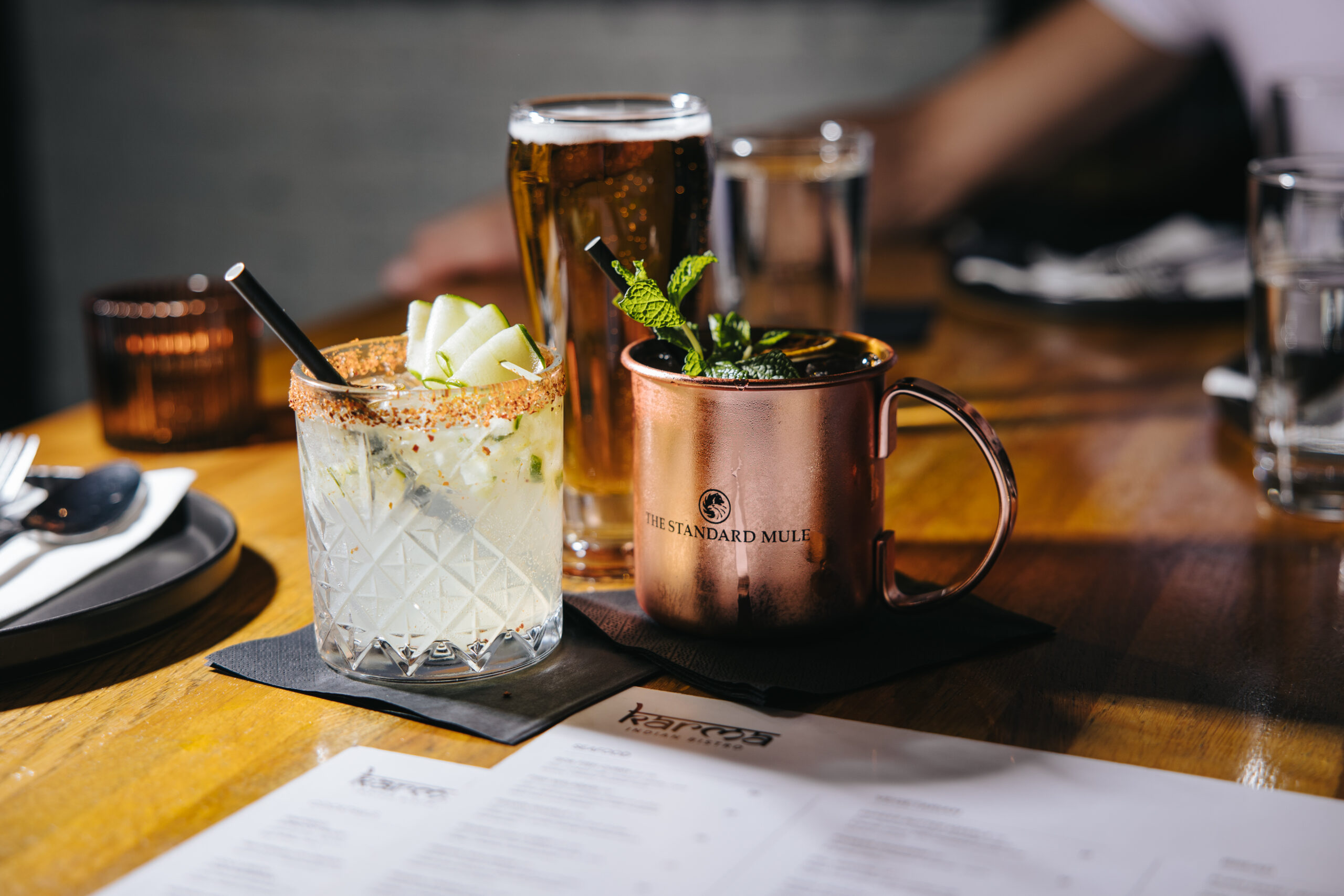
For two people: one shared starter, two curries, one rice, one bread. Pick curries that are different from each other rather than two creamy ones. Order at medium unless you know you want more. That is about $30 to $35 each, and it is a complete meal - you do not need a dish per person, and ordering that way is the commonest first-timer mistake.
Lager became the default pairing with Indian food largely through habit rather than genuine suitability - it's cold, it's neutral, and it's the safe order when nothing else on a wine list looks obviously right. It's not a bad choice. But it's also not the best one, and the actual science of why certain drinks work with spice and others actively fight it is more interesting, and more useful at the table, than "just get a beer."
Here's the real logic behind pairing drinks with Indian food - what to avoid, what actually works, and why.
Chilli heat comes from capsaicin, a compound that triggers the same pain receptors in your mouth that respond to actual physical heat - which is why "spicy" food genuinely feels hot rather than just tasting a certain way. Tannin, the drying, slightly bitter compound found in red wine (and strong black tea), amplifies that same sensation of heat and astringency rather than calming it, which is why a big, tannic red wine next to a spicy curry can make the dish taste hotter and the wine taste harsher than either would on their own. The two compounds are, in a real physiological sense, working against each other rather than complementing each other - which is the single most useful thing to know when picking a drink for Indian food, and explains most of the specific recommendations below.
Given that tannin is the enemy, the wines that actually work with Indian food share a few traits: low tannin, often some residual sweetness, and good acidity to cut through rich, cream- or dairy-based sauces.
Off-dry riesling is close to the ideal pairing for a lot of Indian food - it has enough sweetness to soften chilli heat, sharp acidity to cut through a rich curry sauce, and virtually no tannin to fight with the spice in the first place. It's a genuinely versatile choice across a wide range of dishes, from a creamy korma to a spicier vindaloo.
Pinot gris is a solid, slightly more neutral option if you want something dry rather than off - dry - it still keeps tannin low and has enough body and acidity to stand up to a curry without amplifying the heat.
If red wine is what you actually want, the move is to go low-tannin and serve it slightly cooler than a typical red would be served - a lighter-bodied pinot noir, for instance, fights the food far less than a big cabernet or syrah would, and a bit of a chill on the glass takes some of the residual harshness off further. It's not the ideal category for spicy food generally, but a carefully chosen red is a much better idea than reaching for whatever full-bodied red happens to be the house pour.
Gewürztraminer works on similar logic - it's aromatic, often slightly sweet, and low in tannin, with a floral, lychee-forward character that holds up well against the aromatic spice blends common in North Indian cooking specifically.
Lager's reputation as the Indian food pairing isn't undeserved - it's cold, carbonated, and neutral enough not to actively clash with spice, and the carbonation itself provides a real, if temporary, palate-cleansing effect between bites. That's a genuinely reasonable baseline, which is part of why it became the default in the first place.
But a few beer styles do noticeably better than a standard lager. Wheat beers, with their slightly sweeter, fuller body, offer more to work with alongside a rich curry than a very light lager does. Session IPAs - lighter, lower-alcohol versions of an IPA - can bring a citrusy, slightly bitter character that plays well against fattier, richer dishes like butter chicken, though a full-strength, heavily hopped IPA tends to fight chilli heat in a similar (if less severe) way tannin does. The general rule with beer mirrors wine: lighter body, lower bitterness, and some sweetness or fruit character tend to outperform anything heavy or aggressively bitter.
Lassi - a yoghurt-based drink, blended with water or milk and served either sweet or salted - is the traditional accompaniment to spicy Indian food, and it works for a specific physiological reason rather than just tradition. Capsaicin, the compound responsible for chilli heat, is fat-soluble rather than water-soluble - meaning water does essentially nothing to actually neutralise the burn, it just moves it around your mouth temporarily. Dairy fat, on the other hand, genuinely binds to capsaicin and carries it away, which is why a glass of water after a bite of vindaloo barely helps while a mouthful of lassi provides real, immediate relief.
Sweet lassi, blended with sugar and sometimes fruit like mango, leans into that cooling effect with added sweetness on top. Salted lassi (or chaas, a thinner, more savoury spiced buttermilk drink) skips the sugar in favour of salt and sometimes cumin or mint, offering the same fat-based cooling effect with a more savoury character that some diners prefer alongside a meal rather than as a dessert-adjacent drink. Either version does genuine, physical work against spice in a way that water and, to a lesser extent, beer or wine simply can't match.
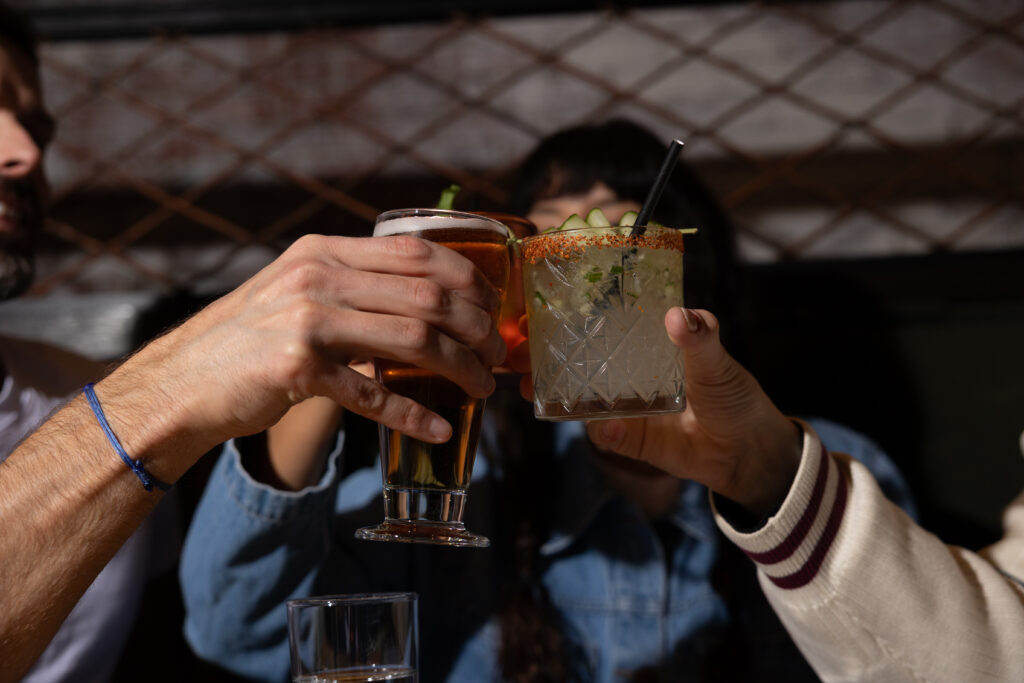
The same principles that govern wine and beer apply to cocktails: look for sweetness, citrus, and enough dilution or carbonation to refresh the palate, and be cautious of anything heavily bitter, tannic, or built around strong, aggressive spirits with no counterbalance.
A well-made gin and tonic, with its bitter quinine tempered by sweetness and lime, works reasonably well against spice, and the carbonation helps in the same way it does with beer. Cocktails built around fresh citrus and a touch of sweetness - a margarita-style drink, or something built on fresh lime and simple syrup - generally hold up better than anything whiskey-forward or built around a strongly bitter amaro, which can clash with chilli heat in much the same way a tannic red does. If a cocktail menu includes something with a mango, tamarind, or cardamom element specifically built to complement Indian spicing, that's usually a strong sign the drink was actually designed with the food in mind rather than just being whatever's popular that season.
For a genuinely effective non-alcoholic pairing, lassi and chaas are the strongest options on the list for the fat-solubility reason explained above, and they work regardless of whether you're avoiding alcohol for the meal or entirely.
Beyond that, a ginger-based soft drink - real ginger beer or a ginger-forward soda, rather than something artificially flavoured - offers a genuine palate reset thanks to ginger's own mild heat and sharpness, which can actually complement rather than fight a spicy dish. Fresh lime soda, common on many Indian menus as a simple sparkling lime drink, works on the same citrus-and-carbonation logic as a gin and tonic, just without the alcohol. And mango-based drinks, whether a simple mango juice or something closer to a mango lassi without the yoghurt, bring sweetness that softens heat in the same general way an off-dry riesling does.
Plain water, meanwhile, genuinely does the least of any option here - it's not doing anything harmful, but it's also not doing the active work that a fat-based, sweet, or carbonated drink is doing against the spice.
If any of this has you wondering exactly how spicy a specific dish actually runs before you pick a drink to go with it, our guide to Indian food heat levels breaks that down properly. The current drinks list - wine, beer, cocktails and the full lassi selection - is available alongside the food on our menu, and you can find us, along with hours and how to book, on our Kitsilano location page.
What wine goes with Indian food?
Off-dry whites with good acidity - riesling, gewurztraminer, pinot gris - handle chilli heat far better than tannic reds, because tannin amplifies the burn. If you want red, choose something low in tannin and served slightly cool.
Does lassi help with spicy food?
Yes. Capsaicin dissolves in fat, not water, so the dairy fat in a lassi carries the heat away in a way that water or beer cannot.