2741 W 4th Ave, Vancouver, BC V6K 1P9
+1 604-559-1666
info@karmaindianbistro.ca
Open daily from 12:00 PM
Here's the practical version: how Indian meals are actually structured, how much to order, how to build a table that shows off the range of a kitchen rather than just picking familiar names, and what to skip your first time.

You order for a table, not for a plate. That one shift explains most of the menu.
For two people: one shared starter, two curries, one rice, one bread. Pick curries that are different from each other rather than two creamy ones. Order at medium unless you know you want more. That is about $30 to $35 each, and it is a complete meal - you do not need a dish per person, and ordering that way is the commonest first-timer mistake.
The hardest part of a first Indian meal usually isn't the food - it's the menu. A long list of unfamiliar names, no clear sense of how much to order, and a nagging worry about accidentally ordering something far too spicy in front of people you're trying not to embarrass yourself in front of. None of that is really about the food being complicated. It's about nobody explaining the two or three things that make the whole menu make sense.
Here's the practical version: how Indian meals are actually structured, how much to order, how to build a table that shows off the range of a kitchen rather than just picking familiar names, and what to skip your first time.
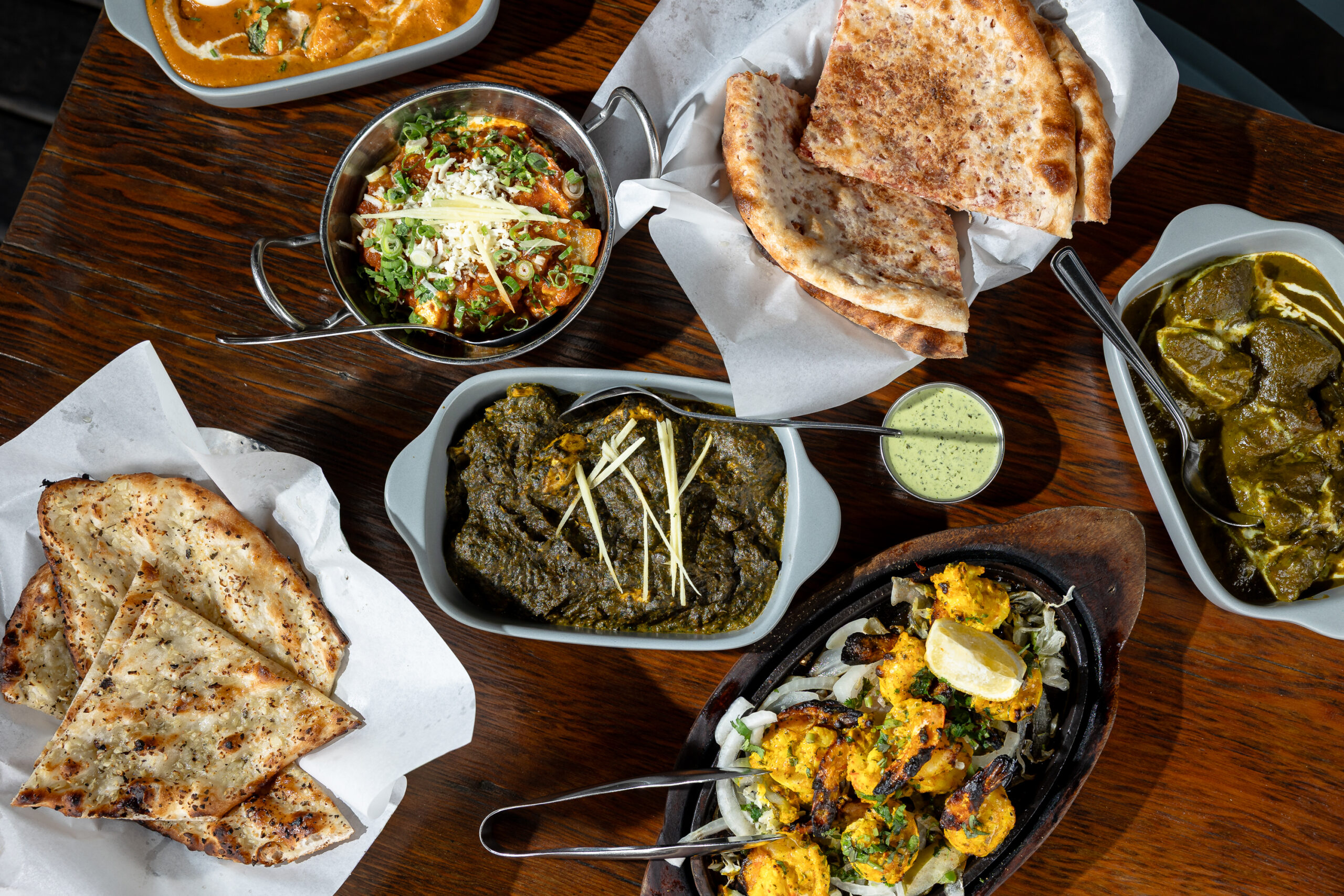
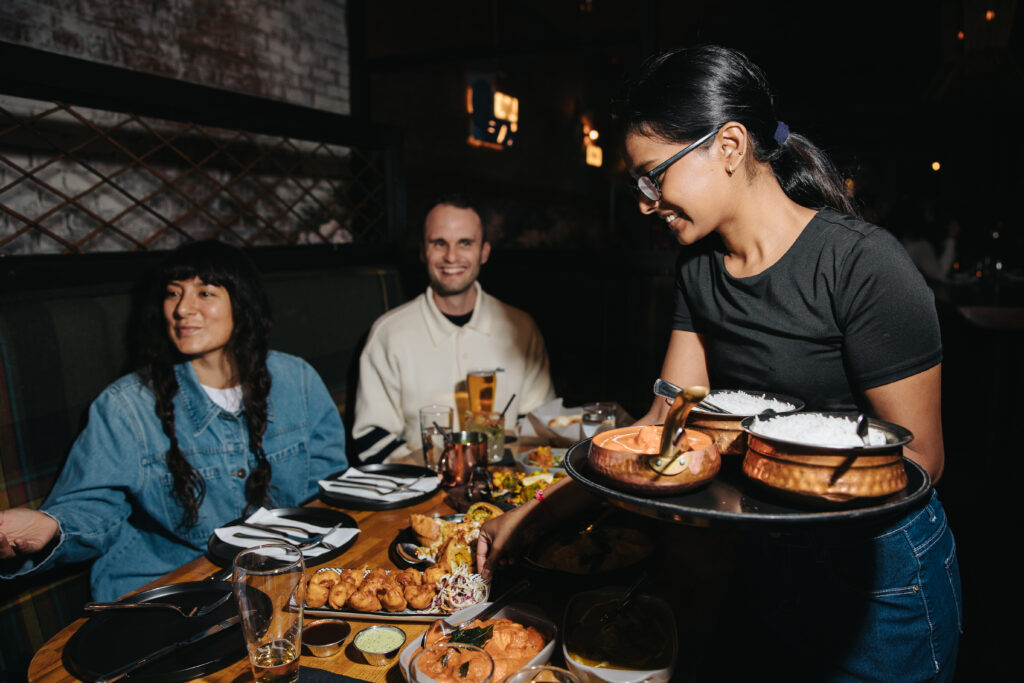
The single biggest adjustment for a first-time diner is understanding that a traditional Indian meal isn't built around one main course per person the way a lot of Western dining is. It's built around a shared table - several curries, a couple of breads, rice, maybe a starter or two - that everyone eats from together, spooning a bit of each dish onto their own plate alongside rice or bread rather than each person eating a single, separate main course front to back.
This changes how you should think about ordering from the start. Rather than each person picking "their dish," the more natural approach - and the one that actually gets you a better meal - is for the table to order collectively, choosing a spread that covers different textures, richness levels, and proteins, and then sharing all of it. Two people ordering two different curries and splitting both will generally have a better, more varied meal than two people each ordering and eating their own dish independently.
As a rough, reliable guide: one curry per person, plus one shared bread or rice per person, with one or two starters for the table is a solid baseline that scales reasonably well as the group grows, though the exact ratio shifts slightly as tables get larger, since shared dishes go further per person in a bigger group.
For two people: two curries, two breads (or one bread and one rice, split between you), and one shared starter is usually enough for a satisfying meal without excess. If you're particularly hungry or want more range to taste, a third curry or a second starter is a reasonable add.
For four people: three to four curries, a mix of two or three breads and a rice, and two starters gives the table real variety without every dish being a small taste - at this size, you can afford to include one curry that's a slightly more adventurous choice, since there's enough food overall that one dish being less to someone's taste doesn't derail the meal.
For six people: four to five curries, several breads plus at least one rice, and two to three starters. At six people, dishes naturally go further - a curry that would feel small split between two people stretches comfortably across six, so you don't need to scale starters and curries in a strict one-to-one ratio with headcount the way you might at a smaller table.
The general pattern: as the table grows, you need proportionally fewer additional dishes per additional person, because shared dishes serve more people without needing to be duplicated.
Rather than picking dishes at random or defaulting to whatever sounds most familiar, building a table around contrast gets you a meal that actually shows the range of what the kitchen can do, rather than three variations on the same rich, creamy theme.
One dish from the tandoor - a tandoori chicken, tikka, or seekh kebab - brings a dry, charred, smoky element to the table that a saucy curry can't provide on its own, and works well as a starter or alongside the mains.
One rich curry - something cream - or dairy -based, like a butter chicken or korma -anchors the table with the indulgent, comforting register most people associate with Indian food generally.
One vegetable-forward dish - a dal, a chana masala, or a vegetable curry - adds a lighter, differently textured dish to the table and is worth including even at a table of committed meat-eaters, since good vegetable dishes are core to the cuisine rather than an afterthought. Our vegetarian and vegan menu has the full range if you want to lean further into this category.
At least one bread, chosen based on what else is on the table - a rich curry pairs well with a plain or garlic naan, while a spicier or drier dish often works better with roti.
Rice, as the neutral base that ties the rest of the table together and gives everyone something to build a plate around regardless of which curries they're drawn to.
That five-part shape - tandoor, rich curry, vegetable dish, bread, rice - covers most of what a kitchen actually does across a single meal, without leaning too hard into any one register.
Heat anxiety is one of the most common reasons first-time diners either under-order or stick to the safest, blandest option on the menu, which usually means missing out on some of the more interesting dishes entirely. The better approach is asking directly rather than guessing from the name - as covered in more detail in our guide to curry names, names like madras and vindaloo describe a tradition and method as much as a fixed heat level, and heat varies meaningfully between kitchens even for the same-named dish.
The simplest, most effective question to ask a server is straightforward: "What's a good, flavourful dish that isn't too spicy for a first-timer?" A good kitchen will have a real answer to this, pointing you toward dishes that are rich in spice flavour without being aggressively hot - korma and most creamy curries are reliably mild, while madras and vindaloo run hotter. Our full heat level breakdown goes through this in more detail if you want to understand the range before you even sit down.
Don't let heat worry push you toward ordering only one or two "safe" dishes for the whole table, though - asking the server to point you toward two or three dishes across a range of heat levels gets you a much more interesting table than defaulting to the mildest option across the board out of caution.
A first visit is a reasonable time to hold off on a few things, not because they're bad, but because they reward already knowing what you like more than they suit a first exploration.
Very regionally specific dishes with unfamiliar names and no clear description are worth asking about before ordering, simply because you won't have context for what to expect — better to ask a server what a dish actually is than to order blind and be surprised either way.
The single hottest dish on the menu, purely as a first-visit choice - not because you shouldn't ever order it, but because your first Indian meal is a better opportunity to taste range and balance than to test your spice tolerance, and a dish that's overwhelmingly hot can crowd out your ability to taste anything else at the table.
Anything described as an "acquired taste" or unusually pungent on a first visit, simply because it's a genuinely bad way to judge an entire cuisine on one polarising dish - better to come back once you already know you like the more approachable range and are ready to branch out.
None of this is a permanent restriction - it's just sequencing. A first meal that goes well, built around contrast and confidence, makes every meal after it easier to order for.
For two people: one tandoori starter to share (chicken tikka or seekh kebab), one rich curry (butter chicken or korma), one vegetable curry (chana masala or dal), one garlic naan, and a small side of rice. This covers the tandoor, dairy-rich, and vegetable registers in one meal, without over-ordering for two people.
For six people: two starters (a tandoori chicken and a vegetable pakora), four to five curries spanning a range of heat and richness (a rich curry, a vegetable curry, something medium-spiced like a madras or kadai, and one more of the table's choosing), a mix of naan and roti, and a rice. At this size, the table can genuinely afford to include one dish purely for curiosity, since there's enough food overall to absorb one dish that turns out not to be everyone's favourite.
Whichever size table you're working with, the full current menu - with everything named above and the rest of the kitchen's range - is here, and any of our team can help you build a spread suited to your table's size and spice preference on the night.
How much Indian food should I order per person?
As a rough guide, one curry per person plus one shared bread or rice each, with one or two starters for the table. Two people ordering two curries, two breads and one starter will usually have enough.
What should I order at an Indian restaurant for the first time?
Build a contrast rather than picking favourites: something from the tandoor, one rich curry, one vegetable dish, a bread and a rice. That covers the range of the kitchen in one table.