2741 W 4th Ave, Vancouver, BC V6K 1P9
+1 604-559-1666
info@karmaindianbistro.ca
Open daily from 12:00 PM
Butter chicken and Chicken Madras sit two lines apart on our menu. The kitchens they came from are two thousand kilometres apart, and they share almost none of the same assumptions - about fat, about starch, about what makes a sauce sour.
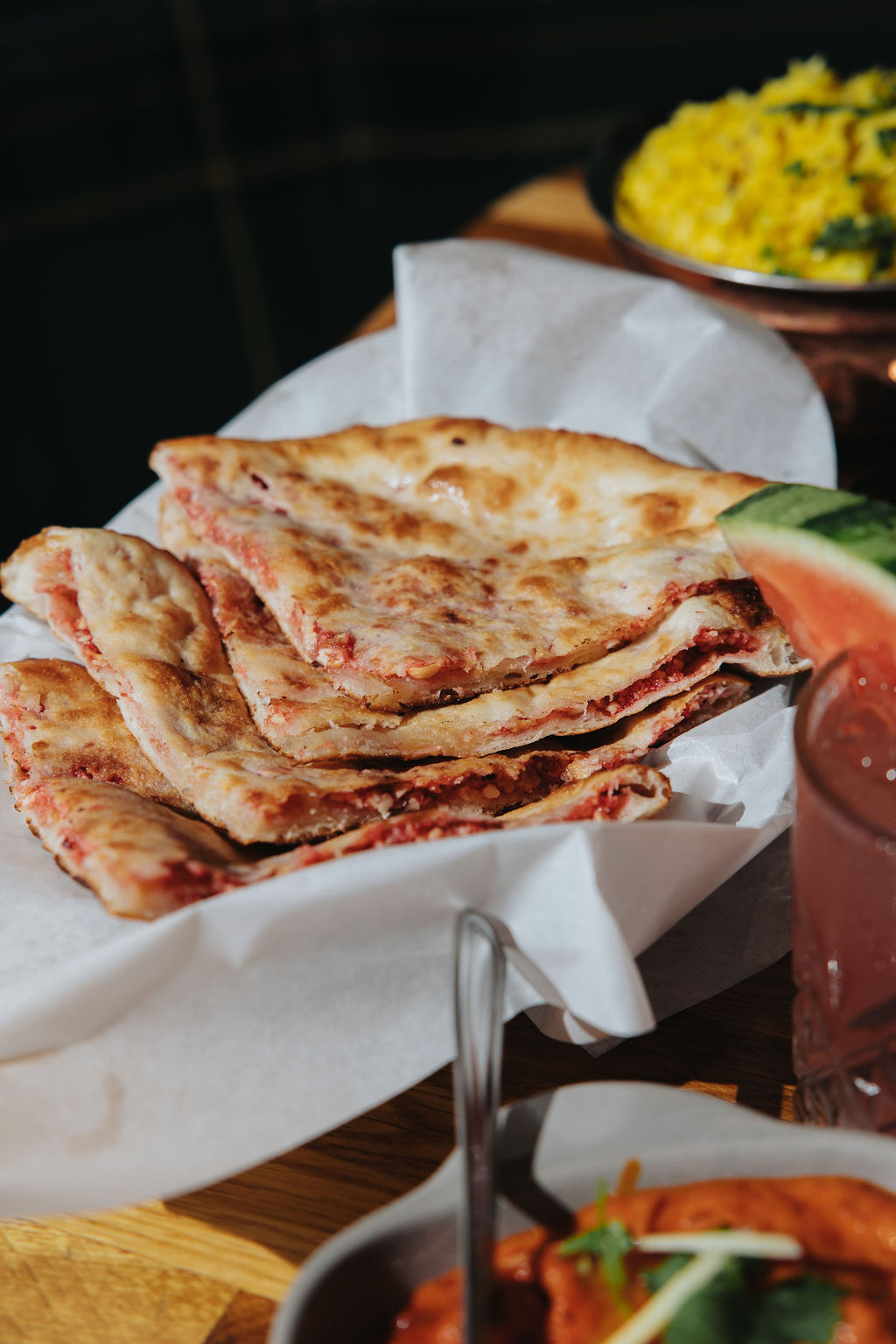
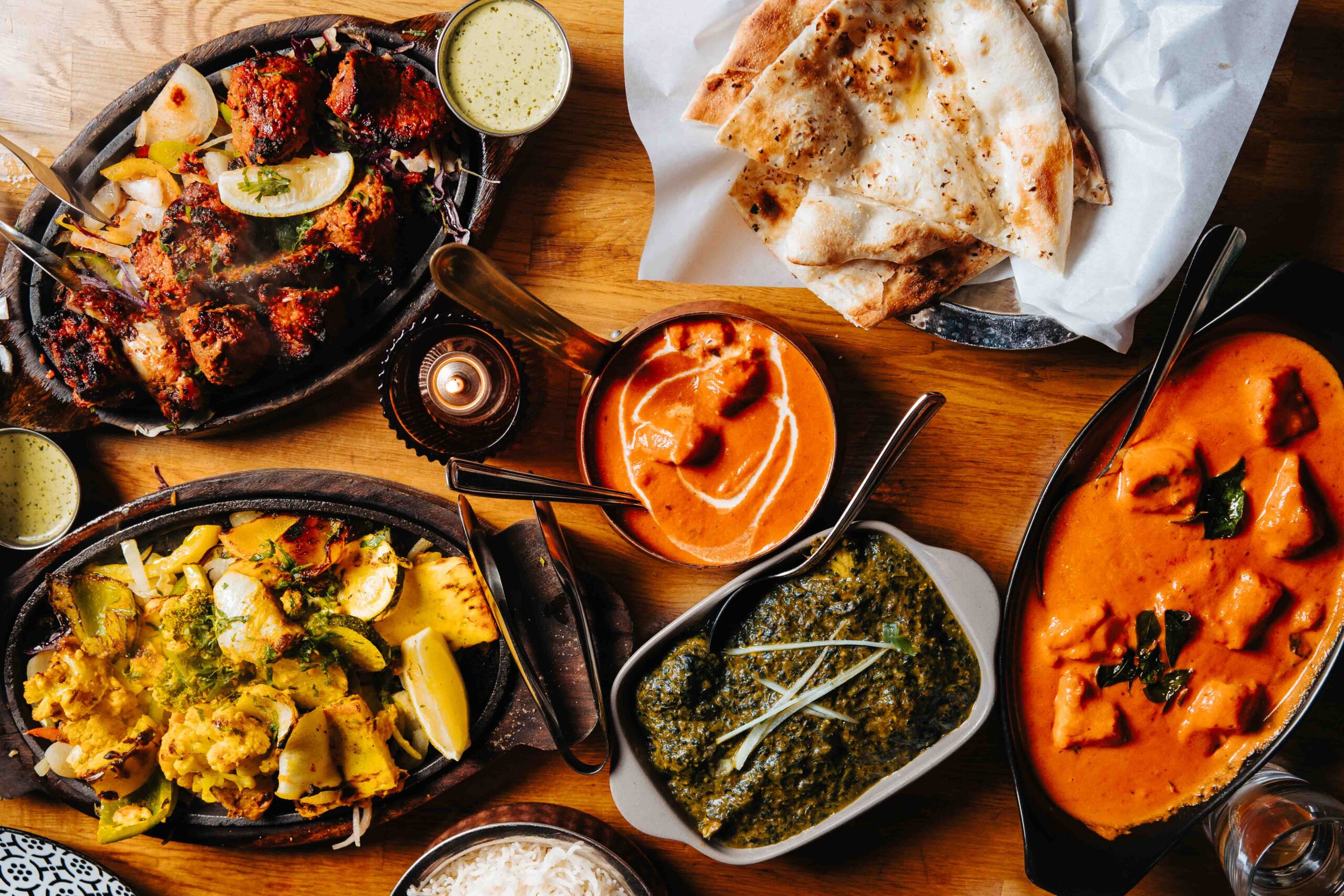
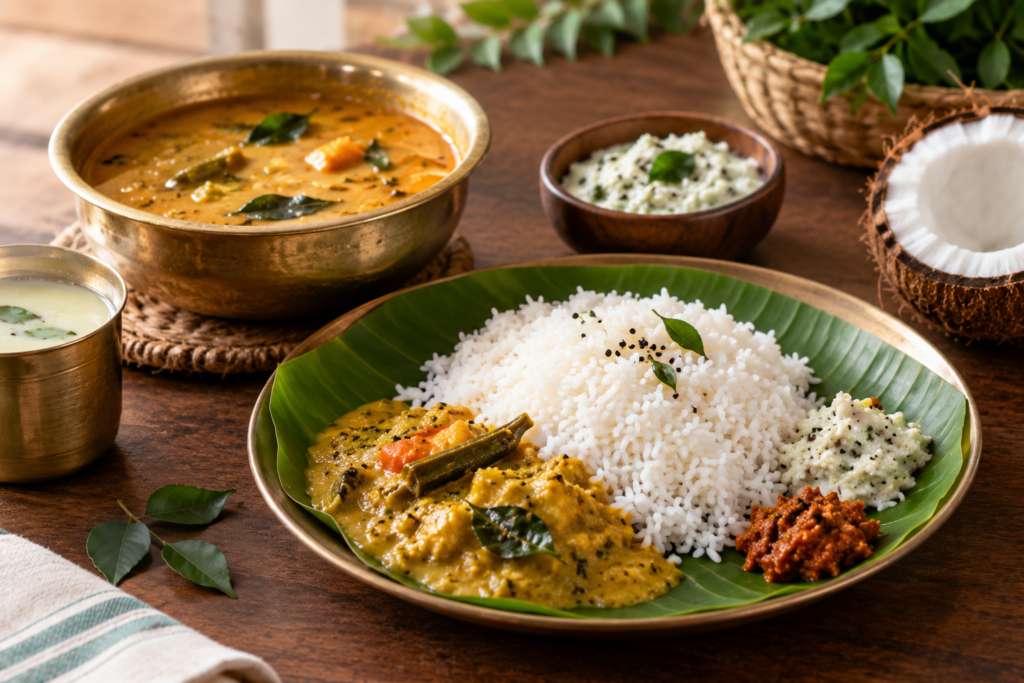
One table, two traditions. Naan and coconut rice do not come from the same place.
The north cooks with wheat, dairy and the tandoor - naan and roti, ghee and cream and paneer, onion-and-tomato gravies. The south cooks with rice, coconut and curry leaf - no bread on the plate, coconut milk and oil where the north uses cream and ghee, and tamarind for sourness instead of tomato and yogurt. Butter chicken is northern. Chicken Madras is southern. They are not variations on each other.
India is not two cuisines. It is closer to thirty, and any Indian reading this will already be objecting that Bengali cooking is nothing like Punjabi, that Gujarati is nothing like either, and that lumping Kerala in with Tamil Nadu is the sort of thing that starts arguments at a family table.
All true. But north and south is a genuinely useful shorthand, because the two ends of the country diverge on the things that decide what a dish tastes like: what you eat it with, what fat it is cooked in, and what makes it sour. Get those three straight and most of an Indian menu stops being a wall of unfamiliar names.
The northern plains grow wheat, so bread is the plate. Naan, roti, paratha, missi roti - the bread is not a side dish there in the way it is here, it is the thing you eat with. That is also why northern gravies tend to be thick: they are built to be picked up with bread rather than spooned over rice.
Get three things straight - the starch, the fat and the souring agent - and most of an Indian menu stops being a wall of unfamiliar names.
Rice grows where it is wet, and the south is wet. It is the staple, the batter for dosa and idli, and the thing every curry is built to be eaten with. There is no bread course. A southern curry is usually looser than a northern one for exactly that reason - it is meant to run into rice, not to be scooped with bread.
Not one ingredient but three. Coconut milk does the job cream does in the north. Coconut oil replaces ghee as the cooking fat. And dry-roasted coconut, ground into the masala, thickens a curry from the inside and gives it a nutty depth - that last one is what makes a proper Chicken Madras taste of somewhere.
Curry leaf is a specific leaf from a specific tree, and it tastes of nothing else - it is not a bay leaf and it has nothing to do with curry powder. Black mustard seeds are popped in hot oil at the start, a technique called tadka, giving a pungency that goes up the nose rather than sitting on the tongue. And tamarind provides the sourness that a northern kitchen would get from tomato or yogurt.
None of the three southern staples — coconut, curry leaf, tamarind — involves an animal. So a southern vegetable curry is often vegan without anyone setting out to make it so, while its northern equivalent has cream or ghee in it by default. That is not a modern dietary trend; it is just what the region grows.
On our menu, the split runs roughly like this:
Chicken
Butter Chicken, Tikka Masala, Korma, Kadai, Palak
Chicken Madras, Chettinad, Coconut Curry, Vindaloo
Vegetarian
Paneer dishes, Dal Makhni, Malai Kofta
Coconut Vegetable, Okra Masala, Chana Masala
Seafood
--
Goa Fish Curry, Fish Malabari, Prawn Goa Curry
Starch
Naan, roti, paratha, biryani
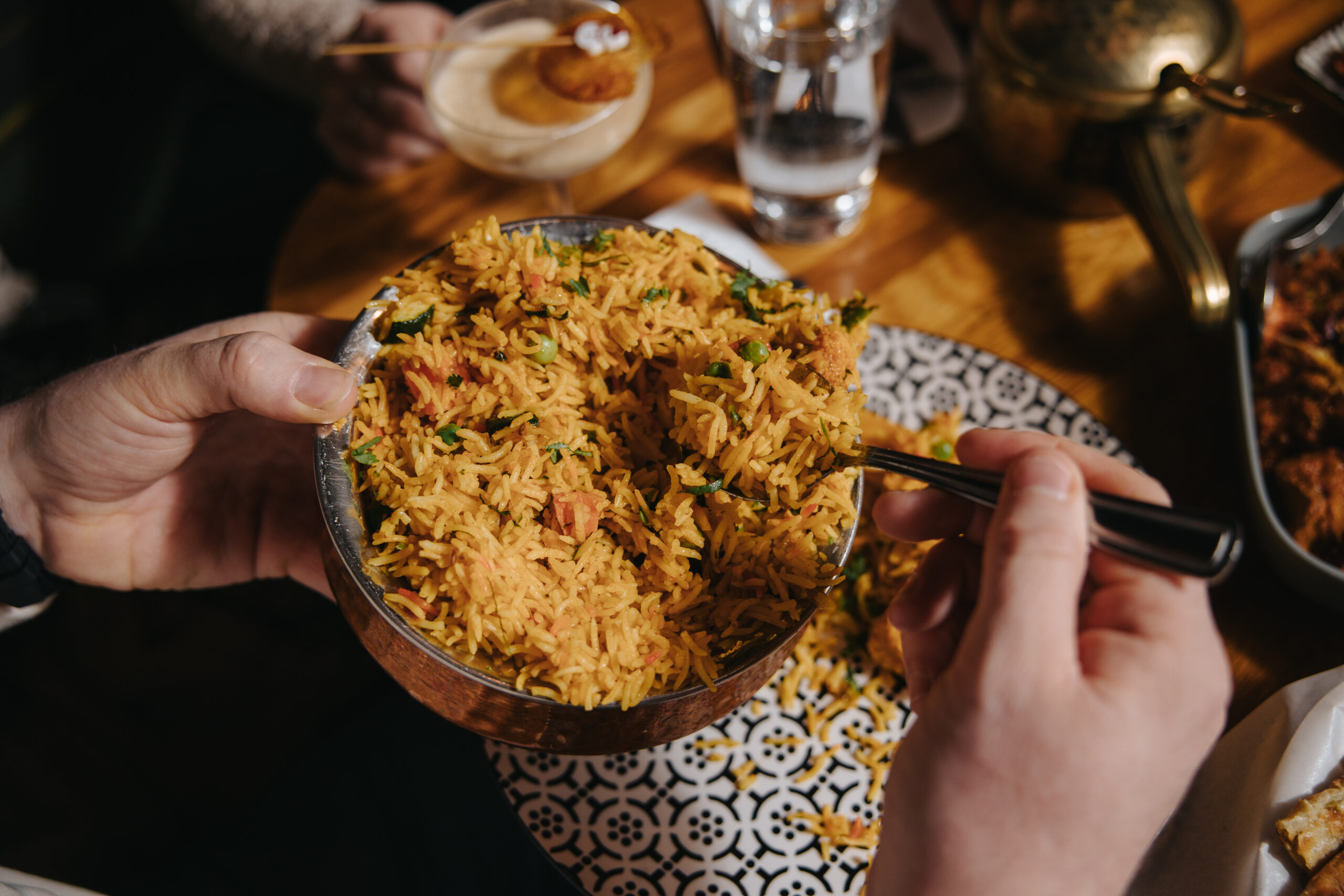
Basmati, jeera and coconut rice
From the fire
Everything in the tandoor
--
Try the Chicken Madras next, and order coconut rice rather than naan with it. It is the clearest single demonstration of the difference on our menu: the same bird, cooked in the same tandoor, finished in a sauce with no dairy in it at all. You will taste the roasted coconut where you expected cream.
Order south. Rice instead of bread solves gluten, and coconut instead of cream solves dairy - our Madras, Chettinad and coconut curries are all marked gluten-free and dairy-free as written. Northern cooking can be adapted, but southern cooking mostly does not need to be.
One from each, always. A butter chicken and a Chicken Madras next to each other give a table two completely different things to eat rather than two versions of the same idea - and it is the fastest way to find out which end of the country you actually prefer.
Almost every Indian restaurant in a Western city leans north, and there is a straightforward commercial reason: butter chicken, tikka masala and korma are what people already know how to order. A northern menu sells itself.
Cooking both is more work than it looks. It means two different pantries - curry leaf and tamarind and coconut alongside cream and paneer - and it means two different sets of technique, because a kitchen that only ever finishes gravies with cream has no reason to learn to temper mustard seed properly. Our head chef, Vishal Kumar, spent thirty years across hotel kitchens in India and seven in Germany before Kitsilano, and the range is deliberate rather than accidental.
It is also, we suspect, why the MICHELIN Guide's inspectors wrote up the Chicken Madras rather than the butter chicken. A kitchen that cooks Tamil food properly in a room full of people ordering butter chicken is telling you something.
Is North or South Indian food spicier?
South Indian cooking is generally the hotter of the two, but the heat is a different kind - black pepper, mustard seed and dried red chilli rather than the chilli-and-cream balance of the north. Northern dishes also have more dairy in them, and dairy blunts heat. At Karma every curry from either tradition is cooked to order across four spice levels, so the choice is yours regardless.
What is the difference between a madras and a masala?
A madras is a South Indian curry built on roasted coconut, black mustard and tamarind. Masala simply means a spice mixture, and by extension the sauce made from one - so tikka masala is a northern dish named after its blend rather than a place. One is a region, the other is a method.
Is South Indian food better for vegans?
Usually, yes. Southern cooking leans on coconut milk and oil where northern cooking uses ghee, cream and paneer, so a great many southern dishes are vegan without being adapted. All nine of our vegan curries are dairy-free as written, and several of them are southern in character.
Do you serve dosas or idli?
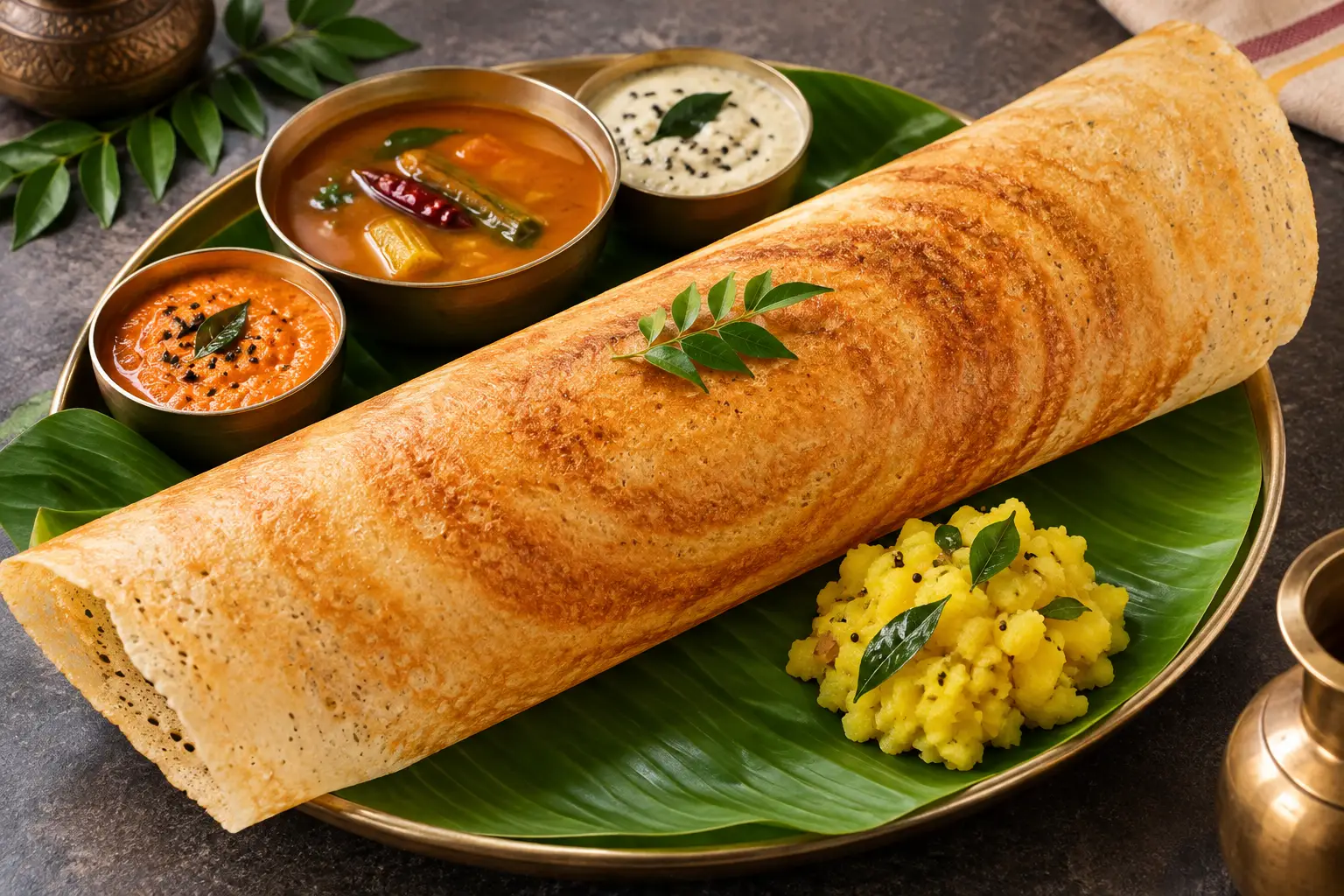
No. Dosas and idli are South Indian breakfast and tiffin dishes built on fermented rice-and-lentil batter, and they belong to a different kind of kitchen. What we cook from the south are the curries - Chicken Madras, Chettinad, coconut curries and the coastal Goan and Malabari dishes.
Is Goan food North or South Indian?
Neither, strictly. Goa is on the west coast, and its cooking is its own thing - coconut and rice like the south, but with a Portuguese inheritance that shows in the vinegar of a vindaloo. Coastal cooking from Goa and Kerala is usually grouped with the south because it shares the rice, coconut and seafood, not because it is the same.
Which is better for eating gluten-free?
The south, by some distance. Rice is the staple rather than wheat, so you are not working around the bread. Northern cooking is built to be eaten with naan, roti and paratha, all of which contain gluten - the exception on our menu is missi roti, which is made with chickpea flour.
Order a butter chicken and a Chicken Madras on the same table and the whole argument makes itself in about four mouthfuls. Both $21, both cooked to order, at 2741 West 4th Avenue in Kitsilano.