2741 W 4th Ave, Vancouver, BC V6K 1P9
+1 604-559-1666
info@karmaindianbistro.ca
Open daily from 12:00 PM
Here's the honest version: what's naturally gluten-free, what isn't, what to ask any kitchen before you sit down, and exactly what's safe to order at Karma in Kitsilano.
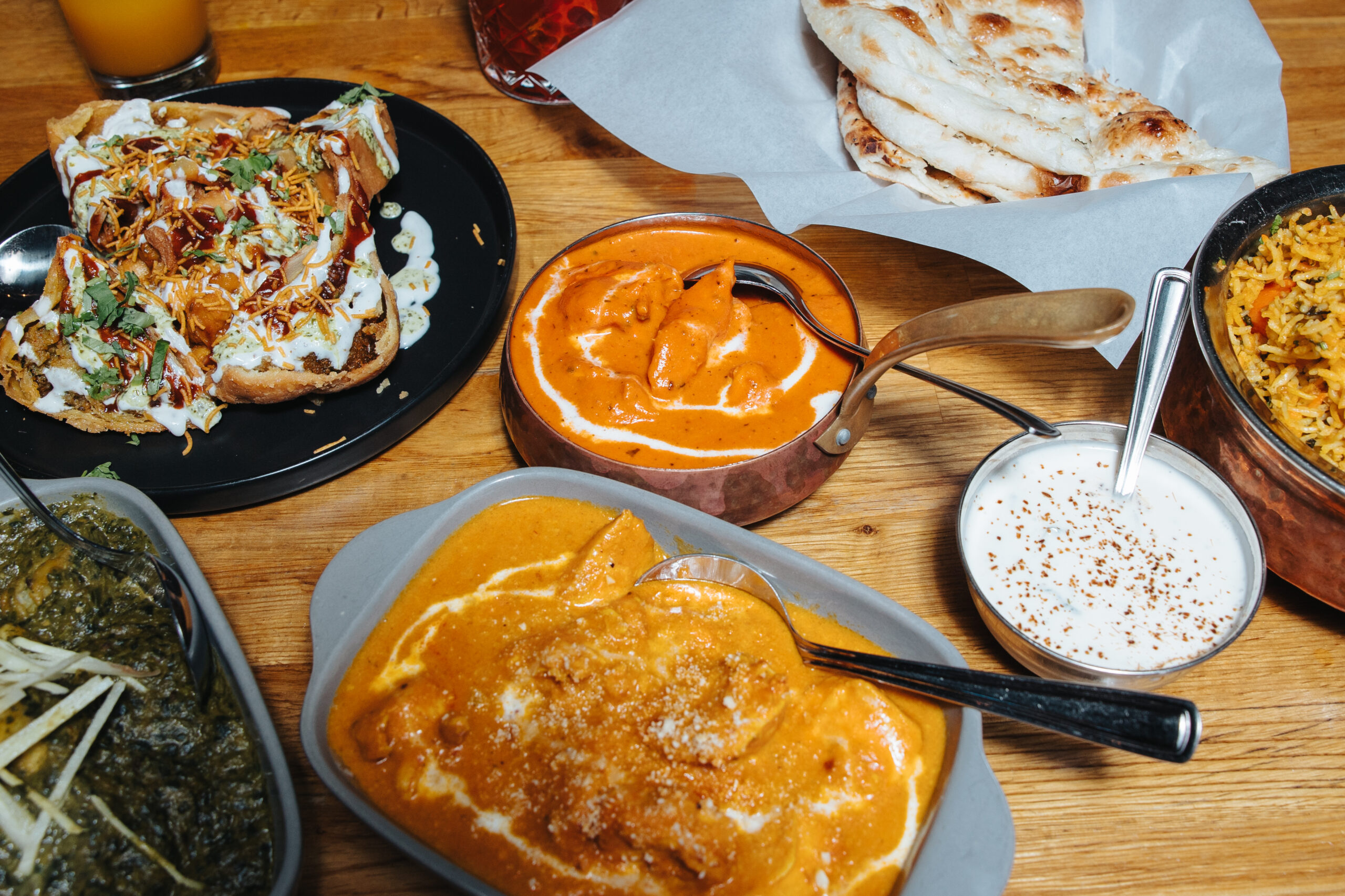
You order for a table, not for a plate. That one shift explains most of the menu.
For two people: one shared starter, two curries, one rice, one bread. Pick curries that are different from each other rather than two creamy ones. Order at medium unless you know you want more. That is about $30 to $35 each, and it is a complete meal - you do not need a dish per person, and ordering that way is the commonest first-timer mistake.
If you have coeliac disease or a gluten intolerance, "Indian food" is one of the more confusing cuisines to navigate on paper - and one of the easier ones in practice, once you know what's actually in the pot. Most curries are not thickened with flour. Most of what will hurt you is bread, batter, and shared fryer oil, not the sauce itself.
That confusion is partly a labelling problem. Menus rarely spell out how a sauce is thickened, whether the tandoor is shared with anything breaded, or whether a spice mix came out of a jar or was ground in-house that morning. So diners default to the safest-sounding assumption - "Indian food probably isn't safe" - even though, dish for dish, it's one of the more naturally gluten-free cuisines in the city once bread is off the table.
Here's the honest version: what's naturally gluten-free, what isn't, what to ask any kitchen before you sit down, and exactly what's safe to order at Karma in Kitsilano.
When it comes to gluten-free Indian food, the details matter more than the label
A traditional curry base - onion, garlic, ginger, tomato, whole spices, and either cream, coconut milk, or yogurt - contains no wheat at all. The body and thickness in a butter chicken, a dal, or a vegetable korma comes from pureed onion and tomato, reduced cream, or lentils, not from a roux. That's genuinely good news: a well-made curry is gluten-free by default, not by substitution. Unlike a lot of Western sauce-making, which leans on a flour-based roux or a beurre manié to build thickness, Indian gravies get their body from vegetables, dairy, and time on the stove.
This is true across regional styles, not just one corner of the menu. North Indian curries built on a tomato-onion masala - butter chicken, chicken tikka masala, rogan josh, dal makhani - are thickened by reduction and dairy. South Indian dishes like sambar and rasam get their body from lentils and tamarind. Coconut-based curries from the west coast and south use coconut milk, not cornstarch or flour, to carry the sauce. None of these traditions reach for wheat as a thickener, because none of them need to.
Where it goes wrong is usually one of four places:
The short version: the sauce is probably fine. The bread, the batter, the garnish, and the shared equipment are where you actually need to ask questions.
This is the one place Indian cuisine is genuinely not built for a gluten-free diner without a swap. Naan, roti, chapati, paratha, kulcha, and puri are all made from wheat flour - there's no naturally gluten-free version of any of them, and "gluten-free naan" made from alternative flours is a specialty item most Indian kitchens, including ours, don't stock. It's worth being direct about this rather than hedging: if a restaurant tells you their naan is gluten-free without a dedicated fryer, prep surface, and flour supply, that claim deserves a follow-up question, not automatic trust.
The good news is that rice, not bread, is the everyday staple across most of India, so the swap is built into the cuisine rather than bolted on as an afterthought. A curry ordered with rice instead of naan isn't a compromise version of the dish - it's how the majority of India actually eats it day to day.
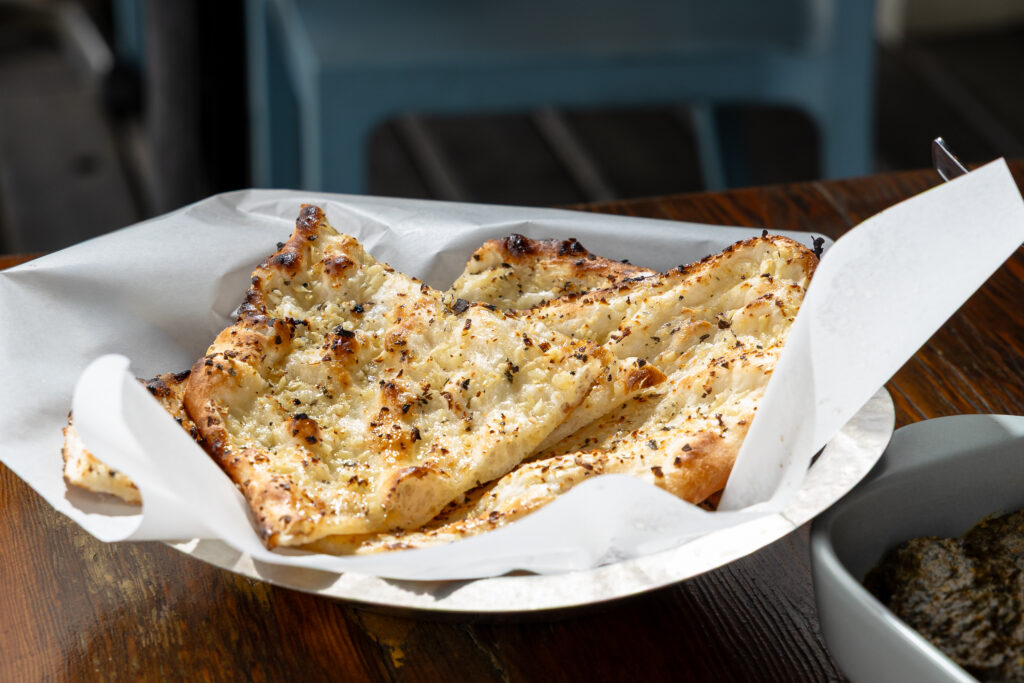
What to actively avoid: any bread described as "stuffed" (kulcha, stuffed paratha) is wheat flour wrapped around a filling, so it carries the same risk as plain naan. Bhature, the puffed fried bread served with chole, is also wheat-based and deep-fried, which adds a shared-oil risk on top of the flour itself.
If a menu only offers naan or roti as the carb option with no rice listed, that's worth a phone call before you go - a kitchen without a rice option on the regular menu may not be set up to serve a gluten-free diner comfortably, even if the curries themselves are technically fine.
A dish being gluten-free "on paper" and a kitchen being safe for coeliac disease are two different things. Coeliac disease reacts to trace amounts - not a full portion of gluten, a crumb's worth - so cross-contact matters as much as the ingredient list itself. This is the part of eating out that catches most gluten-free diners out, because it has nothing to do with what's written on the menu and everything to do with how the kitchen actually runs during a busy service.
Four questions are worth asking anywhere you eat, not just here:
Any kitchen that can answer these four questions clearly and immediately is one worth trusting. Hesitation, vagueness, or a server who has to go ask and comes back with a shrug is the actual red flag - not the cuisine, and not the specific dish.
Everything at Karma is cooked to order, not batched, which is the main reason we can give a straight answer here instead of a hedge. There's no bain-marie of pre-made sauce sitting through service - each curry is built in its own pan when the order comes in, using whole spices ground and blended in-house rather than a pre-mixed commercial base. That matters more for a gluten-free diner than it might sound: it means there's no ambiguity about what went into the pot, because the pot is being started from scratch for you.
All nine vegan curries on the regular menu are gluten-free, made from a dairy-free, flour-free base of onion, tomato, coconut milk, and whole spices. This list spans the full range of the menu - from milder coconut-based dishes to richer tomato-based ones - so a gluten-free vegan diner isn't limited to one or two "safe" options at the edge of the menu.
All nine vegetarian curries on the regular menu are gluten-free as well, using cream or yogurt rather than any flour-based thickener. Paneer-based curries, dal preparations, and vegetable curries are all covered under this list.
Butter chicken and chicken madras are also gluten-free as prepared, giving diners who eat meat a couple of reliable, well-known options alongside the vegetarian and vegan list.
Between the nine vegan curries, the nine vegetarian curries, and the two chicken dishes named above, that's a genuinely wide gluten-free spread on the regular menu - not a single "safe" dish tucked away at the bottom of the page. Naan, roti, paratha, and anything battered are the items to skip; everything else on that curry list can go straight into a bowl of steamed rice, and rice is prepared separately from any bread or fried items, so there's no shared-surface risk on the side dish either.
You don't need to explain coeliac disease from scratch every time. Two sentences does it:
"I have a gluten allergy - can I get [dish name] with rice instead of naan, and can you confirm it's not been fried or cooked near anything with wheat in it?"
That single question covers the ingredient list and the cross-contact check in one go, and it's specific enough that any kitchen -ours included - can give you a real answer rather than a guess.
A few extra pointers worth having in your back pocket:
None of this requires special treatment or a separate menu - it just means asking the right two-part question and giving the kitchen enough information to answer it properly.
Is Indian food gluten-free?
Most Indian curries are thickened with onion, tomato and cream rather than flour, so they are naturally gluten-free. The exceptions are breads, anything battered or fried in shared oil, and some pre-made spice blends and sauces.
Is naan gluten-free?
No. Naan is made with wheat flour. Plain steamed rice, papadum made from lentil flour, and dosa made from rice and lentil batter are the usual gluten-free alternatives.
Which curries at Karma are gluten-free?
All nine vegan curries and all nine vegetarian curries on the regular menu are gluten-free, along with the butter chicken and chicken madras. Everything is cooked to order.