2741 W 4th Ave, Vancouver, BC V6K 1P9
+1 604-559-1666
info@karmaindianbistro.ca
Open daily from 12:00 PM
Planning a group meal in Vancouver? Here’s how to find an Indian restaurant that can accommodate everyone, from dietary restrictions to group-friendly seating.
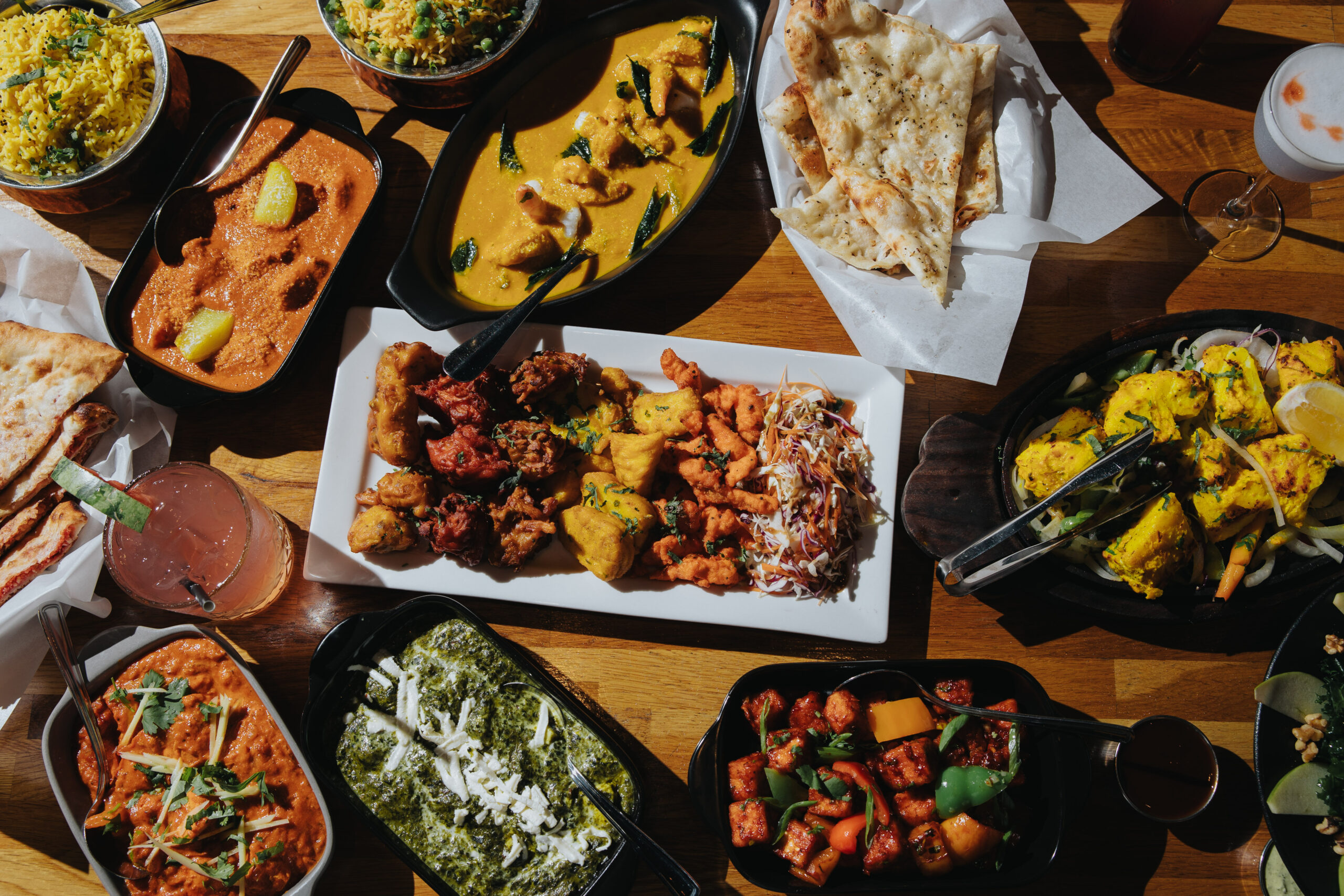
You order for a table, not for a plate. That one shift explains most of the menu.
For two people: one shared starter, two curries, one rice, one bread. Pick curries that are different from each other rather than two creamy ones. Order at medium unless you know you want more. That is about $30 to $35 each, and it is a complete meal - you do not need a dish per person, and ordering that way is the commonest first-timer mistake.
Booking a restaurant for 6 people and booking one for 26 are two different problems. Below a certain size, you call, you get a table, you order off the regular menu. Above it, the restaurant has to plan around you - kitchen timing, staffing, seating layout, and how the rest of the room is affected - and that planning is exactly where most large-group bookings go wrong. Not because the restaurant says no, but because nobody asked the right questions up front and the group finds out about a minimum spend, a set-menu requirement, or a patio-only policy the week of the event.
This is what to know before you call, whether you're organising an office Christmas party, a milestone birthday, or a family gathering that's outgrown a normal reservation.
Most restaurants - Karma included - think about group size in three rough bands, and the band you fall into decides what's actually available to you.
This usually just needs a reservation note and, ideally, a heads-up a day or two ahead. The regular menu stays open, no set menu is required, and the table is seated within the normal dining room without displacing other guests. If you're at the low end of this range, you often don't need to do anything beyond booking a table for the right number of people.
This is where a restaurant starts actively managing the room around you - reserving a section, sometimes asking for a set menu or a simplified ordering process to keep the kitchen on schedule, and often wanting some advance notice so they can staff the shift correctly. At Karma, 34 is the ceiling for this kind of standard group booking within the regular dining room, seated at existing tables rather than requiring the whole space.
Past a certain size, you're no longer sharing the room with other diners - you're taking it over, in part or in full. This is where deposits, minimum spends, and set menus become the norm rather than the exception, because the restaurant is turning away its normal walk-in and reservation business for that service. At Karma, a full buyout including the heated patio takes the space up to 92 people.
Knowing which band your group falls into before you call saves a round of back-and-forth - a request for 18 people is a very different conversation from a request for 60, and telling the restaurant your number up front gets you a faster, more accurate answer.

Once a group crosses into the mid-size range, most restaurants will ask whether you want a set menu or want to keep the regular a la carte menu open. This isn't the restaurant trying to limit your choices for the sake of it - it's a genuine trade-off with real consequences on both sides, and it's worth understanding rather than just picking whichever sounds more generous.
A set menu means the kitchen knows in advance exactly what's being cooked, in what quantities, and can prep and time it accordingly. For the kitchen, this is the difference between firing 25 individual, unpredictable orders in a live service and firing a known batch of dishes at a known time. For the group, it usually means faster food, a smoother pace to the meal, and - often - a lower price per head than ordering individually off the full menu. The trade-off is flexibility: everyone at the table is eating from the same, narrower selection, which can be a real issue if the group includes vegetarians, vegans, people avoiding gluten, or people with different spice tolerances, unless the set menu is built to account for that.
A la carte for a large group keeps full menu choice on the table, which matters if the group has genuinely different dietary needs or if part of the appeal of an Indian restaurant, for your group, is picking exactly what you want rather than eating a curated selection. The cost is on the kitchen and pacing side: 25 to 40 people ordering freely and unpredictably off the full menu, in the middle of a live service also serving walk-in tables, is a much harder night to run smoothly. Expect a longer wait between courses, and expect the restaurant to be more cautious about taking large a la carte groups during a busy dinner service, particularly on weekends.
The honest middle ground, and what most restaurants end up doing for groups over about 20 people, is a curated set menu - not the full a la carte list, but not a single fixed menu either. A handful of options per course (say, three curries, two vegetarian, one meat) that the group chooses from ahead of time. This gets you most of the kitchen's timing benefit while still accommodating different diets and preferences within the group.
Policies on this vary enormously between restaurants - there's no industry standard you can assume applies, which means asking directly, in writing, before you commit is the only reliable way to avoid a surprise. Four things worth confirming on every large-group booking, regardless of where you're eating:
None of these questions are unusual or awkward to ask - any restaurant that regularly handles group bookings will have straightforward answers ready, and a restaurant that hesitates or can't answer clearly is telling you something about how organised the rest of the booking is likely to be.
Almost every group of 15 or more includes at least one person with a dietary restriction, and Indian cuisine happens to be one of the easier cuisines to accommodate this within - provided the restaurant plans for it rather than trying to improvise on the night.
Vegan and vegetarian diners are genuinely well served by Indian menus generally, since lentil, paneer, and vegetable-based curries have always been a core part of the cuisine rather than an add-on. A set menu built for a mixed group should include at least one strong vegan option and one vegetarian option per course, not a single token dish for the whole table to share.
Gluten-free diners need the same care described for individual diners - curries thickened without flour are naturally safe, rice instead of naan solves the bread problem, and the kitchen should be told which guests need this treated as a genuine allergy rather than a preference, particularly if the group is on a shared set menu where cross-contact between dishes is more likely than it would be for a single table.
Spice levels matter more for groups than for individual diners, because a set menu locks everyone into the same heat level unless it's flagged in advance. If your group spans people who want it very mild and people who want it genuinely hot, say so when you book - most kitchens can adjust heat per dish or offer a mild and a spicier version of the same curry side by side, but only if they know ahead of the service, not when the first plates come out.
The general rule: the earlier a restaurant knows about the dietary makeup of your group, the better it can plan for it within a set menu. Telling the restaurant the day before, or worse, at the table, forces improvisation during a service that's already running at capacity.
For a straight answer on capacity: Karma can seat up to 34 people as a standard group booking within the regular dining room, at existing tables, without requiring a buyout. This covers the mid-size range described above - office dinners, family celebrations, and milestone events that need a reserved section but not the whole restaurant.
For anything larger, a full buyout - including the heated patio - takes the space up to 92 people. This is the option for genuinely large events: full-office Christmas parties, larger weddings and engagement parties, and community or association events that need the whole restaurant for the evening.
There's no standard deposit required for a group booking at Karma, though as noted above, policies like this are worth confirming in writing for your specific date and group size, particularly during December when the restaurant is handling a higher volume of large-group and buyout requests than the rest of the year.
None of this requires special treatment or a separate menu - it just means asking the right two-part question and giving the kitchen enough information to answer it properly.
How many people can Karma Indian Bistro seat for a private event?
Up to 34 as a standard group booking in the dining room, and up to 92 on a full buyout including the heated patio.
Do I need a deposit to book a large group?
Karma does not take a standard deposit for group bookings. Policies vary widely between restaurants, so always confirm deposit, minimum spend and cancellation terms in writing.