Samosa, pakora, bhaji: what’s actually different about Indian starters
Samosa, pakora, bhaji, all fried, all served with a dip, all fairly easy to lump together as "the fried stuff."
. Karma Indian Bistro
October 2, 2026
. 8 min read
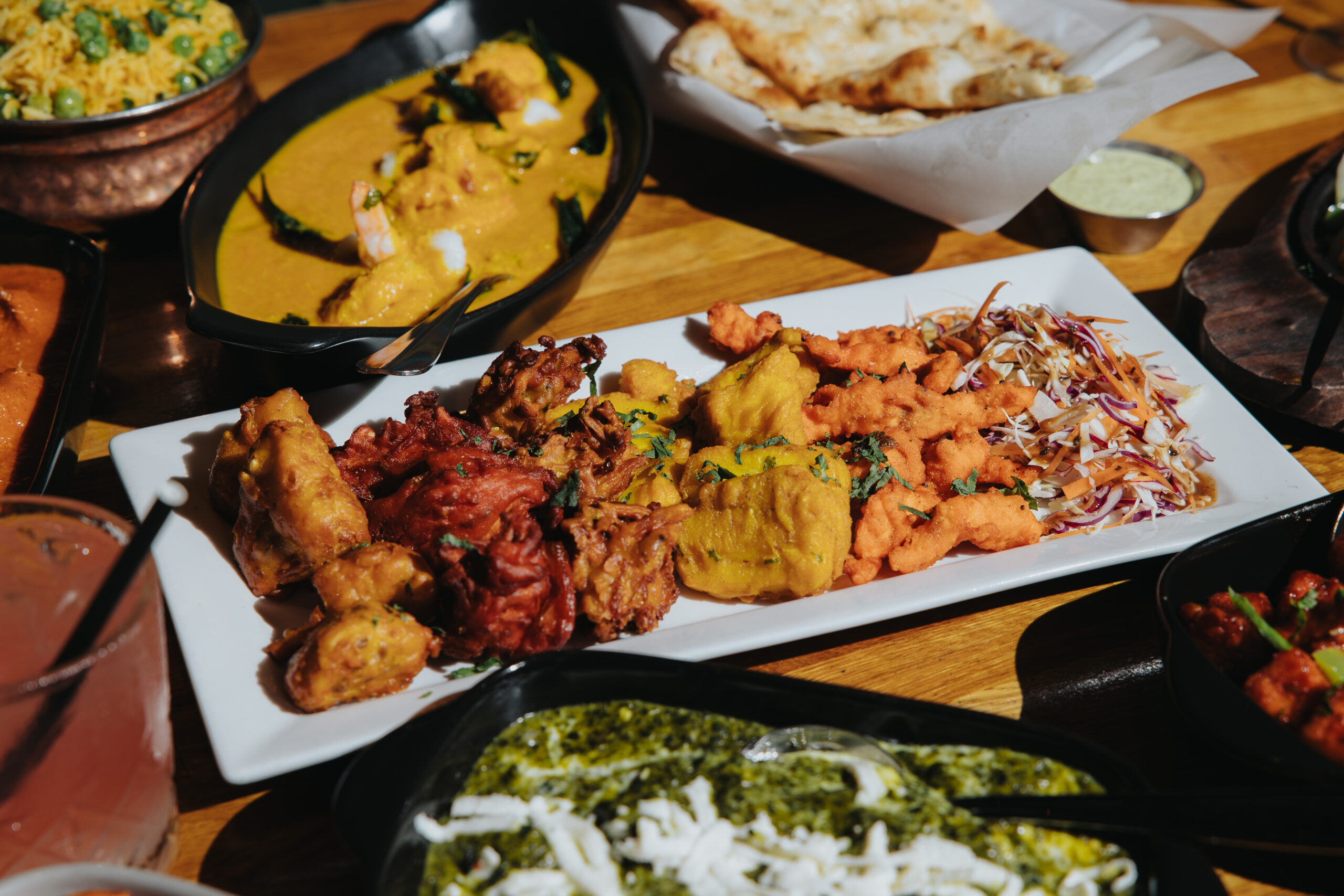
You order for a table, not for a plate. That one shift explains most of the menu.
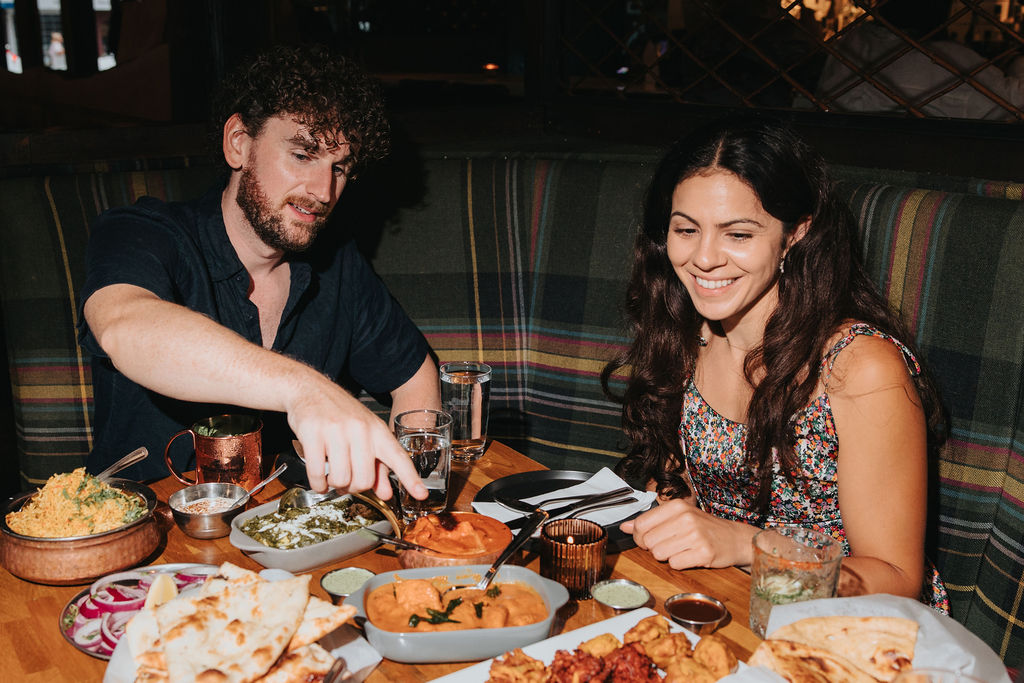
For two people: one shared starter, two curries, one rice, one bread. Pick curries that are different from each other rather than two creamy ones. Order at medium unless you know you want more. That is about $30 to $35 each, and it is a complete meal - you do not need a dish per person, and ordering that way is the commonest first-timer mistake.
Samosa, pakora, bhaji: what's actually different about Indian starters
The starters section of an Indian menu tends to read like a list of near-synonyms - samosa, pakora, bhaji, all fried, all served with a dip, all fairly easy to lump together as "the fried stuff." They're not interchangeable, though, and the difference isn't trivial once you're the one ordering for a table and trying to build some variety rather than three versions of the same texture. Here's what actually separates them.
Two families - pastry - wrapped vs batter - dipped
Almost every starter on an Indian menu falls into one of two construction methods, and knowing which one tells you most of what to expect before it arrives.
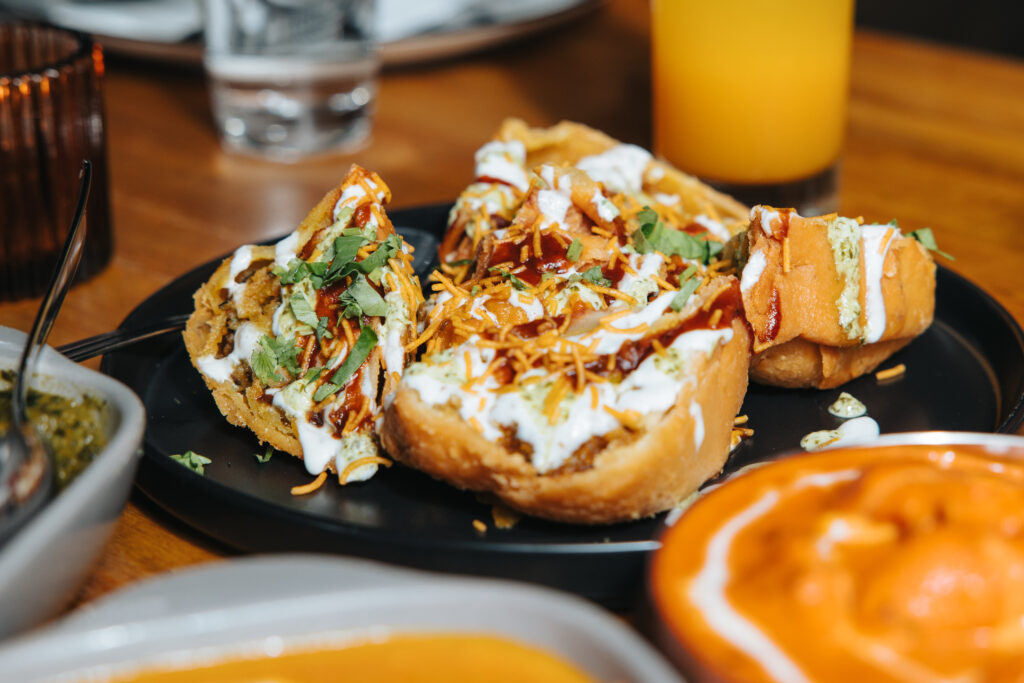
Pastry-wrapped starters start with a dough - usually a simple flour-and-water pastry - that's rolled thin, filled, folded or shaped around the filling, and then fried or baked. The filling stays sealed inside a distinct outer shell, so you get a genuine contrast between a crisp exterior and a soft, spiced interior. The samosa is the defining example of this family.
Batter-dipped starters work the opposite way - the vegetable or protein itself is the main body of the dish, coated in a wet, spiced batter (usually gram flour, or besan, based) and fried directly, so the batter forms a thin, craggy crust around whatever it's coating rather than fully enclosing a separate filling. Pakora and bhaji both belong to this family, and the difference between the two of them, covered below, is mostly about shape and what's being coated rather than the underlying method.
Samosa: the pastry, the filling, the fold
A samosa is a triangular or cone-shaped pastry, made from a simple flour dough rolled thin, filled, folded into its characteristic shape, and then deep-fried (or, less commonly, baked) until the exterior is crisp and golden. The classic filling is spiced potato and peas, though meat versions - spiced ground lamb or chicken - are common too, and regional variations swap in different vegetables or lentils.
What makes a samosa distinct from a spring roll, which it's sometimes confused with by diners unfamiliar with either, is both the pastry and the filling style. A spring roll uses a thinner, wheat-and-water pastry wrapped around a filling that's usually shredded and stir-fried before wrapping - vegetables, sometimes noodles - reflecting its East and Southeast Asian origins. A samosa's pastry is thicker and sturdier, built to hold a chunkier, spiced filling, and the flavour profile is built around Indian spicing (cumin, coriander, garam masala) rather than the soy- and sesame-forward seasoning typical of a spring roll. They occupy a similar spot on a menu - a crisp, fried, hand-held starter - but they come from genuinely different culinary traditions with different pastry, filling, and seasoning conventions.
Pakora and bhaji: same batter, different shape
Pakora and bhaji are close enough in construction that the two words are sometimes used interchangeably on menus, but there's a useful distinction underneath that difference.
Pakora generally refers to bite-sized pieces of vegetable (onion, potato, spinach, cauliflower, paneer) individually coated in a spiced gram-flour batter and fried - each piece is roughly whole or in distinct chunks, coated rather than bound together, so a plate of pakora is a collection of individually battered pieces.
Bhaji, in the specific sense of "onion bhaji," typically refers to a version where thinly sliced onion is mixed directly into the batter itself rather than individually coated, so the onion slices bind together into a single fritter-like mass held together by the batter, rather than staying as separate battered pieces. This gives onion bhaji a more textured, tangled appearance and a slightly different eating experience - more like a fritter than individually battered bites.
Both use essentially the same gram-flour batter and the same frying method, and the terms genuinely do overlap on real-world menus - some kitchens call onion bhaji "onion pakora" and vice versa. The distinction is real but not universally applied consistently, so if the specific format matters to you (individually battered pieces versus a bound fritter), it's worth asking rather than assuming from the name alone.
Papadum and other non-fried starters
Not every starter on an Indian menu is fried in a wet batter. Papadum - a thin wafer made from lentil flour, either fried briefly or roasted until crisp - is a lighter, crunchier starter that's structurally different from both the samosa and pakora families, since it's not wrapped around or coating anything else. It's often served at the very start of a meal, sometimes with a set of chutneys, functioning more as a first bite and palate-opener than a substantial starter course.
Grilled and tandoori starters - chicken tikka, Seekh kebab, paneer tikka - are a third category entirely, built around the tandoor rather than a fryer, and worth including on a table alongside a fried starter or two for genuine textural contrast, since char and smoke read very differently from crisp batter.
Ordering starters for a table
A table ordering multiple starters benefits from spreading across these categories rather than picking two or three variations on the same fried-batter theme. A samosa (pastry, distinct filling), a pakora or bhaji (batter-coated, different texture), and something from the tandoor together give a table real range - crisp pastry, craggy fried batter, and charred grilled meat or paneer - rather than three plates that all deliver roughly the same crunch.
Worth knowing if you're ordering for delivery or pickup rather than eating in: as covered in our guide to delivery and pickup, anything fried - samosa, pakora, bhaji - is genuinely better eaten fresh in the restaurant, since the trip home traps steam inside the container and softens exactly the crisp exterior that makes these starters worth ordering in the first place. If you're building a starter order for a first Indian meal specifically, our guide to what to order your first time covers how starters fit into a balanced table more broadly.
What we make
Our starters menu runs across both families described above - samosa, pakora, and onion bhaji made fresh to order, alongside papadum and tandoori starters for a lighter or smokier option. Whichever combination you're after, the current full lineup is on our food menu.
Questions about ordering
What is the difference between a samosa and a pakora?
A samosa is a filled, folded pastry - a distinct dough wrapped around a spiced filling, then fried. A pakora is a vegetable coated directly in a spiced batter and fried, with no separate pastry shell involved.
Is bhaji the same as pakora?
They're closely related and the names are often used interchangeably. Onion bhaji typically has thin onion slices bound together within the batter into a single fritter, while pakora is usually individually battered, distinct pieces of vegetable, though the distinction isn't applied consistently across every menu.