2741 W 4th Ave, Vancouver, BC V6K 1P9
+1 604-559-1666
info@karmaindianbistro.ca
Open daily from 12:00 PM
A tandoor is the reason tandoori chicken has char at the edges and a naan has blisters across its surface - not a recipe choice, but a direct result of what the oven physically does that other cooking methods can't. It's a piece of equipment most people have eaten the output of far more often than they've actually seen in use, which is part of why it stays a bit mysterious even to regular Indian food diners. Here's what it actually is, how it works, and why the food it produces can't really be faked in a conventional kitchen.
The lit tandoor, interior glowing, shot from above or through the open top
A tandoor is a cylindrical clay oven, traditionally built from clay and clay-based materials, sometimes reinforced with an outer layer of brick or metal for durability. It's open at the top and heated from within, usually by a charcoal or wood fire at the base, though gas-fired tandoors are common in commercial kitchens today.
A tandoor is a cylindrical clay oven, traditionally built from clay and clay-based materials, sometimes reinforced with an outer layer of brick or metal for durability. It's open at the top and heated from within, usually by a charcoal or wood fire at the base, though gas-fired tandoors are common in commercial kitchens today. The cylindrical shape isn't decorative - it's what allows heat to radiate evenly from the walls and concentrate at the base, creating a cooking environment that's fundamentally different from a box-shaped oven with heating elements on one or two sides.
A working clay tandoor runs at roughly 450 to 500°C - dramatically hotter than a domestic oven, which typically tops out somewhere around 250 to 280°C. At that temperature, the tandoor can bake a naan in about ninety seconds, and can sear and cook a skewer of marinated meat in a handful of minutes. That combination -extremely high heat, applied very quickly - is the whole story behind why tandoori food tastes the way it does, and it's a combination that's genuinely difficult to replicate in equipment built for lower, steadier heat.
The tandoor's cylindrical shape is put to work in two completely different ways depending on what's being cooked, and both methods exist specifically because of how the oven is built.
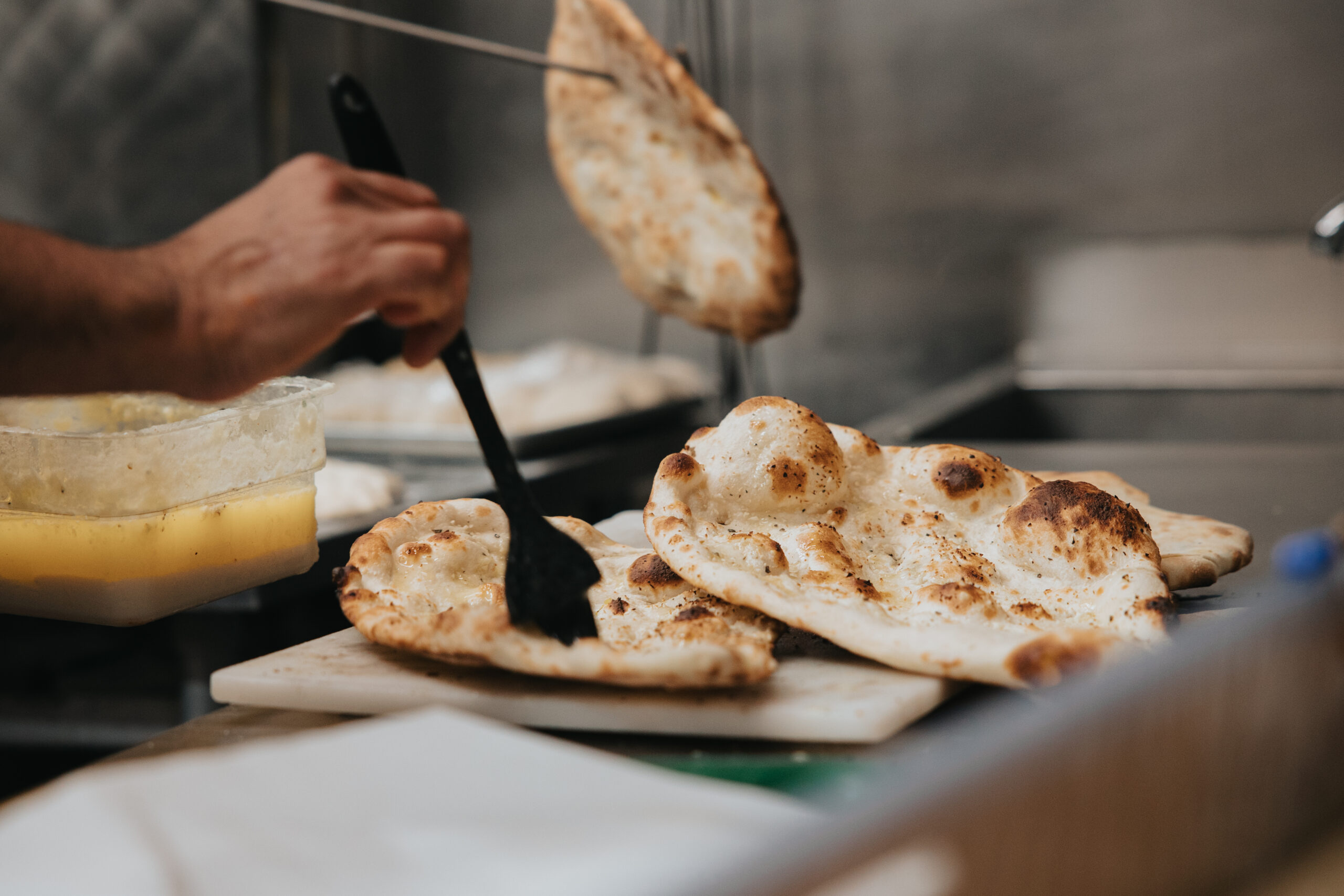
A stretched piece of naan dough is slapped directly against the vertical inner wall of the tandoor, where it sticks on contact - the dough is moist enough, and the wall hot enough, that it adheres on its own without any additional support. The bread then bakes against that scorching clay surface while also being exposed to the radiant heat and rising air within the cylinder, cooking from two directions at once. After roughly ninety seconds, it's peeled off the wall, finished.
Meat and vegetables go on skewers, lowered into the centre. Rather than touching the wall, skewered items are suspended down into the middle of the tandoor, hanging in the intense, dry heat radiating off the clay walls and rising from the fire at the base. The vertical orientation matters here too - it lets heat surround the food evenly from all sides while any fat rendering off simply drips down and away from the food, rather than pooling underneath it the way it would on a flat grill.
Both methods rely on the same core feature of the tandoor: a cylindrical, enclosed space that traps and radiates intense heat far more efficiently than an open grill or a flat-topped oven ever could.
The gap between a tandoor's roughly 450 to 500°C and a domestic oven's 250 to 280°C isn't just a difference of degree - it produces a genuinely different outcome in the food, for a few specific reasons.
Because the tandoor cooks so fast, the outside of a piece of marinated chicken can char and develop deep flavour before the inside has any chance to dry out or overcook. In a slower oven, achieving that same level of char on the outside would mean the inside is overdone long before the exterior gets there. The tandoor sidesteps that trade-off entirely by cooking so quickly that both happen almost simultaneously.
A domestic oven mostly relies on circulating hot air around food. A tandoor's heat comes primarily as direct radiant heat off the clay walls, plus the intensity of an open flame or glowing coals below - a more aggressive, more direct form of heat transfer that sears and chars in a way gentler convection heat doesn't easily achieve.
Some of the flavour associated with tandoori cooking, particularly in bread, comes from contact with the hot clay surface itself - a very faint smokiness and specific char pattern that a metal oven wall or a grill grate doesn't reproduce in quite the same way.
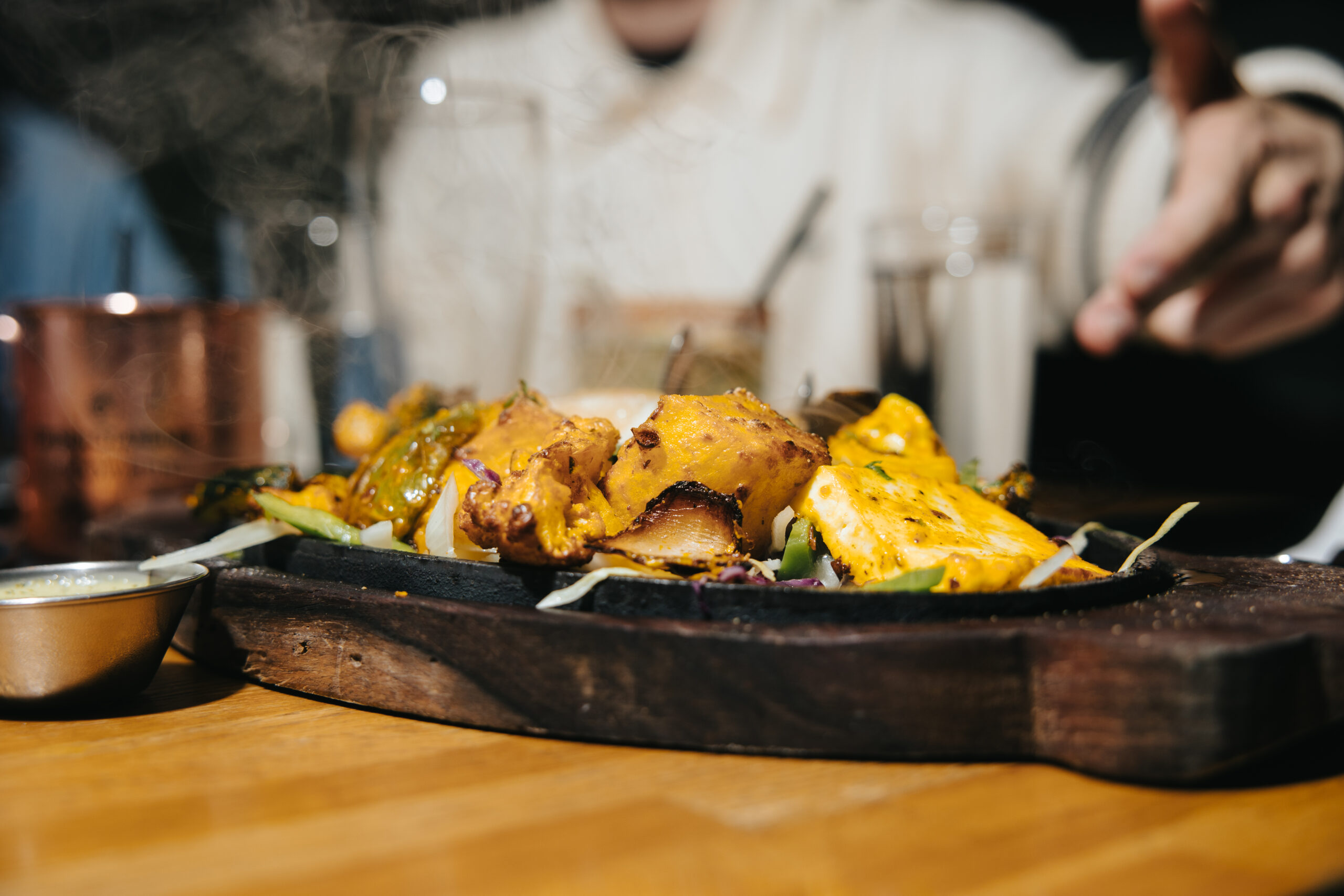
The intense dry heat of a tandoor means food cooks without the moisture a conventional oven can trap and hold, which is part of why tandoori meat has a distinct char and drier, more concentrated exterior rather than the softer surface you'd get from oven-roasting at lower heat over a longer time.
The tandoor produces a specific family of dishes, and while they're often grouped together on a menu, each has a distinct preparation.
Tandoori chicken is chicken, typically on the bone, marinated in yoghurt and a spice blend - commonly including chilli, garam masala, ginger, and garlic - before being cooked on a skewer in the tandoor. The yoghurt in the marinade does real work here beyond flavour: its acidity gently tenderises the meat, and it helps the spice coating cling to the surface through the high heat of cooking. Because it's cooked on a skewer with no added oil, and with rendered fat dripping away through the cooking process rather than pooling around the meat, tandoori chicken ends up one of the leaner preparations on most Indian menus.
Chicken tikka follows the same basic marinade principle as tandoori chicken but is made from boneless chicken pieces, cut smaller, and often marinated for a shorter time given the smaller cut. It's frequently the base for chicken tikka masala once it comes off the skewer and into a sauce, but it's also served on its own as a starter, straight from the tandoor.
Seekh kebab is a different construction entirely - rather than pieces of meat on a skewer, it's ground, spiced meat (commonly lamb or chicken) shaped directly around a skewer into a long cylinder before cooking. The high, direct heat of the tandoor sears the outside of the ground meat quickly, holding its shape and giving it a firm, slightly charred exterior around a juicy interior.
Our tandoor is lit well ahead of service, since a clay oven needs real time to come up to full cooking temperature and hold it steadily rather than being switched on and used within minutes. Once it's up to heat, it stays in near-constant use through service - naan going onto the wall throughout the evening, skewers of tandoori chicken, tikka, and Seekh going in and coming out in a steady rhythm rather than in occasional batches.
That constant cycling is actually part of what keeps the tandoor performing well through a full night of service - a clay oven that's allowed to cool and reheat repeatedly doesn't hold heat as consistently as one kept at a steady working temperature throughout. It's one of the reasons tandoori food from a restaurant running its oven properly tastes noticeably different from an attempt to recreate the same dish in a home kitchen - not a matter of a better recipe, but a genuinely different piece of equipment doing something a domestic oven simply isn't built to do.
If you want to see what actually comes out of ours, the tandoori dishes and the full naan range are on our food menu, and if you're curious how the different breads compare once they're off the wall, that's covered in our guide to Indian breads. You can also read more about the kitchen and the people running it on our about us page.
How hot does a tandoor get?
A working clay tandoor runs at roughly 450 to 500°C - hot enough to bake a naan in about ninety seconds and to char the outside of marinated meat before the inside overcooks.
Is tandoori chicken healthy?
Tandoori chicken is marinated in yoghurt and spices and cooked on a skewer with no added oil and with fat dripping away, which makes it one of the leaner things on most Indian menus.