2741 W 4th Ave, Vancouver, BC V6K 1P9
+1 604-559-1666
info@karmaindianbistro.ca
Open daily from 12:00 PM
Real biryani is built, not mixed. The defining technique is called "dum" cooking, and it works roughly like this: rice is par-cooked separately - boiled partway, not fully - while meat or vegetables are separately marinated and part-cooked in their own spiced base.
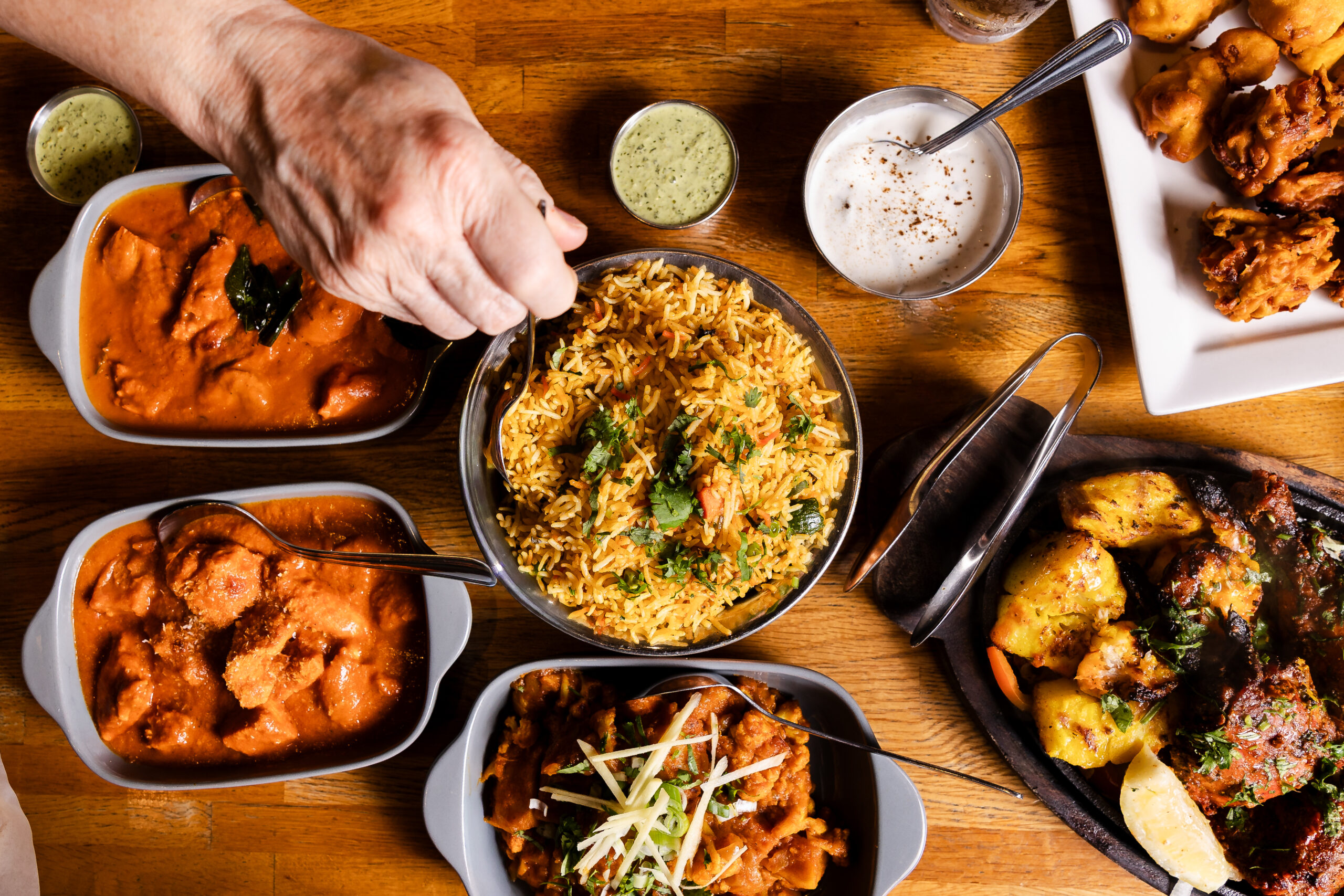
You order for a table, not for a plate. That one shift explains most of the menu.
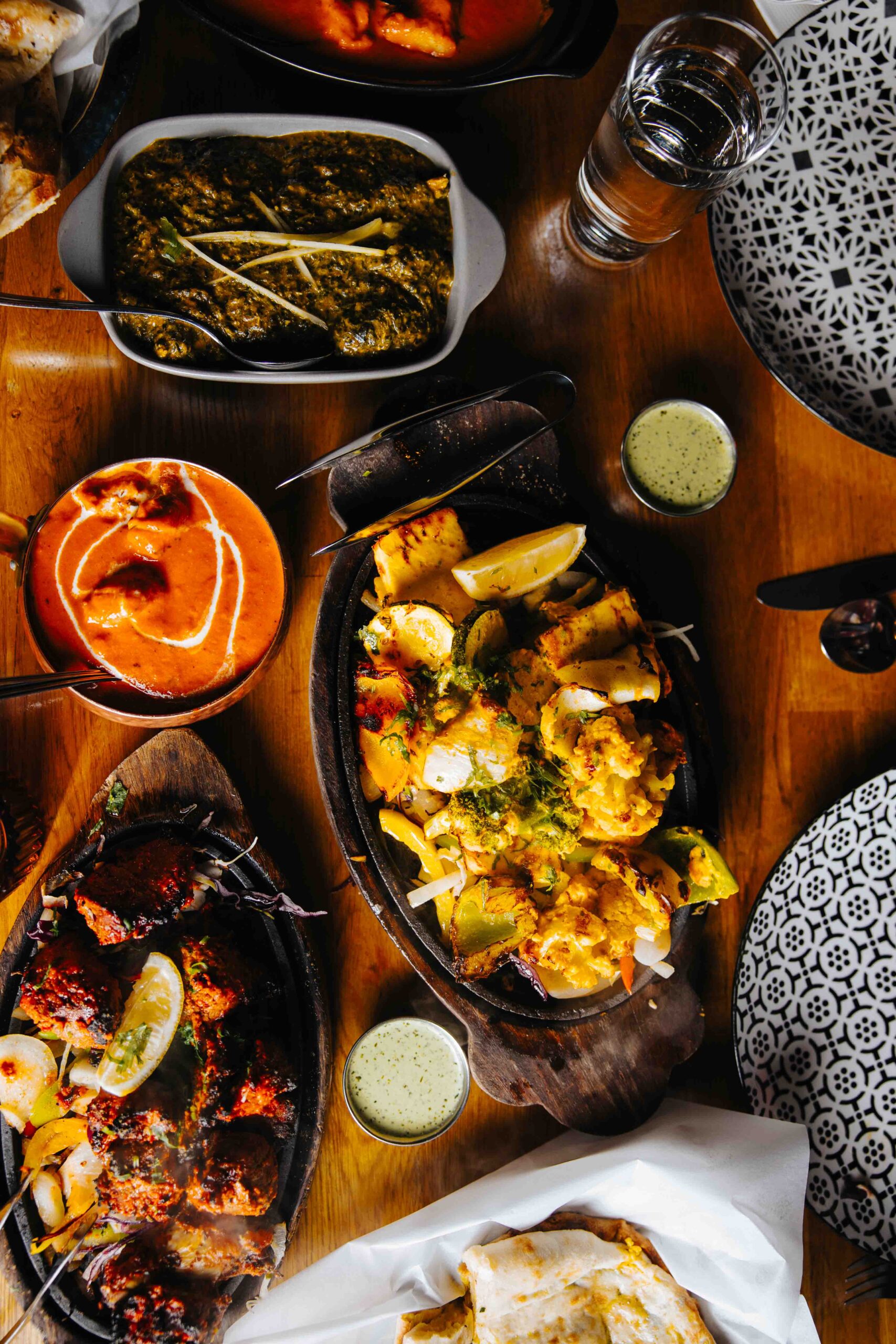
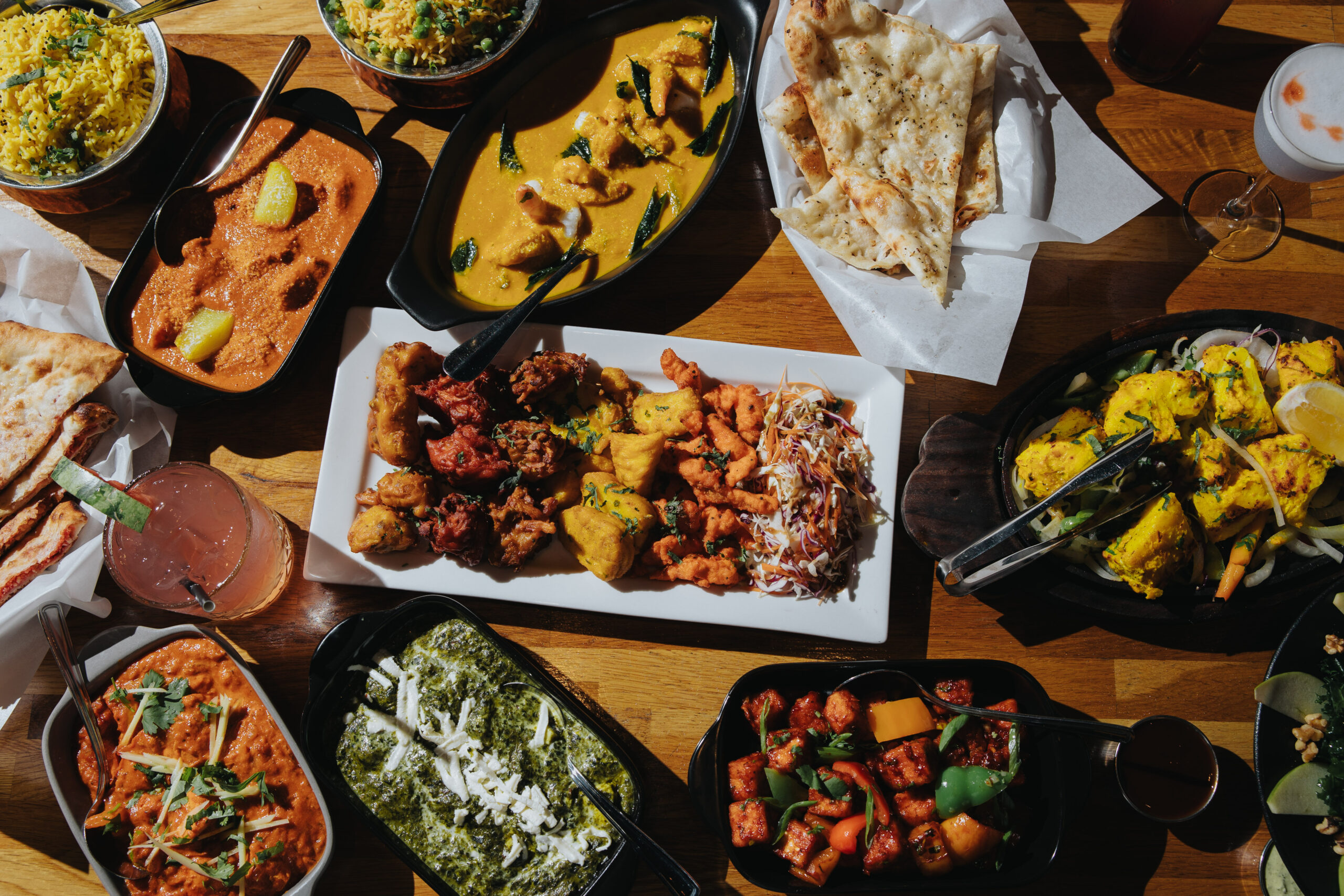
For two people: one shared starter, two curries, one rice, one bread. Pick curries that are different from each other rather than two creamy ones. Order at medium unless you know you want more. That is about $30 to $35 each, and it is a complete meal - you do not need a dish per person, and ordering that way is the commonest first-timer mistake.
Biryani is one of the most ordered, most searched, and most misunderstood dishes on an Indian menu. Part of that is because the word gets used loosely - plenty of places sell a spiced rice dish under the name "biryani" that skips the actual technique that defines it. The difference isn't subtle once you know what to look for, and it's the difference between a dish with real depth in every grain and one that just tastes like rice with curry stirred through it.
Here's what actually makes a biryani, the regional styles you'll run into on a Vancouver menu, how to spot a shortcut version, and what we do with ours in Kitsilano.
Real biryani is built, not mixed. The defining technique is called "dum" cooking, and it works roughly like this: rice is par-cooked separately - boiled partway, not fully - while meat or vegetables are separately marinated and part-cooked in their own spiced base. The two are then layered in a heavy pot, rice over meat or meat over rice depending on the style, often finished with fried onions, fresh herbs, and sometimes a thread of saffron milk poured over the top layer.
The pot is then sealed - traditionally with a ring of dough pressed around the lid to trap steam completely - and cooked over low, gentle heat for an extended period. Inside that sealed pot, the rice finishes cooking in the steam and aromatics rising up from the meat layer below, rather than being boiled or stirred together with it. That slow, sealed, steam-finished cooking is what "dum" actually means, and it's the step that separates biryani from every dish that just looks like it on a plate.
The result of doing this properly is rice where every grain has taken on flavour from the layer below without the dish turning into a single, homogenous mixture - you should still be able to identify distinct layers and textures within a well-made biryani, not just a uniform bowl of orange-tinted rice.
Biryani isn't one dish with minor variations - different regions of India (and beyond) developed genuinely distinct styles, and knowing the difference helps you order with the right expectations.
Hyderabadi biryani is probably the most internationally recognised style, originating in Hyderabad in South-Central India. It's typically built with raw, marinated meat layered directly with par-cooked rice (rather than pre-cooking the meat separately) and is generally the boldest and spiciest of the major styles, with a more pronounced chilli presence than most other regional versions.
Lucknowi biryani (also called Awadhi biryani) comes from Lucknow in North India and takes a gentler approach - meat is typically cooked separately in a rich, aromatic gravy before being layered with the rice, and the overall profile leans fragrant and subtly spiced rather than chilli-forward. Where Hyderabadi biryani announces itself with heat, Lucknowi biryani tends to lead with aroma - saffron, whole spices, and a more delicate balance overall.
Kolkata biryani developed in Bengal and carries a distinctive regional signature: potato, often a whole boiled potato per portion, layered in alongside the meat - a detail that traces back to a specific piece of culinary history in the region and that immediately distinguishes it from other styles on sight.
Vancouver menus tend to draw most heavily from the Hyderabadi tradition, since it's the style most familiar internationally, but it's worth checking which style a specific dish is drawing from if you have a preference between bold heat and gentler aromatics.
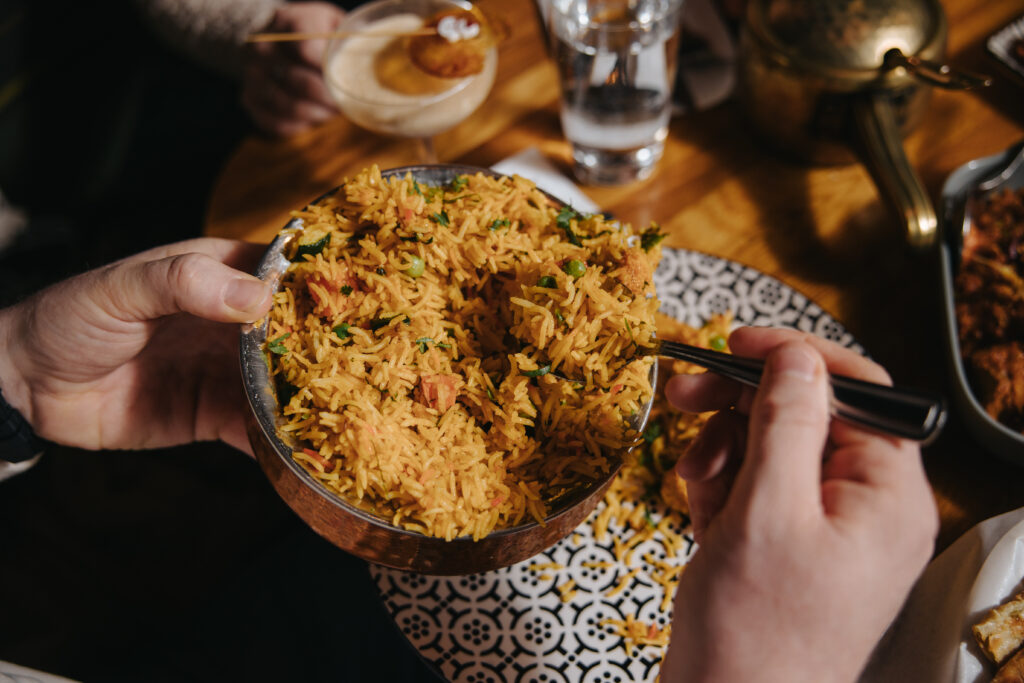
Because proper dum-style biryani takes real time and a specific technique, it's also one of the easier dishes to shortcut - and the shortcuts are usually identifiable if you know what to look for.
Uniform colour and texture throughout. Proper biryani, built in layers, tends to show visible variation - some rice closer to the meat will have taken on more colour and flavour than rice further from it. A dish that's uniformly one colour and texture from top to bottom, with no visible layering, is more likely to have been mixed together rather than built and steamed in layers.
No distinct rice grains. Well-cooked biryani rice should be separate, distinct grains, not clumped or mushy - a sign the rice was properly par-cooked before layering rather than cooked fully and then combined with the meat and sauce afterward.
Tastes like curry poured over rice, rather than rice and meat that finished cooking together. This is the clearest tell. If the dish tastes like a curry was made separately and ladled over a bed of plain or lightly spiced rice, that's not biryani in the technical sense - it might still taste fine, but it's a different dish being sold under a familiar name.
No fried onions, herbs, or saffron aroma. These finishing elements - crisp fried onions, fresh coriander or mint, the specific fragrance of saffron - are traditional markers of a properly built biryani and are usually the first things skipped in a rushed version.
None of this is about gatekeeping the word - plenty of quick spiced-rice dishes are genuinely good in their own right. It's about knowing what you're ordering, and knowing when a menu is using "biryani" loosely.
Biryani is traditionally served with a small number of specific accompaniments that are worth knowing, since they're built to round out the dish rather than just pad the plate.
Raita - a cooling yoghurt-based side, often with cucumber, onion, or mint mixed in - is the classic pairing, and it does real work against a biryani's spice and richness rather than just sitting alongside it decoratively.
Mirchi ka salan, a tangy, spiced chilli-and-peanut curry, is a traditional Hyderabadi accompaniment specifically, served alongside Hyderabadi biryani as a second sauce to spoon over the rice if you want more heat and depth.
A simple side salad - sliced onion, cucumber, lemon - is common and, again, functions as a palate reset between bites of a rich, layered dish rather than a separate course.A simple side salad - sliced onion, cucumber, lemon - is common and, again, functions as a palate reset between bites of a rich, layered dish rather than a separate course.
As for drinks, a cold lassi (sweet or salted) plays a similar cooling role to raita, and if you're drinking alcohol, a crisp lager or a lightly off-dry white wine tends to sit better against biryani's spice and richness than something heavier or more tannic.
Our biryani follows the traditional dum method described above - rice and meat layered and finished together under seal, not combined and reheated. That's a genuinely slower way to cook it than mixing everything in one pot, but it's the only way to get the layered texture and depth that separates real biryani from spiced rice with meat stirred through it.
If you want to see the current biryani options alongside the rest of the menu, they're listed on our food menu. And if biryani has you curious about how we handle other signature dishes, our chicken madras and butter chicken pages go into the same kind of detail. You can also read more generally about the restaurant and the kitchen on our Karma Indian restaurant in Kitsilano page.
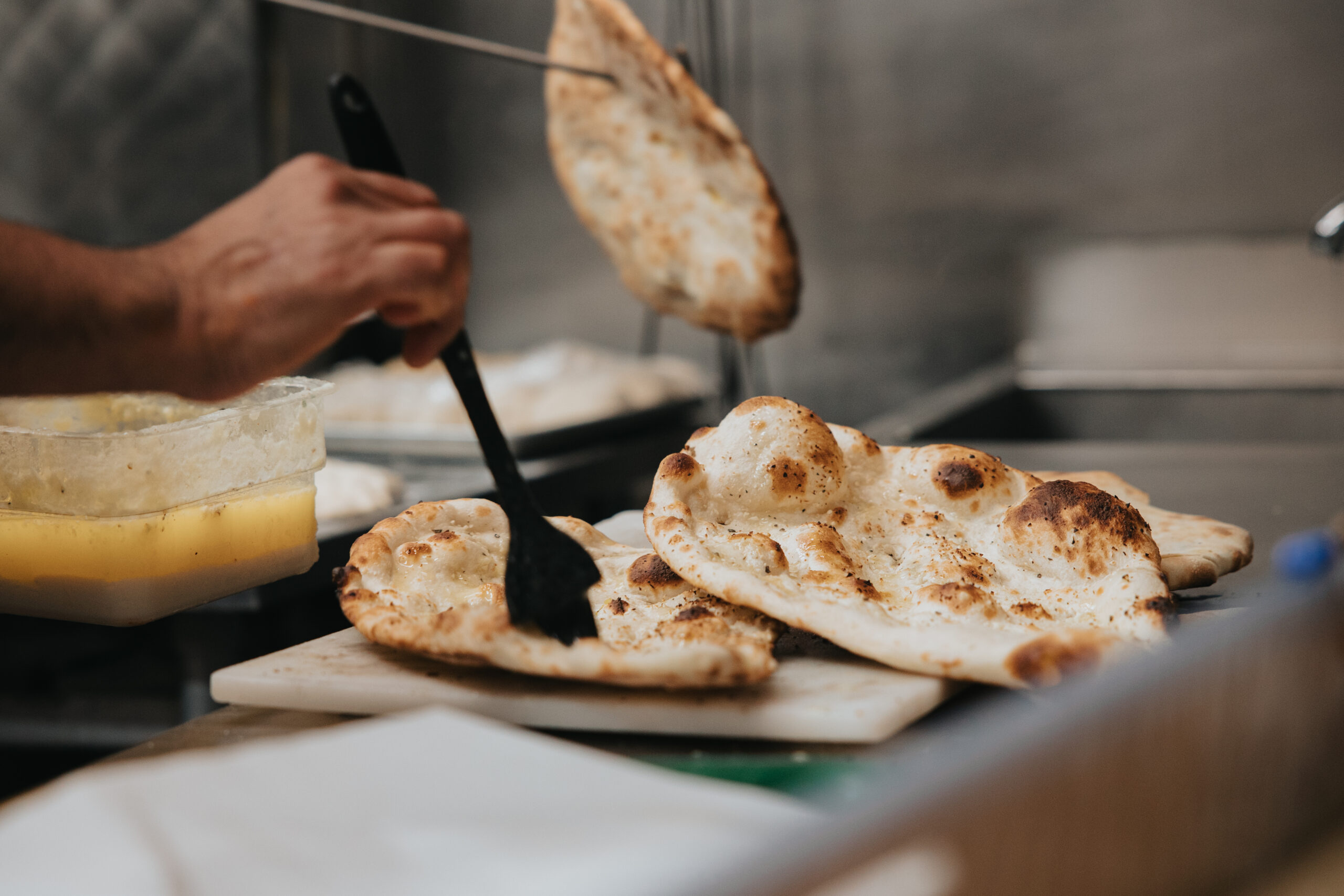
At Karma, naan is made fresh to order and baked in a traditional tandoor, which is what produces the char and puff that separates a good naan from a flat, oven-baked imitation. The full naan range - plain, garlic, butter, cheese, and peshwari - is available, alongside roti for guests who want a lighter, everyday-style bread instead of the richer tandoor-baked option.
If you're curious about how the tandoor itself works and why it cooks bread so differently from a conventional oven, that's covered in more detail on our tandoor oven page. And if you'd rather just see the full bread list alongside the rest of the menu, it's all on our food menu.
What is the difference between biryani and pulao?
Biryani is cooked in layers - part-cooked rice over marinated meat or vegetables - then sealed and steamed so the two finish together. Pulao is cooked as one mixture in a single pot.
Is biryani spicy?
It varies by style and by kitchen. Hyderabadi biryani is typically the hottest; Lucknowi is fragrant rather than fiery. Most kitchens, including ours, will adjust the heat on request.