
Mint, tamarind, mango: what Indian chutneys and pickles actually are
Chutney is typically a fresh or lightly cooked condiment, made to be used within days rather than stored long-term - blended or ground from fresh ingredients like mint, coriander, or tamarind, with a soft, spoonable texture closer to a sauce or a thick dip than anything preserved.
. Karma Indian Bistro
October 10, 2026
. 8 min read
You order for a table, not for a plate. That one shift explains most of the menu.
For two people: one shared starter, two curries, one rice, one bread. Pick curries that are different from each other rather than two creamy ones. Order at medium unless you know you want more. That is about $30 to $35 each, and it is a complete meal - you do not need a dish per person, and ordering that way is the commonest first-timer mistake.
Mint, tamarind, mango: what Indian chutneys and pickles actually are
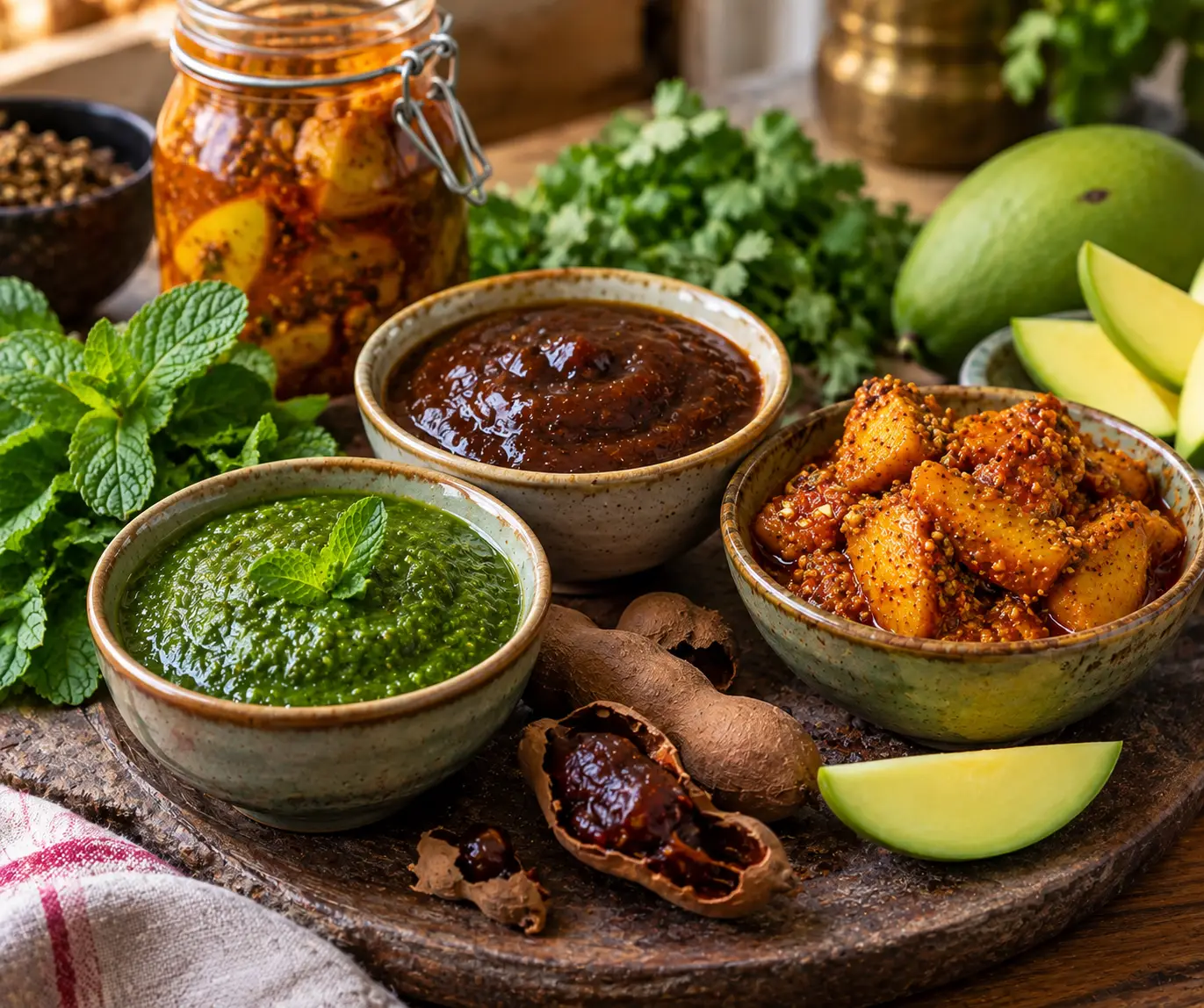
The small dishes that show up alongside papadum or a starter order tend to get treated as an afterthought - dip it, forget about it, move on to the main course. That undersells them. Chutneys and pickles are genuinely distinct categories with different purposes, different shelf lives, and different roles on the table, and knowing the difference changes how you'd actually use them rather than just dabbing a bit of whichever one's closest.
Chutney and pickle are not the same category
The two words get used loosely and sometimes interchangeably, but they describe fundamentally different things. Chutney is typically a fresh or lightly cooked condiment, made to be used within days rather than stored long-term - blended or ground from fresh ingredients like mint, coriander, or tamarind, with a soft, spoonable texture closer to a sauce or a thick dip than anything preserved.
Pickle (achaar) is a genuinely preserved food, typically made by curing fruit or vegetable pieces in oil, salt, and spices over an extended period, sometimes involving sun-drying or fermentation as part of the process. The result is intensely flavoured, often quite salty or sour, and built to last for months rather than days - a small jar of pickle in an Indian household is closer in concept to a preserve or a cured condiment than to a fresh sauce.
That distinction - fresh and short-lived versus preserved and long-lasting - is the real dividing line, and it also explains why pickle tends to be used sparingly, a small spoonful alongside a meal, while chutney is often used more generously, closer to how you'd use a dipping sauce.
Mint chutney: fresh, cooling, made for the moment
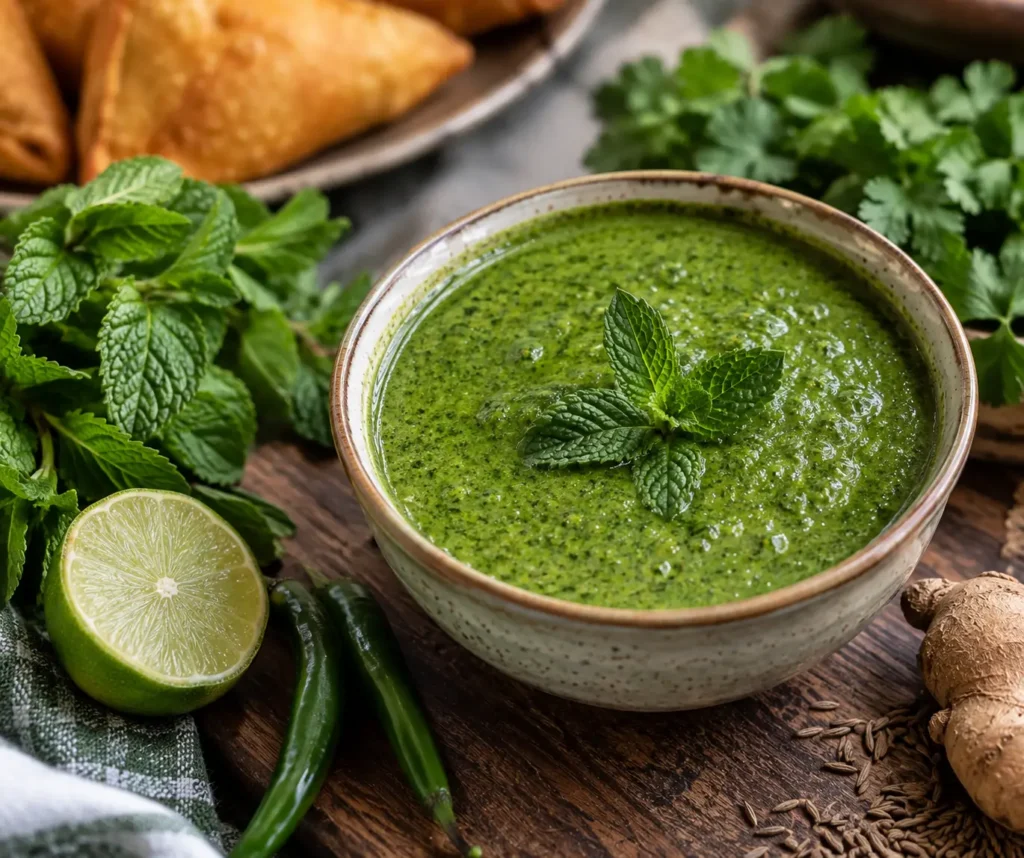
Mint chutney (pudina chutney) is a bright green, blended condiment made from fresh mint, usually with coriander, green chilli, lemon or lime juice, and sometimes a bit of yoghurt for body. It's made fresh and meant to be used quickly, since the fresh herbs lose their brightness and colour within a few days even under refrigeration.
The flavour is sharp, herbaceous, and cooling - mint's naturally refreshing quality is the whole point, and it works particularly well as a counterpoint to fried, rich foods, cutting through the heaviness of a samosa or pakora in the same general way a squeeze of lemon cuts through a rich dish. It's the chutney most commonly served alongside fried starters specifically, as covered in our guide to Indian starters, for exactly that reason.
Tamarind chutney: the sweet-sour one
Tamarind chutney is built around tamarind pulp - a sour, tangy fruit pulp that's a defining ingredient across a lot of Indian cooking - cooked down with jaggery or sugar, and often a small amount of warming spice like cumin or ginger, into a thick, dark brown, sweet-and-sour condiment. Unlike mint chutney's sharp, herbaceous brightness, tamarind chutney's character is deeper and more complex: sweet up front, sour underneath, with a warmth from the spices that rounds it out.
This is the chutney most associated with chaat, the broad category of Indian street food snacks, where a drizzle of tamarind chutney (often alongside mint chutney for contrast) is a defining finishing touch. On a restaurant table, it works particularly well against fried starters and tandoori dishes alike, since its sweetness balances char and spice in a way mint chutney's coolness doesn't quite replicate.
Mango and lime pickle: preserved, intense, a little goes a long way
Mango pickle is one of the most common and recognisable Indian pickles, made from unripe, firm mango pieces cured in oil, salt, and a spice blend that typically includes mustard seed, fenugreek, and chilli. The unripe mango brings a distinct sourness that ripe mango doesn't have, and the curing process concentrates that sourness alongside the spice blend into something genuinely intense - a small amount goes a long way, and it's meant to be eaten in small quantities alongside a meal rather than in any real volume.
Lime pickle follows similar logic with whole or quartered limes instead of mango, cured the same way, producing an intensely sour, salty, spiced condiment. Both are built to be a sharp, punchy counterpoint to a meal rather than a component eaten on its own - a small spoonful mixed into a bite of rice and curry, rather than spread generously the way you might use a chutney.
Because both mango and lime pickle are preserved rather than fresh, they keep for a genuinely long time - months, properly stored - which is part of why they've traditionally been a pantry staple in Indian households rather than something made fresh for each meal the way chutney typically is.
What to pair with what
As a rough guide: mint chutney for fried starters and anything that benefits from a cooling, sharp contrast. Tamarind chutney for a sweeter counterpoint, particularly good against tandoori dishes or anything with real char. Mango or lime pickle used sparingly alongside rice and curry, mixed in rather than used as a dip, for a concentrated hit of sour, salty intensity that a milder dish sometimes benefits from.
None of these are strict rules - plenty of diners simply use whichever chutney or pickle is on the table with whatever they're eating, and there's nothing wrong with that. But if you're trying to get the most out of a shared table, matching the condiment's character (cooling, sweet, or intensely sour) to what it's going alongside gets a noticeably better result than reaching for whichever is nearest.
What we serve alongside your meal
We make our chutneys fresh rather than from a pre-made base, which matters more for mint chutney in particular, since its brightness fades quickly once it's no longer freshly made. Whichever starter or main you're building your table around - as covered in our guide to first-time ordering - the condiments on the table aren't just a garnish, and it's worth actually using them deliberately rather than leaving them untouched at the edge of the plate. The current menu, starters included, is here.
Questions about ordering
What is the difference between chutney and pickle?
Chutney is typically fresh or lightly cooked and made to be used within days, with a soft, spoonable texture. Pickle is preserved in oil, salt and spices over an extended period, has a much longer shelf life, and is used more sparingly.
What is mango pickle made of?
Mango pickle is made from unripe, firm mango pieces cured in oil, salt, and a spice blend that typically includes mustard seed, fenugreek and chilli, producing an intensely sour, salty, spiced condiment.