2741 W 4th Ave, Vancouver, BC V6K 1P9
+1 604-559-1666
info@karmaindianbistro.ca
Open daily from 12:00 PM
Tadka gets mentioned throughout Indian cooking without always being named directly — it's the technique behind the sizzle you sometimes hear poured over a bowl of dal right before it's served, the reason mustard seeds and curry leaves show up fried at the start of a South Indian dish, and one of the most consistently used but least explained techniques across the whole cuisine.
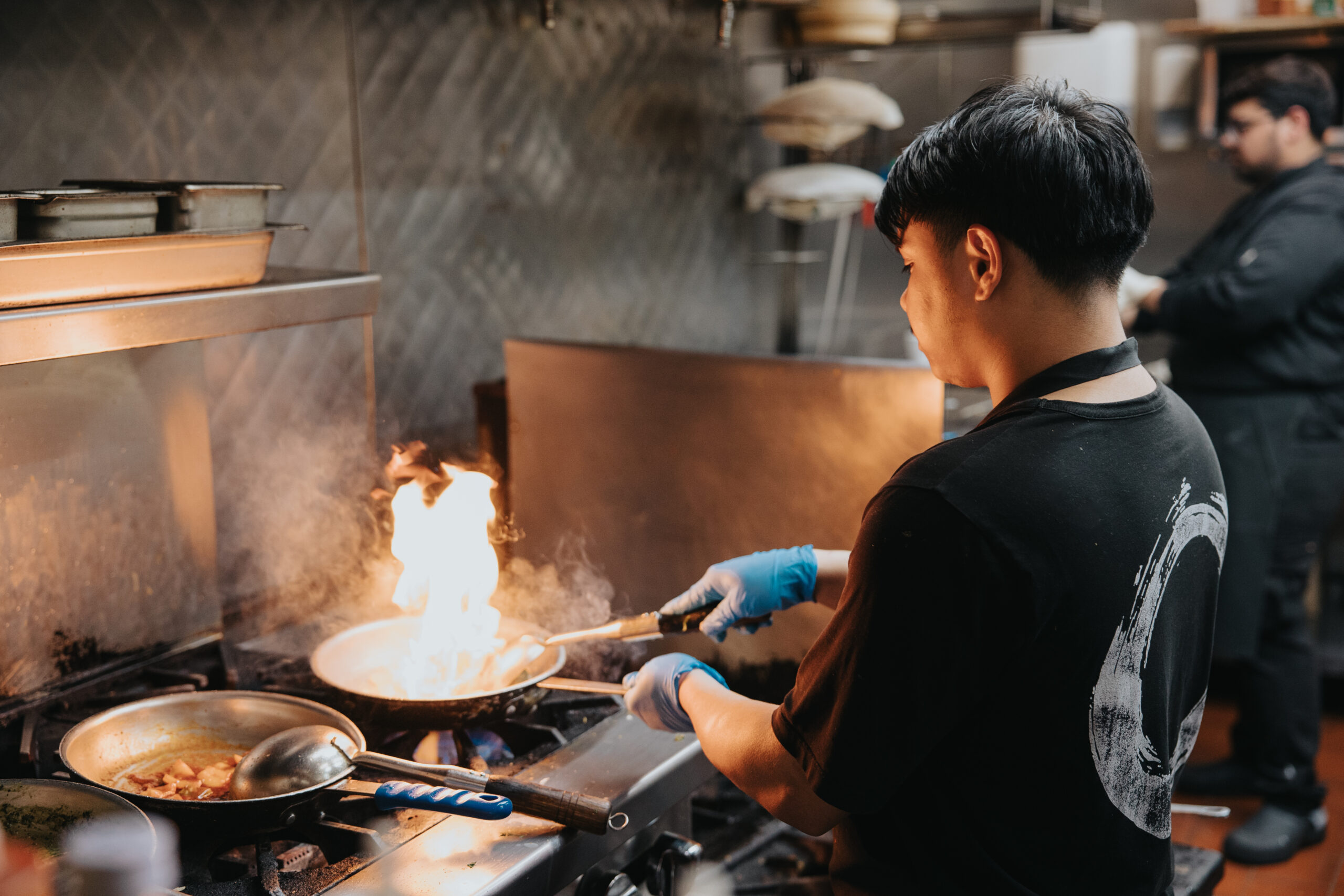
You order for a table, not for a plate. That one shift explains most of the menu.
For two people: one shared starter, two curries, one rice, one bread. Pick curries that are different from each other rather than two creamy ones. Order at medium unless you know you want more. That is about $30 to $35 each, and it is a complete meal - you do not need a dish per person, and ordering that way is the commonest first-timer mistake.
Tadka gets mentioned throughout Indian cooking without always being named directly — it's the technique behind the sizzle you sometimes hear poured over a bowl of dal right before it's served, the reason mustard seeds and curry leaves show up fried at the start of a South Indian dish, and one of the most consistently used but least explained techniques across the whole cuisine. Here's what it actually is, and why it does something ground spices sitting in a jar simply can't.
Tadka (also called chhonk or vaghar, depending on the region) is the technique of briefly frying whole spices — mustard seeds, cumin seeds, dried chillies, curry leaves, and others depending on the dish — in hot oil or ghee, releasing their aroma and flavour into the fat itself before that flavoured fat is either used as the base for the rest of the dish or poured over a finished dish as a final touch.
Tadka (also called chhonk or vaghar, depending on the region) is the technique of briefly frying whole spices — mustard seeds, cumin seeds, dried chillies, curry leaves, and others depending on the dish — in hot oil or ghee, releasing their aroma and flavour into the fat itself before that flavoured fat is either used as the base for the rest of the dish or poured over a finished dish as a final touch.
Many of the compounds responsible for a spice's aroma and flavour are fat-soluble rather than water-soluble, meaning they dissolve into oil or ghee far more readily and completely than they do into a watery sauce or liquid. Briefly frying a whole spice in hot fat pulls those compounds out and disperses them through the fat itself, which then carries that concentrated flavour through the rest of the dish as it's used in cooking.
Whole spices specifically — rather than pre-ground versions — also hold their aromatic oils longer, since grinding exposes far more surface area to air and accelerates flavour loss over time. Tadka typically uses whole seeds and dried spices for exactly this reason: they still have their full aromatic potential intact right up until the moment they hit hot oil, at which point that potential gets released all at once rather than having slowly faded on a spice shelf. This is part of why a properly done tadka can taste noticeably more vivid and aromatic than the same spices simply stirred into a dish in ground form.
Tadka isn't tied to one single point in the cooking process — it shows up at different stages depending on the dish and the regional tradition, and understanding where it happens tells you something about what job it's doing.
At the start, tadka often forms the base a dish is built on — whole spices fried in oil before onion, garlic, and other ingredients are added, so everything that follows cooks with that aromatic fat as its foundation rather than a neutral, unflavoured oil.
As a finishing touch, tadka is poured over a finished dish just before serving — the technique most associated with dal specifically, where a small tadka of ghee, cumin, and dried chilli is prepared separately and drizzled, still sizzling, over the top of an otherwise finished pot of dal right at the table or just before it leaves the kitchen. This gives the dish a final, bright layer of flavour and aroma that would otherwise dull if the same spices had simply been cooked into the dal from the very beginning.
Either way, the underlying principle is the same: heat plus fat plus whole spice, timed to extract maximum flavour at the moment it will do the most for the dish.
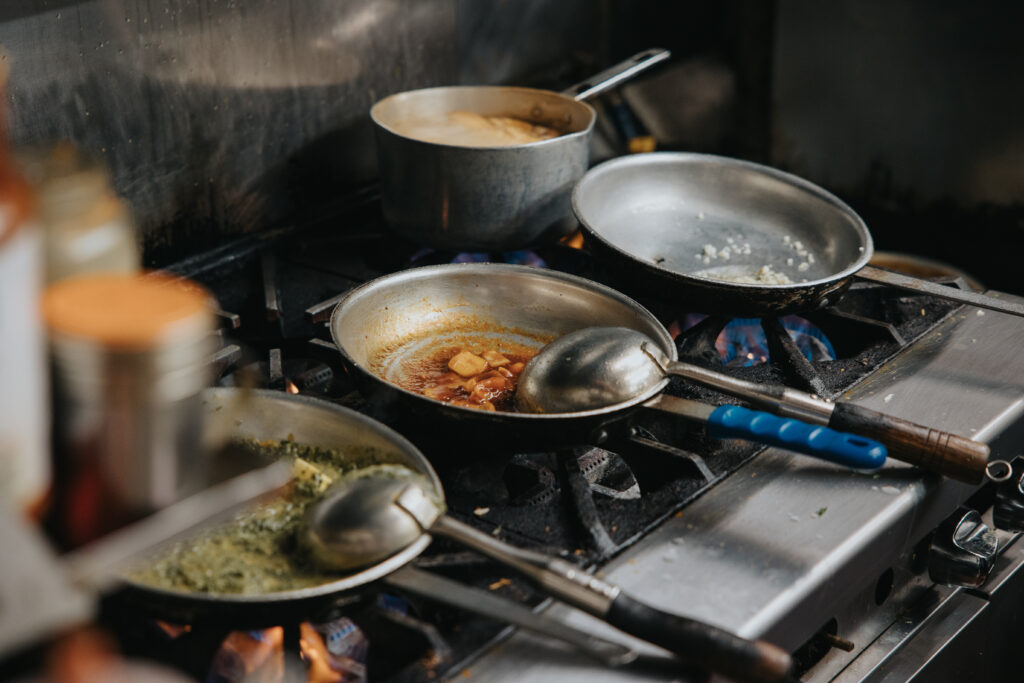
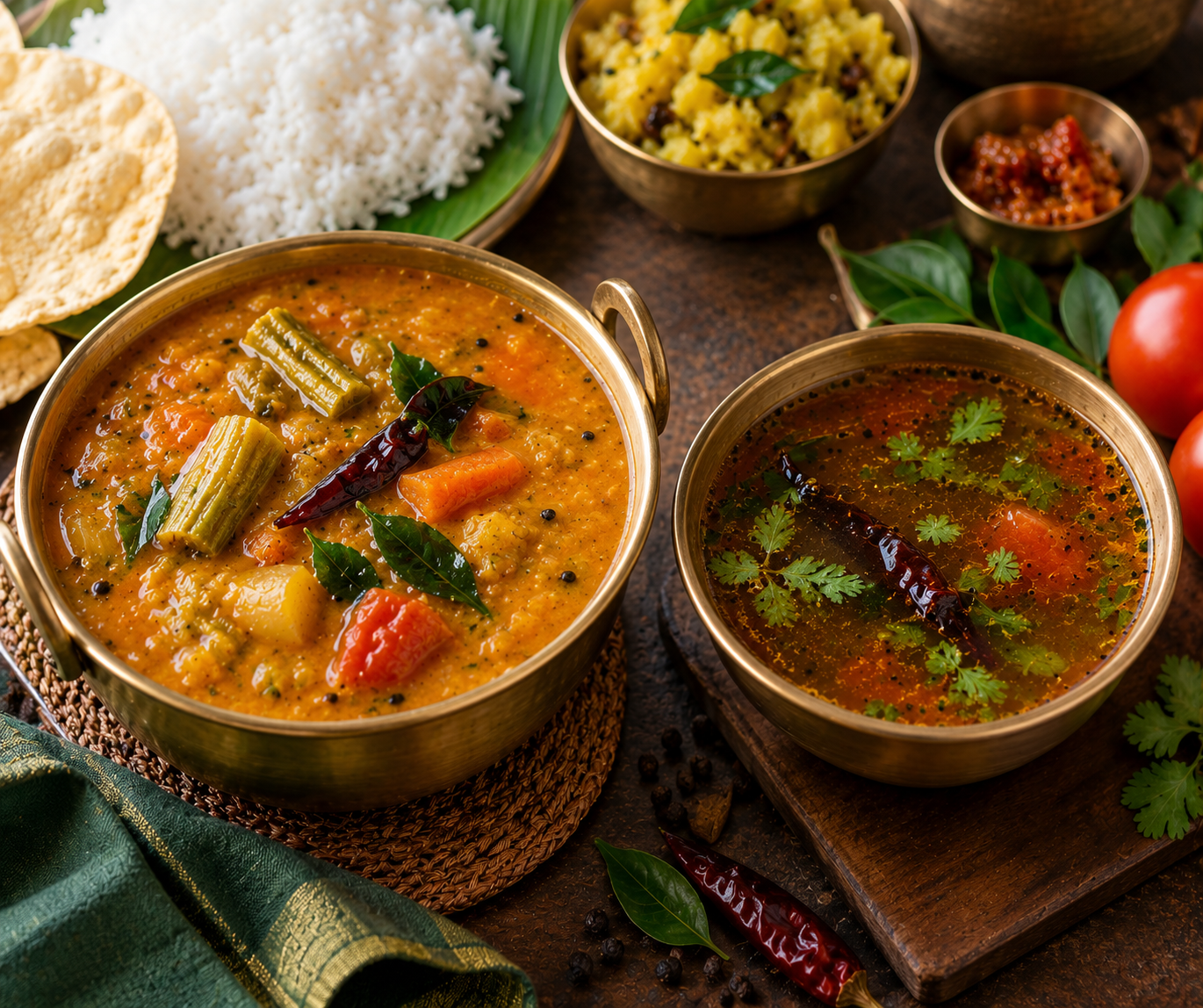
What goes into a tadka varies meaningfully by region, echoing the broader north-south distinctions covered in our guide to Indian regional cooking. A South Indian tadka very commonly includes mustard seeds and fresh curry leaves — as covered in our guide to dosa, this specific combination is central to South Indian tempering and shows up across sambar, rasam, and countless vegetable preparations. A North Indian tadka more often leans on cumin seeds, dried red chilli, and sometimes asafoetida (hing), reflecting the broader spice profile discussed in our guide to Indian spices.
Neither version is more correct than the other — they're regional expressions of the same underlying technique, shaped by what each tradition's pantry and flavour preferences emphasise.
If you've had our dal, you've tasted tadka directly — that final sizzling pour of spiced ghee over the top is exactly the technique described here, done specifically to give the dish a bright final layer of flavour rather than letting it fade into the pot over a long simmer. It shows up throughout the rest of the kitchen too, wherever a dish's base starts with whole spices hitting hot oil rather than a plain, unflavoured start. The current menu, tadka and all, is here.
What does tadka mean?
Tadka is the technique of briefly frying whole spices in hot oil or ghee to release their flavour into the fat, either as the base a dish is built on or as a finishing touch poured over a completed dish, most commonly dal.
Why is tadka used instead of just adding ground spices?
Many spice flavour compounds are fat-soluble and release more fully into hot oil than they do when simply stirred into a liquid. Whole spices also retain more of their aroma than pre-ground versions, so frying them briefly in fat extracts more flavour than adding ground spice directly.